

Biotechnological Potential of Marine Microbes 26.4 Conclusions and Future Perspectives 657
Part E | 26.4
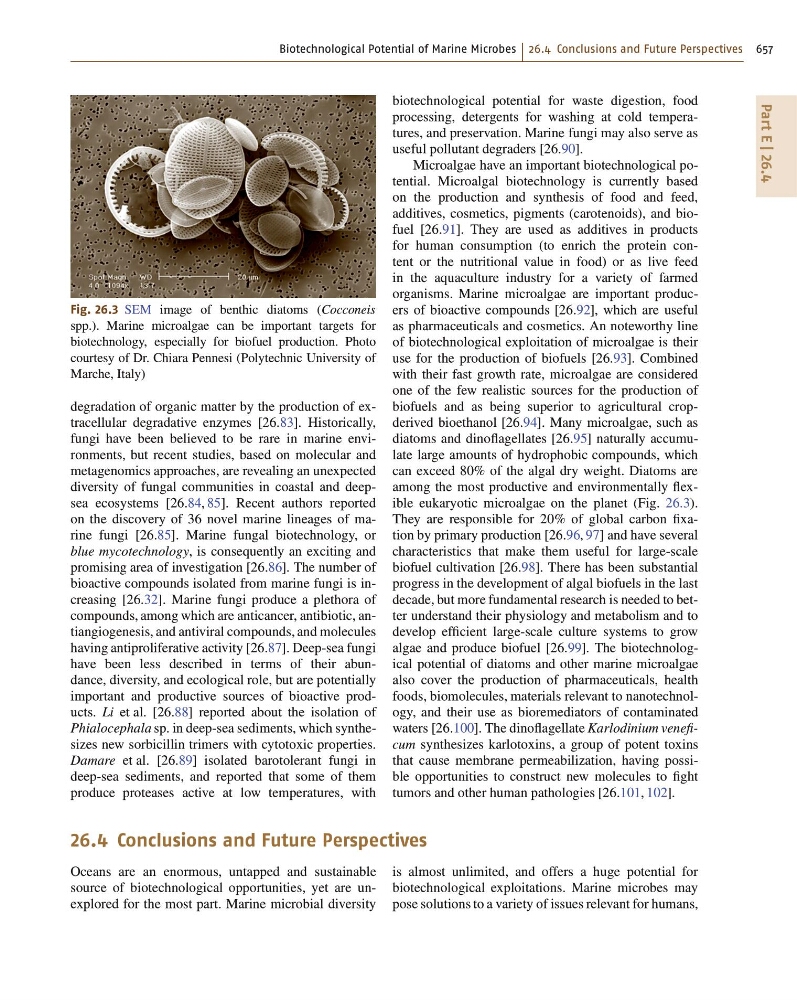
Fig. 26.3 SEM image of benthic diatoms (Cocconeis
spp.). Marine microalgae can be important targets for
biotechnology, especially for biofuel production. Photo
courtesy of Dr. Chiara Pennesi (Polytechnic University of
Marche, Italy)
degradation of organic matter by the production of extracellular degradative enzymes [26.83]. Historically,
fungi have been believed to be rare in marine environments, but recent studies, based on molecular and
metagenomics approaches, are revealing an unexpected
diversity of fungal communities in coastal and deepsea ecosystems [26.84, 85]. Recent authors reported
on the discovery of 36 novel marine lineages of marine fungi [26.85]. Marine fungal biotechnology, or
blue mycotechnology, is consequently an exciting and
promising area of investigation [26.86]. The number of
bioactive compounds isolated from marine fungi is increasing [26.32]. Marine fungi produce a plethora of
compounds, among which are anticancer, antibiotic, antiangiogenesis, and antiviral compounds, and molecules
having antiproliferative activity [26.87]. Deep-sea fungi
have been less described in terms of their abundance, diversity, and ecological role, but are potentially
important and productive sources of bioactive products. Li et al. [26.88] reported about the isolation of
Phialocephala sp. in deep-sea sediments, which synthesizes new sorbicillin trimers with cytotoxic properties.
Damare et al. [26.89] isolated barotolerant fungi in
deep-sea sediments, and reported that some of them
produce proteases active at low temperatures, with
biotechnological potential for waste digestion, food
processing, detergents for washing at cold temperatures, and preservation. Marine fungi may also serve as
useful pollutant degraders [26.90].
Microalgae have an important biotechnological potential. Microalgal biotechnology is currently based
on the production and synthesis of food and feed,
additives, cosmetics, pigments (carotenoids), and biofuel [26.91]. They are used as additives in products
for human consumption (to enrich the protein content or the nutritional value in food) or as live feed
in the aquaculture industry for a variety of farmed
organisms. Marine microalgae are important producers of bioactive compounds [26.92], which are useful
as pharmaceuticals and cosmetics. An noteworthy line
of biotechnological exploitation of microalgae is their
use for the production of biofuels [26.93]. Combined
with their fast growth rate, microalgae are considered
one of the few realistic sources for the production of
biofuels and as being superior to agricultural cropderived bioethanol [26.94]. Many microalgae, such as
diatoms and dinoflagellates [26.95] naturally accumulate large amounts of hydrophobic compounds, which
can exceed 80% of the algal dry weight. Diatoms are
among the most productive and environmentally flexible eukaryotic microalgae on the planet (Fig. 26.3).
They are responsible for 20% of global carbon fixation by primary production [26.96, 97] and have several
characteristics that make them useful for large-scale
biofuel cultivation [26.98]. There has been substantial
progress in the development of algal biofuels in the last
decade, but more fundamental research is needed to better understand their physiology and metabolism and to
develop efficient large-scale culture systems to grow
algae and produce biofuel [26.99]. The biotechnological potential of diatoms and other marine microalgae
also cover the production of pharmaceuticals, health
foods, biomolecules, materials relevant to nanotechnology, and their use as bioremediators of contaminated
waters [26.100]. The dinoflagellate Karlodinium veneficum synthesizes karlotoxins, a group of potent toxins
that cause membrane permeabilization, having possible opportunities to construct new molecules to fight
tumors and other human pathologies [26.101, 102].
26.4 Conclusions and Future Perspectives
Oceans are an enormous, untapped and sustainable
source of biotechnological opportunities, yet are unexplored for the most part. Marine microbial diversity
is almost unlimited, and offers a huge potential for
biotechnological exploitations. Marine microbes may
pose solutions to a variety of issues relevant for humans,