

Part D | 22.2
550 Part D Marine Algal Biotechnology
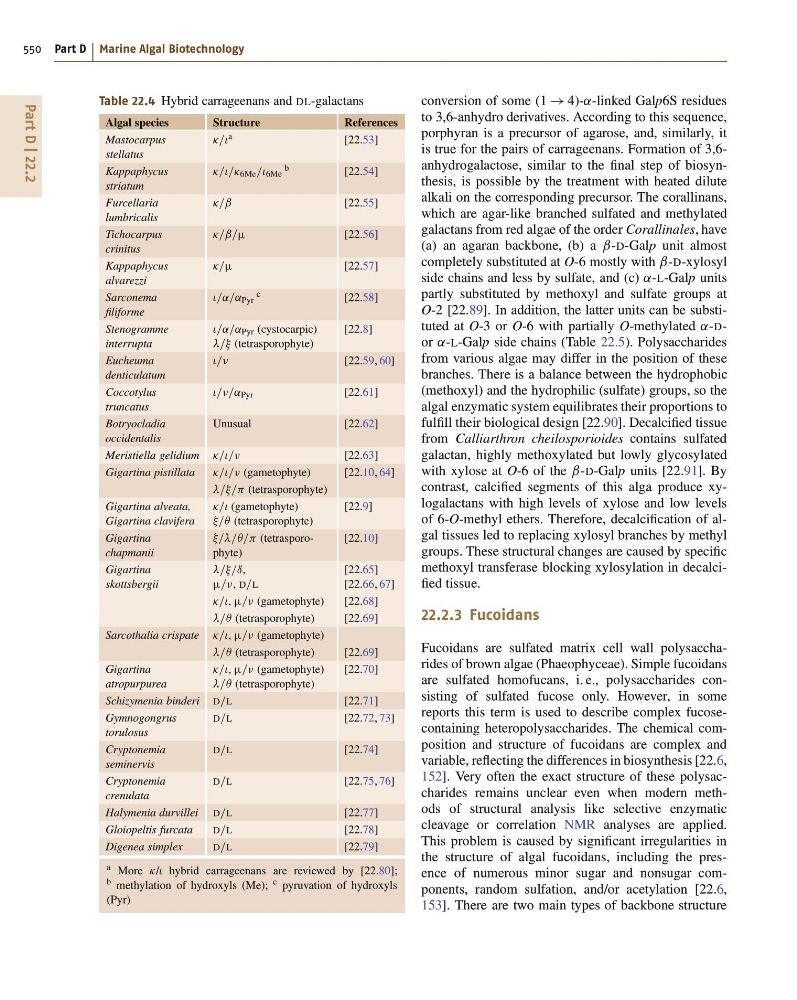
Table 22.4 Hybrid carrageenans and DL-galactans
Algal species
Structure
References
Mastocarpus
stellatus
Ä=Ã a
[22.53]
Kappaphycus
striatum
Ä=Ã=Ä 6Me =Ã 6Me
b
[22.54]
Furcellaria
lumbricalis
Ä=ˇ
[22.55]
Tichocarpus
crinitus
Ä=ˇ=
[22.56]
Kappaphycus
alvarezzi
Ä=
[22.57]
Sarconema
filiforme
Ã=˛=˛ Pyr
c
[22.58]
Stenogramme
interrupta
Ã=˛=˛ Pyr (cystocarpic)
== (tetrasporophyte)
[22.8]
Eucheuma
denticulatum
Ã==
[22.59, 60]
Coccotylus
truncatus
Ã===˛ Pyr
[22.61]
Botryocladia
occidentalis
Unusual
[22.62]
Meristiella gelidium Ä=Ã==
[22.63]
Gigartina pistillata
Ä=Ã== (gametophyte)
[22.10, 64]
==== (tetrasporophyte)
Gigartina alveata,
Gigartina clavifera
Ä=Ã (gametophyte)
=Â (tetrasporophyte)
[22.9]
Gigartina
chapmanii
===Â== (tetrasporophyte)
[22.10]
Gigartina
skottsbergii
===ı,
==, D=L
[22.65]
[22.66, 67]
Ä=Ã, == (gametophyte)
[22.68]
=Â (tetrasporophyte)
[22.69]
Sarcothalia crispate Ä=Ã, == (gametophyte)
=Â (tetrasporophyte)
[22.69]
Gigartina
atropurpurea
Ä=Ã, == (gametophyte)
=Â (tetrasporophyte)
[22.70]
Schizymenia binderi D=L
[22.71]
Gymnogongrus
torulosus
D=L
[22.72, 73]
Cryptonemia
seminervis
D=L
[22.74]
Cryptonemia
crenulata
D=L
[22.75, 76]
Halymenia durvillei D=L
[22.77]
Gloiopeltis furcata
D=L
[22.78]
Digenea simplex
D=L
[22.79]
a More Ä/Ã hybrid carrageenans are reviewed by [22.80];
b methylation of hydroxyls (Me);
c pyruvation of hydroxyls
(Pyr)
conversion of some (1 ! 4)-˛-linked Galp6S residues
to 3,6-anhydro derivatives. According to this sequence,
porphyran is a precursor of agarose, and, similarly, it
is true for the pairs of carrageenans. Formation of 3,6anhydrogalactose, similar to the final step of biosynthesis, is possible by the treatment with heated dilute
alkali on the corresponding precursor. The corallinans,
which are agar-like branched sulfated and methylated
galactans from red algae of the order Corallinales, have
(a) an agaran backbone, (b) a ˇ-D-Galp unit almost
completely substituted at O-6 mostly with ˇ-D-xylosyl
side chains and less by sulfate, and (c) ˛-L-Galp units
partly substituted by methoxyl and sulfate groups at
O-2 [22.89]. In addition, the latter units can be substituted at O-3 or O-6 with partially O-methylated ˛-Dor ˛-L-Galp side chains (Table 22.5). Polysaccharides
from various algae may differ in the position of these
branches. There is a balance between the hydrophobic
(methoxyl) and the hydrophilic (sulfate) groups, so the
algal enzymatic system equilibrates their proportions to
fulfill their biological design [22.90]. Decalcified tissue
from Calliarthron cheilosporioides contains sulfated
galactan, highly methoxylated but lowly glycosylated
with xylose at O-6 of the ˇ-D-Galp units [22.91]. By
contrast, calcified segments of this alga produce xylogalactans with high levels of xylose and low levels
of 6-O-methyl ethers. Therefore, decalcification of algal tissues led to replacing xylosyl branches by methyl
groups. These structural changes are caused by specific
methoxyl transferase blocking xylosylation in decalcified tissue.
22.2.3 Fucoidans
Fucoidans are sulfated matrix cell wall polysaccharides of brown algae (Phaeophyceae). Simple fucoidans
are sulfated homofucans, i. e., polysaccharides consisting of sulfated fucose only. However, in some
reports this term is used to describe complex fucosecontaining heteropolysaccharides. The chemical composition and structure of fucoidans are complex and
variable, reflecting the differences in biosynthesis [22.6,
152]. Very often the exact structure of these polysaccharides remains unclear even when modern methods of structural analysis like selective enzymatic
cleavage or correlation NMR analyses are applied.
This problem is caused by significant irregularities in
the structure of algal fucoidans, including the presence of numerous minor sugar and nonsugar components, random sulfation, and/or acetylation [22.6,
153]. There are two main types of backbone structure
550 Part D Marine Algal Biotechnology
Table 22.4 Hybrid carrageenans and DL-galactans
Algal species
Structure
References
Mastocarpus
stellatus
Ä=Ã a
[22.53]
Kappaphycus
striatum
Ä=Ã=Ä 6Me =Ã 6Me
b
[22.54]
Furcellaria
lumbricalis
Ä=ˇ
[22.55]
Tichocarpus
crinitus
Ä=ˇ=
[22.56]
Kappaphycus
alvarezzi
Ä=
[22.57]
Sarconema
filiforme
Ã=˛=˛ Pyr
c
[22.58]
Stenogramme
interrupta
Ã=˛=˛ Pyr (cystocarpic)
== (tetrasporophyte)
[22.8]
Eucheuma
denticulatum
Ã==
[22.59, 60]
Coccotylus
truncatus
Ã===˛ Pyr
[22.61]
Botryocladia
occidentalis
Unusual
[22.62]
Meristiella gelidium Ä=Ã==
[22.63]
Gigartina pistillata
Ä=Ã== (gametophyte)
[22.10, 64]
==== (tetrasporophyte)
Gigartina alveata,
Gigartina clavifera
Ä=Ã (gametophyte)
=Â (tetrasporophyte)
[22.9]
Gigartina
chapmanii
===Â== (tetrasporophyte)
[22.10]
Gigartina
skottsbergii
===ı,
==, D=L
[22.65]
[22.66, 67]
Ä=Ã, == (gametophyte)
[22.68]
=Â (tetrasporophyte)
[22.69]
Sarcothalia crispate Ä=Ã, == (gametophyte)
=Â (tetrasporophyte)
[22.69]
Gigartina
atropurpurea
Ä=Ã, == (gametophyte)
=Â (tetrasporophyte)
[22.70]
Schizymenia binderi D=L
[22.71]
Gymnogongrus
torulosus
D=L
[22.72, 73]
Cryptonemia
seminervis
D=L
[22.74]
Cryptonemia
crenulata
D=L
[22.75, 76]
Halymenia durvillei D=L
[22.77]
Gloiopeltis furcata
D=L
[22.78]
Digenea simplex
D=L
[22.79]
a More Ä/Ã hybrid carrageenans are reviewed by [22.80];
b methylation of hydroxyls (Me);
c pyruvation of hydroxyls
(Pyr)
conversion of some (1 ! 4)-˛-linked Galp6S residues
to 3,6-anhydro derivatives. According to this sequence,
porphyran is a precursor of agarose, and, similarly, it
is true for the pairs of carrageenans. Formation of 3,6anhydrogalactose, similar to the final step of biosynthesis, is possible by the treatment with heated dilute
alkali on the corresponding precursor. The corallinans,
which are agar-like branched sulfated and methylated
galactans from red algae of the order Corallinales, have
(a) an agaran backbone, (b) a ˇ-D-Galp unit almost
completely substituted at O-6 mostly with ˇ-D-xylosyl
side chains and less by sulfate, and (c) ˛-L-Galp units
partly substituted by methoxyl and sulfate groups at
O-2 [22.89]. In addition, the latter units can be substituted at O-3 or O-6 with partially O-methylated ˛-Dor ˛-L-Galp side chains (Table 22.5). Polysaccharides
from various algae may differ in the position of these
branches. There is a balance between the hydrophobic
(methoxyl) and the hydrophilic (sulfate) groups, so the
algal enzymatic system equilibrates their proportions to
fulfill their biological design [22.90]. Decalcified tissue
from Calliarthron cheilosporioides contains sulfated
galactan, highly methoxylated but lowly glycosylated
with xylose at O-6 of the ˇ-D-Galp units [22.91]. By
contrast, calcified segments of this alga produce xylogalactans with high levels of xylose and low levels
of 6-O-methyl ethers. Therefore, decalcification of algal tissues led to replacing xylosyl branches by methyl
groups. These structural changes are caused by specific
methoxyl transferase blocking xylosylation in decalcified tissue.
22.2.3 Fucoidans
Fucoidans are sulfated matrix cell wall polysaccharides of brown algae (Phaeophyceae). Simple fucoidans
are sulfated homofucans, i. e., polysaccharides consisting of sulfated fucose only. However, in some
reports this term is used to describe complex fucosecontaining heteropolysaccharides. The chemical composition and structure of fucoidans are complex and
variable, reflecting the differences in biosynthesis [22.6,
152]. Very often the exact structure of these polysaccharides remains unclear even when modern methods of structural analysis like selective enzymatic
cleavage or correlation NMR analyses are applied.
This problem is caused by significant irregularities in
the structure of algal fucoidans, including the presence of numerous minor sugar and nonsugar components, random sulfation, and/or acetylation [22.6,
153]. There are two main types of backbone structure