

Cell Wall Polysaccharides of Marine Algae 22.2 Structural Diversity of Algal Polysaccharides 549
Part D | 22.2
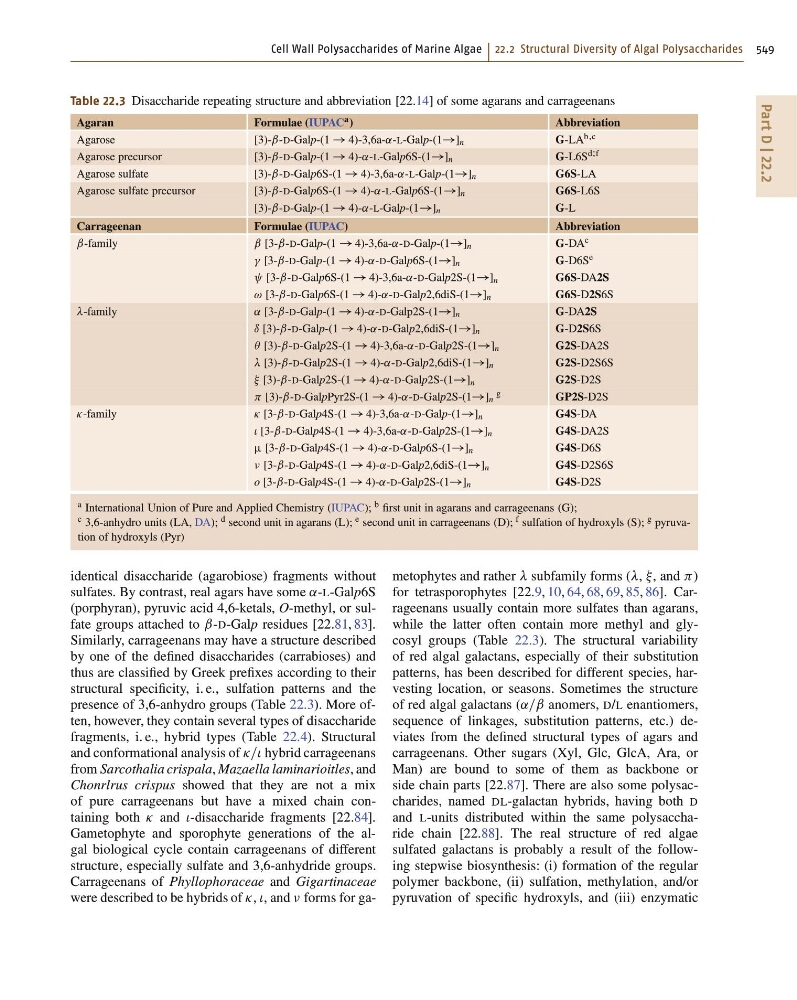
Table 22.3 Disaccharide repeating structure and abbreviation [22.14] of some agarans and carrageenans
Agaran
Formulae (IUPAC
a )
Abbreviation
Agarose
[3)-ˇ-D-Galp-(1 ! 4)-3,6a-˛-L-Galp-(1!] n
G-LA b;c
Agarose precursor
[3)-ˇ-D-Galp-(1 ! 4)-˛-L-Galp6S-(1!] n
G-L6S dIf
Agarose sulfate
[3)-ˇ-D-Galp6S-(1 ! 4)-3,6a-˛-L-Galp-(1!] n
G6S-LA
Agarose sulfate precursor
[3)-ˇ-D-Galp6S-(1 ! 4)-˛-L-Galp6S-(1!] n
G6S-L6S
[3)-ˇ-D-Galp-(1 ! 4)-˛-L-Galp-(1!] n
G-L
Carrageenan
Formulae (IUPAC)
Abbreviation
ˇ-family
ˇ [3-ˇ-D-Galp-(1 ! 4)-3,6a-˛-D-Galp-(1!] n
G-DA c
[3-ˇ-D-Galp-(1 ! 4)-˛-D-Galp6S-(1!] n
G-D6S
e
[3-ˇ-D-Galp6S-(1 ! 4)-3,6a-˛-D-Galp2S-(1!] n
G6S-DA2S
! [3-ˇ-D-Galp6S-(1 ! 4)-˛-D-Galp2,6diS-(1!] n
G6S-D2S6S
˛ [3-ˇ-D-Galp-(1 ! 4)-˛-D-Galp2S-(1!] n
G-DA2S
ı [3)-ˇ-D-Galp-(1 ! 4)-˛-D-Galp2,6diS-(1!] n
G-D2S6S
 [3)-ˇ-D-Galp2S-(1 ! 4)-3,6a-˛-D-Galp2S-(1!] n
G2S-DA2S
[3)-ˇ-D-Galp2S-(1 ! 4)-˛-D-Galp2,6diS-(1!] n
G2S-D2S6S
[3)-ˇ-D-Galp2S-(1 ! 4)-˛-D-Galp2S-(1!] n
G2S-D2S
[3)-ˇ-D-GalpPyr2S-(1 ! 4)-˛-D-Galp2S-(1!] n
g
GP2S-D2S
Ä-family
Ä [3-ˇ-D-Galp4S-(1 ! 4)-3,6a-˛-D-Galp-(1!] n
G4S-DA
à [3-ˇ-D-Galp4S-(1 ! 4)-3,6a-˛-D-Galp2S-(1!] n
G4S-DA2S
[3-ˇ-D-Galp4S-(1 ! 4)-˛-D-Galp6S-(1!] n
G4S-D6S
[3-ˇ-D-Galp4S-(1 ! 4)-˛-D-Galp2,6diS-(1!] n
G4S-D2S6S
o [3-ˇ-D-Galp4S-(1 ! 4)-˛-D-Galp2S-(1!] n
G4S-D2S
a International Union of Pure and Applied Chemistry (IUPAC); b first unit in agarans and carrageenans (G);
c 3,6-anhydro units (LA, DA); d second unit in agarans (L); e second unit in carrageenans (D); f sulfation of hydroxyls (S); g pyruvation of hydroxyls (Pyr)
identical disaccharide (agarobiose) fragments without
sulfates. By contrast, real agars have some ˛-L-Galp6S
(porphyran), pyruvic acid 4,6-ketals, O-methyl, or sulfate groups attached to ˇ-D-Galp residues [22.81, 83].
Similarly, carrageenans may have a structure described
by one of the defined disaccharides (carrabioses) and
thus are classified by Greek prefixes according to their
structural specificity, i. e., sulfation patterns and the
presence of 3,6-anhydro groups (Table 22.3). More often, however, they contain several types of disaccharide
fragments, i. e., hybrid types (Table 22.4). Structural
and conformational analysis of Ä=Ã hybrid carrageenans
from Sarcothalia crispala, Mazaella laminarioitles, and
Chonrlrus crispus showed that they are not a mix
of pure carrageenans but have a mixed chain containing both Ä and Ã-disaccharide fragments [22.84].
Gametophyte and sporophyte generations of the algal biological cycle contain carrageenans of different
structure, especially sulfate and 3,6-anhydride groups.
Carrageenans of Phyllophoraceae and Gigartinaceae
were described to be hybrids of Ä, Ã, and forms for gametophytes and rather subfamily forms (, , and )
for tetrasporophytes [22.9, 10, 64, 68, 69, 85, 86]. Carrageenans usually contain more sulfates than agarans,
while the latter often contain more methyl and glycosyl groups (Table 22.3). The structural variability
of red algal galactans, especially of their substitution
patterns, has been described for different species, harvesting location, or seasons. Sometimes the structure
of red algal galactans (˛=ˇ anomers, D/L enantiomers,
sequence of linkages, substitution patterns, etc.) deviates from the defined structural types of agars and
carrageenans. Other sugars (Xyl, Glc, GlcA, Ara, or
Man) are bound to some of them as backbone or
side chain parts [22.87]. There are also some polysaccharides, named DL-galactan hybrids, having both D
and L-units distributed within the same polysaccharide chain [22.88]. The real structure of red algae
sulfated galactans is probably a result of the following stepwise biosynthesis: (i) formation of the regular
polymer backbone, (ii) sulfation, methylation, and/or
pyruvation of specific hydroxyls, and (iii) enzymatic
Part D | 22.2
Table 22.3 Disaccharide repeating structure and abbreviation [22.14] of some agarans and carrageenans
Agaran
Formulae (IUPAC
a )
Abbreviation
Agarose
[3)-ˇ-D-Galp-(1 ! 4)-3,6a-˛-L-Galp-(1!] n
G-LA b;c
Agarose precursor
[3)-ˇ-D-Galp-(1 ! 4)-˛-L-Galp6S-(1!] n
G-L6S dIf
Agarose sulfate
[3)-ˇ-D-Galp6S-(1 ! 4)-3,6a-˛-L-Galp-(1!] n
G6S-LA
Agarose sulfate precursor
[3)-ˇ-D-Galp6S-(1 ! 4)-˛-L-Galp6S-(1!] n
G6S-L6S
[3)-ˇ-D-Galp-(1 ! 4)-˛-L-Galp-(1!] n
G-L
Carrageenan
Formulae (IUPAC)
Abbreviation
ˇ-family
ˇ [3-ˇ-D-Galp-(1 ! 4)-3,6a-˛-D-Galp-(1!] n
G-DA c
[3-ˇ-D-Galp-(1 ! 4)-˛-D-Galp6S-(1!] n
G-D6S
e
[3-ˇ-D-Galp6S-(1 ! 4)-3,6a-˛-D-Galp2S-(1!] n
G6S-DA2S
! [3-ˇ-D-Galp6S-(1 ! 4)-˛-D-Galp2,6diS-(1!] n
G6S-D2S6S
˛ [3-ˇ-D-Galp-(1 ! 4)-˛-D-Galp2S-(1!] n
G-DA2S
ı [3)-ˇ-D-Galp-(1 ! 4)-˛-D-Galp2,6diS-(1!] n
G-D2S6S
 [3)-ˇ-D-Galp2S-(1 ! 4)-3,6a-˛-D-Galp2S-(1!] n
G2S-DA2S
[3)-ˇ-D-Galp2S-(1 ! 4)-˛-D-Galp2,6diS-(1!] n
G2S-D2S6S
[3)-ˇ-D-Galp2S-(1 ! 4)-˛-D-Galp2S-(1!] n
G2S-D2S
[3)-ˇ-D-GalpPyr2S-(1 ! 4)-˛-D-Galp2S-(1!] n
g
GP2S-D2S
Ä-family
Ä [3-ˇ-D-Galp4S-(1 ! 4)-3,6a-˛-D-Galp-(1!] n
G4S-DA
à [3-ˇ-D-Galp4S-(1 ! 4)-3,6a-˛-D-Galp2S-(1!] n
G4S-DA2S
[3-ˇ-D-Galp4S-(1 ! 4)-˛-D-Galp6S-(1!] n
G4S-D6S
[3-ˇ-D-Galp4S-(1 ! 4)-˛-D-Galp2,6diS-(1!] n
G4S-D2S6S
o [3-ˇ-D-Galp4S-(1 ! 4)-˛-D-Galp2S-(1!] n
G4S-D2S
a International Union of Pure and Applied Chemistry (IUPAC); b first unit in agarans and carrageenans (G);
c 3,6-anhydro units (LA, DA); d second unit in agarans (L); e second unit in carrageenans (D); f sulfation of hydroxyls (S); g pyruvation of hydroxyls (Pyr)
identical disaccharide (agarobiose) fragments without
sulfates. By contrast, real agars have some ˛-L-Galp6S
(porphyran), pyruvic acid 4,6-ketals, O-methyl, or sulfate groups attached to ˇ-D-Galp residues [22.81, 83].
Similarly, carrageenans may have a structure described
by one of the defined disaccharides (carrabioses) and
thus are classified by Greek prefixes according to their
structural specificity, i. e., sulfation patterns and the
presence of 3,6-anhydro groups (Table 22.3). More often, however, they contain several types of disaccharide
fragments, i. e., hybrid types (Table 22.4). Structural
and conformational analysis of Ä=Ã hybrid carrageenans
from Sarcothalia crispala, Mazaella laminarioitles, and
Chonrlrus crispus showed that they are not a mix
of pure carrageenans but have a mixed chain containing both Ä and Ã-disaccharide fragments [22.84].
Gametophyte and sporophyte generations of the algal biological cycle contain carrageenans of different
structure, especially sulfate and 3,6-anhydride groups.
Carrageenans of Phyllophoraceae and Gigartinaceae
were described to be hybrids of Ä, Ã, and forms for gametophytes and rather subfamily forms (, , and )
for tetrasporophytes [22.9, 10, 64, 68, 69, 85, 86]. Carrageenans usually contain more sulfates than agarans,
while the latter often contain more methyl and glycosyl groups (Table 22.3). The structural variability
of red algal galactans, especially of their substitution
patterns, has been described for different species, harvesting location, or seasons. Sometimes the structure
of red algal galactans (˛=ˇ anomers, D/L enantiomers,
sequence of linkages, substitution patterns, etc.) deviates from the defined structural types of agars and
carrageenans. Other sugars (Xyl, Glc, GlcA, Ara, or
Man) are bound to some of them as backbone or
side chain parts [22.87]. There are also some polysaccharides, named DL-galactan hybrids, having both D
and L-units distributed within the same polysaccharide chain [22.88]. The real structure of red algae
sulfated galactans is probably a result of the following stepwise biosynthesis: (i) formation of the regular
polymer backbone, (ii) sulfation, methylation, and/or
pyruvation of specific hydroxyls, and (iii) enzymatic