

Cell Wall Polysaccharides of Marine Algae 22.2 Structural Diversity of Algal Polysaccharides 545
Part D | 22.2
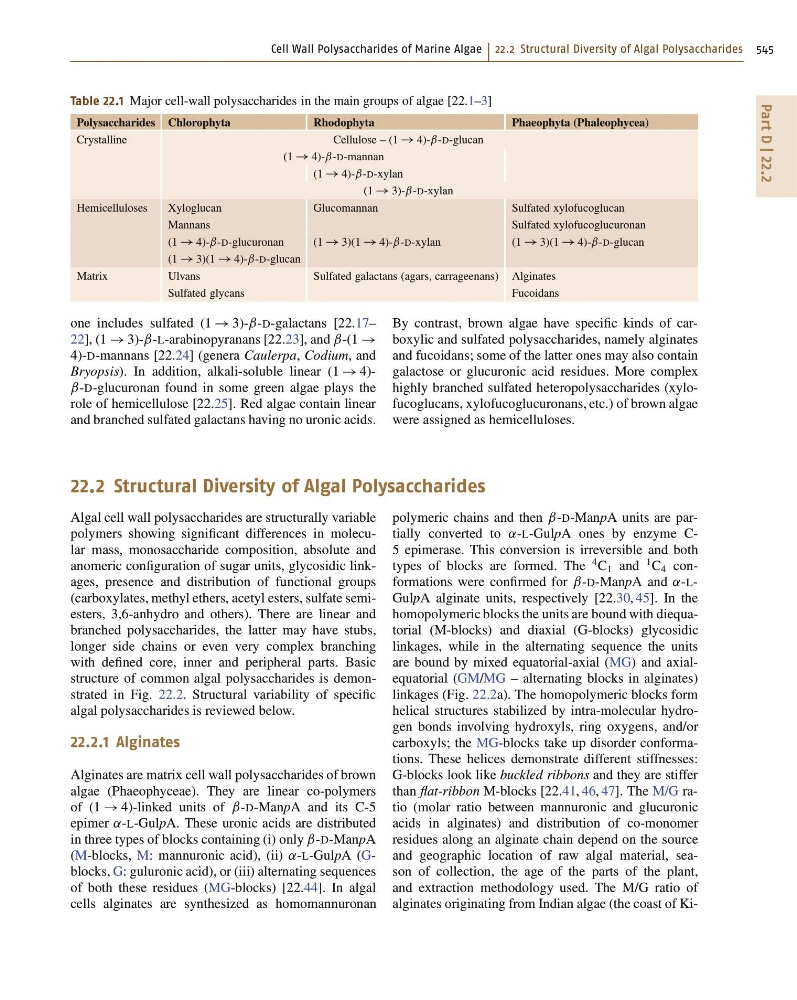
Table 22.1 Major cell-wall polysaccharides in the main groups of algae [22.1–3]
Polysaccharides Chlorophyta
Rhodophyta
Phaeophyta (Phaleophycea)
Crystalline
Cellulose – (1 ! 4)-ˇ-D-glucan
(1 ! 4)-ˇ-D-mannan
(1 ! 4)-ˇ-D-xylan
(1 ! 3)-ˇ-D-xylan
Hemicelluloses
Xyloglucan
Glucomannan
Sulfated xylofucoglucan
Mannans
Sulfated xylofucoglucuronan
(1 ! 4)-ˇ-D-glucuronan
(1 ! 3)(1 ! 4)-ˇ-D-xylan
(1 ! 3)(1 ! 4)-ˇ-D-glucan
(1 ! 3)(1 ! 4)-ˇ-D-glucan
Matrix
Ulvans
Sulfated galactans (agars, carrageenans) Alginates
Sulfated glycans
Fucoidans
one includes sulfated (1 ! 3)-ˇ-D-galactans [22.17–
22], (1 ! 3)-ˇ-L-arabinopyranans [22.23], and ˇ-(1 !
4)-D-mannans [22.24] (genera Caulerpa, Codium, and
Bryopsis). In addition, alkali-soluble linear (1 ! 4)ˇ-D-glucuronan found in some green algae plays the
role of hemicellulose [22.25]. Red algae contain linear
and branched sulfated galactans having no uronic acids.
By contrast, brown algae have specific kinds of carboxylic and sulfated polysaccharides, namely alginates
and fucoidans; some of the latter ones may also contain
galactose or glucuronic acid residues. More complex
highly branched sulfated heteropolysaccharides (xylofucoglucans, xylofucoglucuronans, etc.) of brown algae
were assigned as hemicelluloses.
22.2 Structural Diversity of Algal Polysaccharides
Algal cell wall polysaccharides are structurally variable
polymers showing significant differences in molecular mass, monosaccharide composition, absolute and
anomeric configuration of sugar units, glycosidic linkages, presence and distribution of functional groups
(carboxylates, methyl ethers, acetyl esters, sulfate semiesters, 3,6-anhydro and others). There are linear and
branched polysaccharides, the latter may have stubs,
longer side chains or even very complex branching
with defined core, inner and peripheral parts. Basic
structure of common algal polysaccharides is demonstrated in Fig. 22.2. Structural variability of specific
algal polysaccharides is reviewed below.
22.2.1 Alginates
Alginates are matrix cell wall polysaccharides of brown
algae (Phaeophyceae). They are linear co-polymers
of (1 ! 4)-linked units of ˇ-D-ManpA and its C-5
epimer ˛-L-GulpA. These uronic acids are distributed
in three types of blocks containing (i) only ˇ-D-ManpA
(M-blocks, M: mannuronic acid), (ii) ˛-L-GulpA (Gblocks, G: guluronic acid), or (iii) alternating sequences
of both these residues (MG-blocks) [22.44]. In algal
cells alginates are synthesized as homomannuronan
polymeric chains and then ˇ-D-ManpA units are partially converted to ˛-L-GulpA ones by enzyme C5 epimerase. This conversion is irreversible and both
types of blocks are formed. The
4 C 1 and
1 C 4 conformations were confirmed for ˇ-D-ManpA and ˛-LGulpA alginate units, respectively [22.30, 45]. In the
homopolymeric blocks the units are bound with diequatorial (M-blocks) and diaxial (G-blocks) glycosidic
linkages, while in the alternating sequence the units
are bound by mixed equatorial-axial (MG) and axialequatorial (GM/MG – alternating blocks in alginates)
linkages (Fig. 22.2a). The homopolymeric blocks form
helical structures stabilized by intra-molecular hydrogen bonds involving hydroxyls, ring oxygens, and/or
carboxyls; the MG-blocks take up disorder conformations. These helices demonstrate different stiffnesses:
G-blocks look like buckled ribbons and they are stiffer
than flat-ribbon M-blocks [22.41, 46, 47]. The M/G ratio (molar ratio between mannuronic and glucuronic
acids in alginates) and distribution of co-monomer
residues along an alginate chain depend on the source
and geographic location of raw algal material, season of collection, the age of the parts of the plant,
and extraction methodology used. The M/G ratio of
alginates originating from Indian algae (the coast of Ki-
Part D | 22.2
Table 22.1 Major cell-wall polysaccharides in the main groups of algae [22.1–3]
Polysaccharides Chlorophyta
Rhodophyta
Phaeophyta (Phaleophycea)
Crystalline
Cellulose – (1 ! 4)-ˇ-D-glucan
(1 ! 4)-ˇ-D-mannan
(1 ! 4)-ˇ-D-xylan
(1 ! 3)-ˇ-D-xylan
Hemicelluloses
Xyloglucan
Glucomannan
Sulfated xylofucoglucan
Mannans
Sulfated xylofucoglucuronan
(1 ! 4)-ˇ-D-glucuronan
(1 ! 3)(1 ! 4)-ˇ-D-xylan
(1 ! 3)(1 ! 4)-ˇ-D-glucan
(1 ! 3)(1 ! 4)-ˇ-D-glucan
Matrix
Ulvans
Sulfated galactans (agars, carrageenans) Alginates
Sulfated glycans
Fucoidans
one includes sulfated (1 ! 3)-ˇ-D-galactans [22.17–
22], (1 ! 3)-ˇ-L-arabinopyranans [22.23], and ˇ-(1 !
4)-D-mannans [22.24] (genera Caulerpa, Codium, and
Bryopsis). In addition, alkali-soluble linear (1 ! 4)ˇ-D-glucuronan found in some green algae plays the
role of hemicellulose [22.25]. Red algae contain linear
and branched sulfated galactans having no uronic acids.
By contrast, brown algae have specific kinds of carboxylic and sulfated polysaccharides, namely alginates
and fucoidans; some of the latter ones may also contain
galactose or glucuronic acid residues. More complex
highly branched sulfated heteropolysaccharides (xylofucoglucans, xylofucoglucuronans, etc.) of brown algae
were assigned as hemicelluloses.
22.2 Structural Diversity of Algal Polysaccharides
Algal cell wall polysaccharides are structurally variable
polymers showing significant differences in molecular mass, monosaccharide composition, absolute and
anomeric configuration of sugar units, glycosidic linkages, presence and distribution of functional groups
(carboxylates, methyl ethers, acetyl esters, sulfate semiesters, 3,6-anhydro and others). There are linear and
branched polysaccharides, the latter may have stubs,
longer side chains or even very complex branching
with defined core, inner and peripheral parts. Basic
structure of common algal polysaccharides is demonstrated in Fig. 22.2. Structural variability of specific
algal polysaccharides is reviewed below.
22.2.1 Alginates
Alginates are matrix cell wall polysaccharides of brown
algae (Phaeophyceae). They are linear co-polymers
of (1 ! 4)-linked units of ˇ-D-ManpA and its C-5
epimer ˛-L-GulpA. These uronic acids are distributed
in three types of blocks containing (i) only ˇ-D-ManpA
(M-blocks, M: mannuronic acid), (ii) ˛-L-GulpA (Gblocks, G: guluronic acid), or (iii) alternating sequences
of both these residues (MG-blocks) [22.44]. In algal
cells alginates are synthesized as homomannuronan
polymeric chains and then ˇ-D-ManpA units are partially converted to ˛-L-GulpA ones by enzyme C5 epimerase. This conversion is irreversible and both
types of blocks are formed. The
4 C 1 and
1 C 4 conformations were confirmed for ˇ-D-ManpA and ˛-LGulpA alginate units, respectively [22.30, 45]. In the
homopolymeric blocks the units are bound with diequatorial (M-blocks) and diaxial (G-blocks) glycosidic
linkages, while in the alternating sequence the units
are bound by mixed equatorial-axial (MG) and axialequatorial (GM/MG – alternating blocks in alginates)
linkages (Fig. 22.2a). The homopolymeric blocks form
helical structures stabilized by intra-molecular hydrogen bonds involving hydroxyls, ring oxygens, and/or
carboxyls; the MG-blocks take up disorder conformations. These helices demonstrate different stiffnesses:
G-blocks look like buckled ribbons and they are stiffer
than flat-ribbon M-blocks [22.41, 46, 47]. The M/G ratio (molar ratio between mannuronic and glucuronic
acids in alginates) and distribution of co-monomer
residues along an alginate chain depend on the source
and geographic location of raw algal material, season of collection, the age of the parts of the plant,
and extraction methodology used. The M/G ratio of
alginates originating from Indian algae (the coast of Ki-