

Part D | 22.2
546 Part D Marine Algal Biotechnology
a)
b)
d)
e)
g)
h)
c)
OH
OH
OH
OH
HO
HO
OH
OH
OOC
O
O
O
O
O
O
O
O
G
G
M
M
α
α
–
OOC
–
OOC
–
OOC
–
OOC
–
OH
OH
OH
HO
O
O
O
O
O
α
O 3 SO
HO
OH
OH
OH
O
O
O
O
O
α
OSO 3
–
H 3 C
H 3 C
O
O
α
O 3 SO
–
–
OSO 3 –
f)
O
O
O
O
O 3 SO
–
H 3 C
O
O
α
OSO 3 –
H 3 C
OH
OH
OH
HO
O
O
α
α
OOC
–
H 3 C
O
O
O
O
O 3 SO
–
OH
OH
HO
α
O
O
OH
OH
α
H 3 C
O
O
O 3 SO
–
OH
α
OSO 3 –
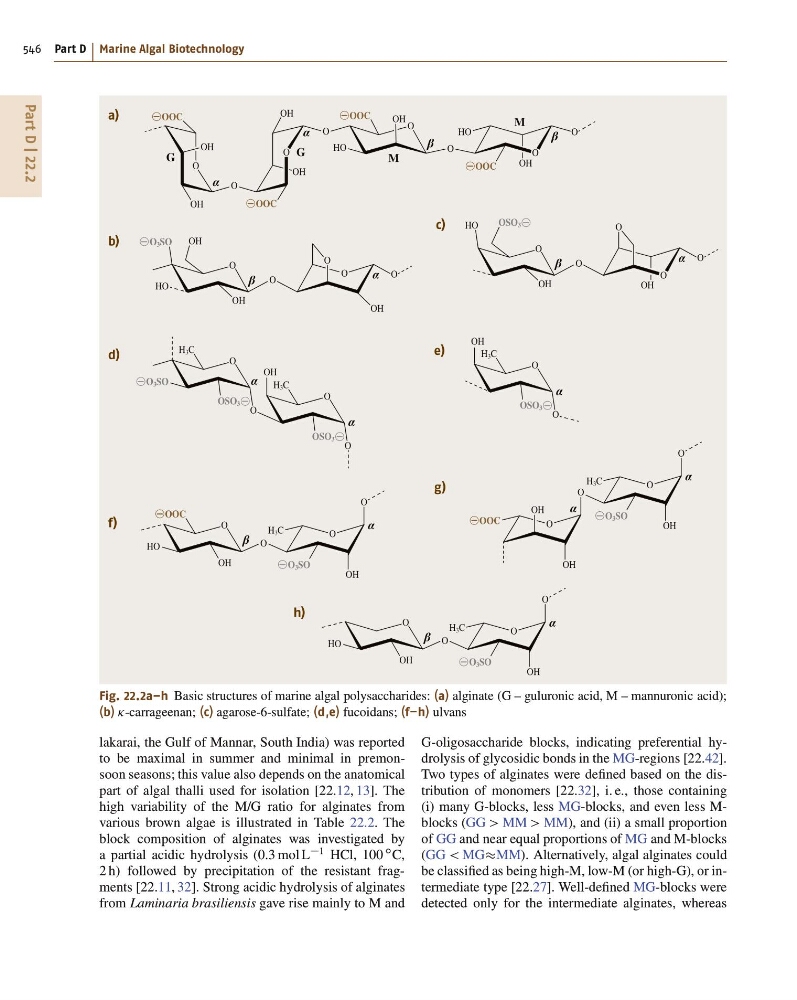
Fig. 22.2a–h Basic structures of marine algal polysaccharides: (a) alginate (G – guluronic acid, M – mannuronic acid);
(b) Ä-carrageenan; (c) agarose-6-sulfate; (d,e) fucoidans; (f–h) ulvans
lakarai, the Gulf of Mannar, South India) was reported
to be maximal in summer and minimal in premonsoon seasons; this value also depends on the anatomical
part of algal thalli used for isolation [22.12, 13]. The
high variability of the M/G ratio for alginates from
various brown algae is illustrated in Table 22.2. The
block composition of alginates was investigated by
a partial acidic hydrolysis (0:3 mol L
1 HCl, 100
ı C,
2 h) followed by precipitation of the resistant fragments [22.11, 32]. Strong acidic hydrolysis of alginates
from Laminaria brasiliensis gave rise mainly to M and
G-oligosaccharide blocks, indicating preferential hydrolysis of glycosidic bonds in the MG-regions [22.42].
Two types of alginates were defined based on the distribution of monomers [22.32], i. e., those containing
(i) many G-blocks, less MG-blocks, and even less Mblocks (GG > MM > MM), and (ii) a small proportion
of GG and near equal proportions of MG and M-blocks
(GG < MGMM). Alternatively, algal alginates could
be classified as being high-M, low-M (or high-G), or intermediate type [22.27]. Well-defined MG-blocks were
detected only for the intermediate alginates, whereas
546 Part D Marine Algal Biotechnology
a)
b)
d)
e)
g)
h)
c)
OH
OH
OH
OH
HO
HO
OH
OH
OOC
O
O
O
O
O
O
O
O
G
G
M
M
α
α
–
OOC
–
OOC
–
OOC
–
OOC
–
OH
OH
OH
HO
O
O
O
O
O
α
O 3 SO
HO
OH
OH
OH
O
O
O
O
O
α
OSO 3
–
H 3 C
H 3 C
O
O
α
O 3 SO
–
–
OSO 3 –
f)
O
O
O
O
O 3 SO
–
H 3 C
O
O
α
OSO 3 –
H 3 C
OH
OH
OH
HO
O
O
α
α
OOC
–
H 3 C
O
O
O
O
O 3 SO
–
OH
OH
HO
α
O
O
OH
OH
α
H 3 C
O
O
O 3 SO
–
OH
α
OSO 3 –
Fig. 22.2a–h Basic structures of marine algal polysaccharides: (a) alginate (G – guluronic acid, M – mannuronic acid);
(b) Ä-carrageenan; (c) agarose-6-sulfate; (d,e) fucoidans; (f–h) ulvans
lakarai, the Gulf of Mannar, South India) was reported
to be maximal in summer and minimal in premonsoon seasons; this value also depends on the anatomical
part of algal thalli used for isolation [22.12, 13]. The
high variability of the M/G ratio for alginates from
various brown algae is illustrated in Table 22.2. The
block composition of alginates was investigated by
a partial acidic hydrolysis (0:3 mol L
1 HCl, 100
ı C,
2 h) followed by precipitation of the resistant fragments [22.11, 32]. Strong acidic hydrolysis of alginates
from Laminaria brasiliensis gave rise mainly to M and
G-oligosaccharide blocks, indicating preferential hydrolysis of glycosidic bonds in the MG-regions [22.42].
Two types of alginates were defined based on the distribution of monomers [22.32], i. e., those containing
(i) many G-blocks, less MG-blocks, and even less Mblocks (GG > MM > MM), and (ii) a small proportion
of GG and near equal proportions of MG and M-blocks
(GG < MGMM). Alternatively, algal alginates could
be classified as being high-M, low-M (or high-G), or intermediate type [22.27]. Well-defined MG-blocks were
detected only for the intermediate alginates, whereas