

Part B | 13.2
394 Part B Tools and Methods in Marine Biotechnology
tude less than that required for microinjection. Several
reports have also appeared in the literature that describe successful transfer of transgenes into fish by
electroporating sperm instead of embryos [13.11, 70–
72]. Fish sperm remain un-activated in the presence
of 100% seminal fluid (i. e., dry sperm). Upon dilution of the dry sperm with any aqueous buffer, the
sperm will be activated and the window that sperm
remain active is very brief (< 30 s). Out of the active window sperm are non-motile and unable to fertilize eggs. Therefore, electroporation of fish sperm
needs to be conducted under a buffer condition that
sperm remain un-activated. In our laboratory, we found
that the dry sperm of rainbow trout can remain unactivated by making a 1 to 4 dilution with a phosphate buffered saline (PBS: 8 g=L NaCl, 0:2 g=L KCl,
1:44 g=L Na 2 HPO 4 , 0:24 g=L, KH 2 PO 4 , pH 7:6). With
this condition we have successfully transferred foreign genes into rainbow trout via sperm-mediated gene
transfer by electroporation.
Like insects, the sperm produced by male shrimp
are stored in the spermatophore. Upon copulation,
the spermatophore is transferred from the reproductive
tracts of males to the reproductive tracts of females
to fertilize eggs. By the time that eggs are spawned
by reproductively mature females, the embryos are already in multiple cell stage, which is not suitable for
conducting gene transfer by electroporation or microina)
c)
b)
d)
Placement of sperm into thylecum
Placement of sperm into thylecum
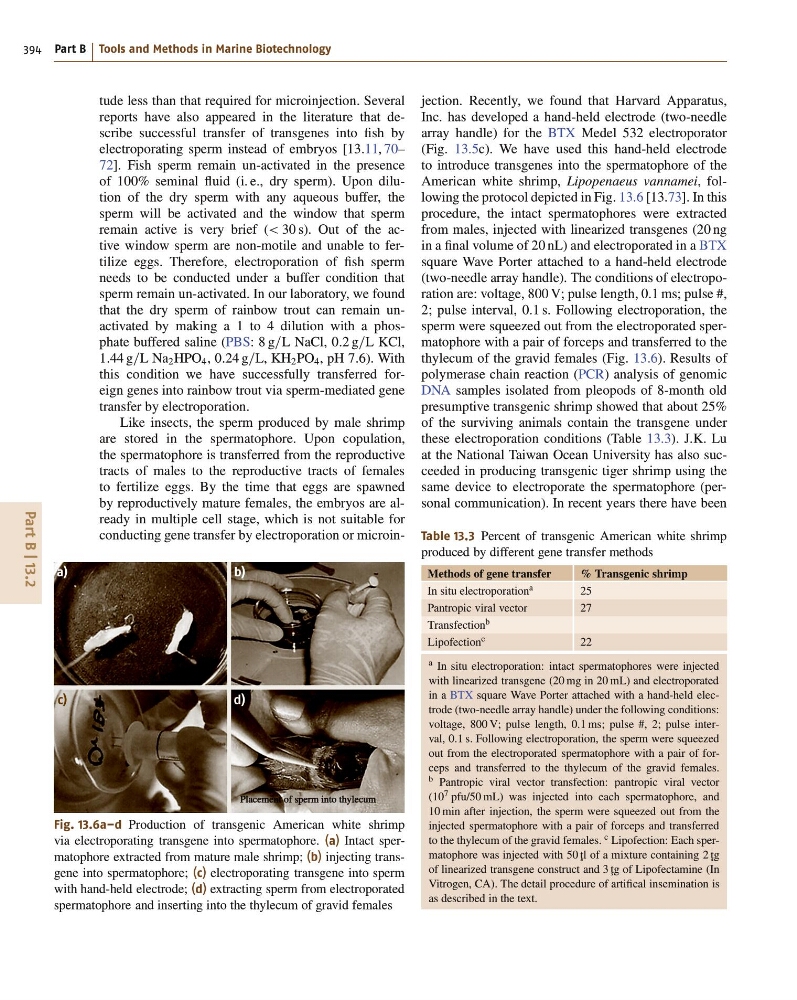
Fig. 13.6a–d Production of transgenic American white shrimp
via electroporating transgene into spermatophore. (a) Intact spermatophore extracted from mature male shrimp; (b) injecting transgene into spermatophore; (c) electroporating transgene into sperm
with hand-held electrode; (d) extracting sperm from electroporated
spermatophore and inserting into the thylecum of gravid females
jection. Recently, we found that Harvard Apparatus,
Inc. has developed a hand-held electrode (two-needle
array handle) for the BTX Medel 532 electroporator
(Fig. 13.5c). We have used this hand-held electrode
to introduce transgenes into the spermatophore of the
American white shrimp, Lipopenaeus vannamei, following the protocol depicted in Fig. 13.6 [13.73]. In this
procedure, the intact spermatophores were extracted
from males, injected with linearized transgenes (20 ng
in a final volume of 20 nL) and electroporated in a BTX
square Wave Porter attached to a hand-held electrode
(two-needle array handle). The conditions of electroporation are: voltage, 800 V; pulse length, 0:1 ms; pulse #,
2; pulse interval, 0:1 s. Following electroporation, the
sperm were squeezed out from the electroporated spermatophore with a pair of forceps and transferred to the
thylecum of the gravid females (Fig. 13.6). Results of
polymerase chain reaction (PCR) analysis of genomic
DNA samples isolated from pleopods of 8-month old
presumptive transgenic shrimp showed that about 25%
of the surviving animals contain the transgene under
these electroporation conditions (Table 13.3). J.K. Lu
at the National Taiwan Ocean University has also succeeded in producing transgenic tiger shrimp using the
same device to electroporate the spermatophore (personal communication). In recent years there have been
Table 13.3 Percent of transgenic American white shrimp
produced by different gene transfer methods
Methods of gene transfer
% Transgenic shrimp
In situ electroporation a
25
Pantropic viral vector
27
Transfection b
Lipofection c
22
a In situ electroporation: intact spermatophores were injected
with linearized transgene (20 mg in 20 mL) and electroporated
in a BTX square Wave Porter attached with a hand-held electrode (two-needle array handle) under the following conditions:
voltage, 800 V; pulse length, 0:1 ms; pulse #, 2; pulse interval, 0:1 s. Following electroporation, the sperm were squeezed
out from the electroporated spermatophore with a pair of forceps and transferred to the thylecum of the gravid females.
b Pantropic viral vector transfection: pantropic viral vector
(10 7 pfu/50 mL) was injected into each spermatophore, and
10 min after injection, the sperm were squeezed out from the
injected spermatophore with a pair of forceps and transferred
to the thylecum of the gravid females. c Lipofection: Each spermatophore was injected with 50 ¸ tl of a mixture containing 2 ¸ tg
of linearized transgene construct and 3 ¸ tg of Lipofectamine (In
Vitrogen, CA). The detail procedure of artifical insemination is
as described in the text.
394 Part B Tools and Methods in Marine Biotechnology
tude less than that required for microinjection. Several
reports have also appeared in the literature that describe successful transfer of transgenes into fish by
electroporating sperm instead of embryos [13.11, 70–
72]. Fish sperm remain un-activated in the presence
of 100% seminal fluid (i. e., dry sperm). Upon dilution of the dry sperm with any aqueous buffer, the
sperm will be activated and the window that sperm
remain active is very brief (< 30 s). Out of the active window sperm are non-motile and unable to fertilize eggs. Therefore, electroporation of fish sperm
needs to be conducted under a buffer condition that
sperm remain un-activated. In our laboratory, we found
that the dry sperm of rainbow trout can remain unactivated by making a 1 to 4 dilution with a phosphate buffered saline (PBS: 8 g=L NaCl, 0:2 g=L KCl,
1:44 g=L Na 2 HPO 4 , 0:24 g=L, KH 2 PO 4 , pH 7:6). With
this condition we have successfully transferred foreign genes into rainbow trout via sperm-mediated gene
transfer by electroporation.
Like insects, the sperm produced by male shrimp
are stored in the spermatophore. Upon copulation,
the spermatophore is transferred from the reproductive
tracts of males to the reproductive tracts of females
to fertilize eggs. By the time that eggs are spawned
by reproductively mature females, the embryos are already in multiple cell stage, which is not suitable for
conducting gene transfer by electroporation or microina)
c)
b)
d)
Placement of sperm into thylecum
Placement of sperm into thylecum
Fig. 13.6a–d Production of transgenic American white shrimp
via electroporating transgene into spermatophore. (a) Intact spermatophore extracted from mature male shrimp; (b) injecting transgene into spermatophore; (c) electroporating transgene into sperm
with hand-held electrode; (d) extracting sperm from electroporated
spermatophore and inserting into the thylecum of gravid females
jection. Recently, we found that Harvard Apparatus,
Inc. has developed a hand-held electrode (two-needle
array handle) for the BTX Medel 532 electroporator
(Fig. 13.5c). We have used this hand-held electrode
to introduce transgenes into the spermatophore of the
American white shrimp, Lipopenaeus vannamei, following the protocol depicted in Fig. 13.6 [13.73]. In this
procedure, the intact spermatophores were extracted
from males, injected with linearized transgenes (20 ng
in a final volume of 20 nL) and electroporated in a BTX
square Wave Porter attached to a hand-held electrode
(two-needle array handle). The conditions of electroporation are: voltage, 800 V; pulse length, 0:1 ms; pulse #,
2; pulse interval, 0:1 s. Following electroporation, the
sperm were squeezed out from the electroporated spermatophore with a pair of forceps and transferred to the
thylecum of the gravid females (Fig. 13.6). Results of
polymerase chain reaction (PCR) analysis of genomic
DNA samples isolated from pleopods of 8-month old
presumptive transgenic shrimp showed that about 25%
of the surviving animals contain the transgene under
these electroporation conditions (Table 13.3). J.K. Lu
at the National Taiwan Ocean University has also succeeded in producing transgenic tiger shrimp using the
same device to electroporate the spermatophore (personal communication). In recent years there have been
Table 13.3 Percent of transgenic American white shrimp
produced by different gene transfer methods
Methods of gene transfer
% Transgenic shrimp
In situ electroporation a
25
Pantropic viral vector
27
Transfection b
Lipofection c
22
a In situ electroporation: intact spermatophores were injected
with linearized transgene (20 mg in 20 mL) and electroporated
in a BTX square Wave Porter attached with a hand-held electrode (two-needle array handle) under the following conditions:
voltage, 800 V; pulse length, 0:1 ms; pulse #, 2; pulse interval, 0:1 s. Following electroporation, the sperm were squeezed
out from the electroporated spermatophore with a pair of forceps and transferred to the thylecum of the gravid females.
b Pantropic viral vector transfection: pantropic viral vector
(10 7 pfu/50 mL) was injected into each spermatophore, and
10 min after injection, the sperm were squeezed out from the
injected spermatophore with a pair of forceps and transferred
to the thylecum of the gravid females. c Lipofection: Each spermatophore was injected with 50 ¸ tl of a mixture containing 2 ¸ tg
of linearized transgene construct and 3 ¸ tg of Lipofectamine (In
Vitrogen, CA). The detail procedure of artifical insemination is
as described in the text.