

Part B | 12.7
362 Part B Tools and Methods in Marine Biotechnology
Effluent
reservoir
Influent reservoir
(flow rates: 50,
200 or 400 mL/d)
Cotton
filter
Peristaltic
pump
Fluorescent lamp
Tube reactor with P. laminosum
immobilized on hollow fibers
Growth chamber
Heater at 43 °C
P
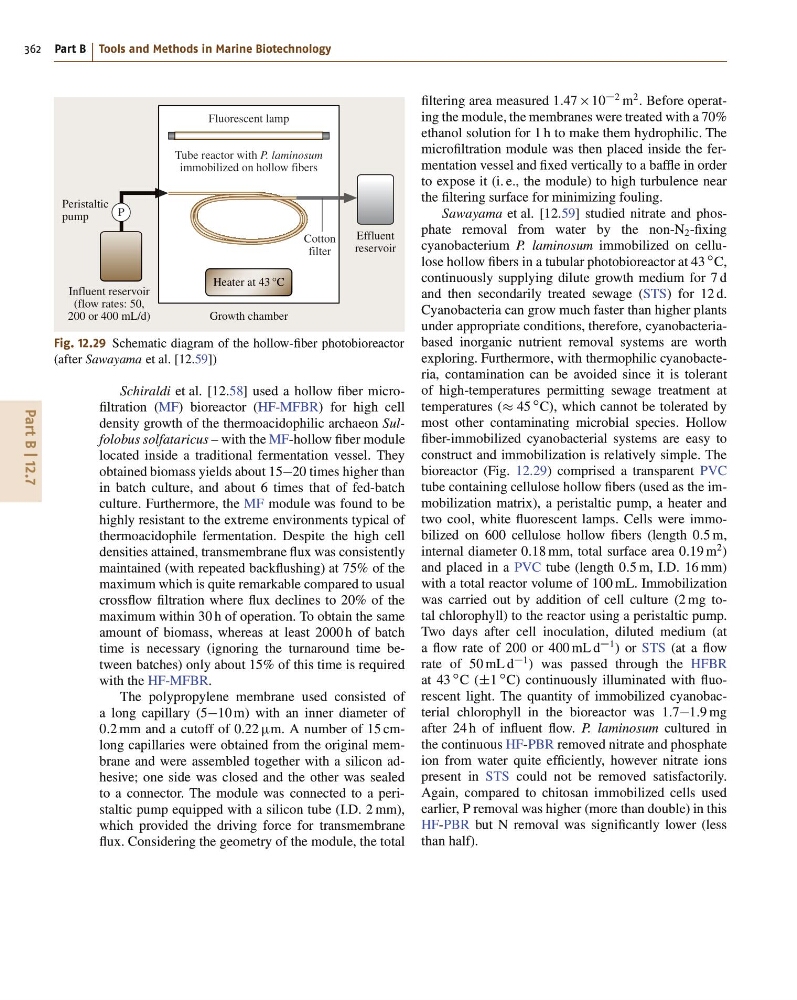
Fig. 12.29 Schematic diagram of the hollow-fiber photobioreactor
(after Sawayama et al. [12.59])
Schiraldi et al. [12.58] used a hollow fiber microfiltration (MF) bioreactor (HF-MFBR) for high cell
density growth of the thermoacidophilic archaeon Sulfolobus solfataricus – with the MF-hollow fiber module
located inside a traditional fermentation vessel. They
obtained biomass yields about 1520 times higher than
in batch culture, and about 6 times that of fed-batch
culture. Furthermore, the MF module was found to be
highly resistant to the extreme environments typical of
thermoacidophile fermentation. Despite the high cell
densities attained, transmembrane flux was consistently
maintained (with repeated backflushing) at 75% of the
maximum which is quite remarkable compared to usual
crossflow filtration where flux declines to 20% of the
maximum within 30 h of operation. To obtain the same
amount of biomass, whereas at least 2000 h of batch
time is necessary (ignoring the turnaround time between batches) only about 15% of this time is required
with the HF-MFBR.
The polypropylene membrane used consisted of
a long capillary (510 m) with an inner diameter of
0:2 mm and a cutoff of 0:22 m. A number of 15 cmlong capillaries were obtained from the original membrane and were assembled together with a silicon adhesive; one side was closed and the other was sealed
to a connector. The module was connected to a peristaltic pump equipped with a silicon tube (I.D. 2 mm),
which provided the driving force for transmembrane
flux. Considering the geometry of the module, the total
filtering area measured 1:47 10
2 m
2 . Before operating the module, the membranes were treated with a 70%
ethanol solution for 1 h to make them hydrophilic. The
microfiltration module was then placed inside the fermentation vessel and fixed vertically to a baffle in order
to expose it (i. e., the module) to high turbulence near
the filtering surface for minimizing fouling.
Sawayama et al. [12.59] studied nitrate and phosphate removal from water by the non-N 2 -fixing
cyanobacterium P. laminosum immobilized on cellulose hollow fibers in a tubular photobioreactor at 43
ı C,
continuously supplying dilute growth medium for 7 d
and then secondarily treated sewage (STS) for 12 d.
Cyanobacteria can grow much faster than higher plants
under appropriate conditions, therefore, cyanobacteriabased inorganic nutrient removal systems are worth
exploring. Furthermore, with thermophilic cyanobacteria, contamination can be avoided since it is tolerant
of high-temperatures permitting sewage treatment at
temperatures ( 45
ı C), which cannot be tolerated by
most other contaminating microbial species. Hollow
fiber-immobilized cyanobacterial systems are easy to
construct and immobilization is relatively simple. The
bioreactor (Fig. 12.29) comprised a transparent PVC
tube containing cellulose hollow fibers (used as the immobilization matrix), a peristaltic pump, a heater and
two cool, white fluorescent lamps. Cells were immobilized on 600 cellulose hollow fibers (length 0:5 m,
internal diameter 0:18 mm, total surface area 0:19 m
2 )
and placed in a PVC tube (length 0:5 m, I.D. 16 mm)
with a total reactor volume of 100 mL. Immobilization
was carried out by addition of cell culture (2 mg total chlorophyll) to the reactor using a peristaltic pump.
Two days after cell inoculation, diluted medium (at
a flow rate of 200 or 400 mL d
1 ) or STS (at a flow
rate of 50 mL d
1 ) was passed through the HFBR
at 43
ı C (˙1
ı C) continuously illuminated with fluorescent light. The quantity of immobilized cyanobacterial chlorophyll in the bioreactor was 1:71:9 mg
after 24 h of influent flow. P. laminosum cultured in
the continuous HF-PBR removed nitrate and phosphate
ion from water quite efficiently, however nitrate ions
present in STS could not be removed satisfactorily.
Again, compared to chitosan immobilized cells used
earlier, P removal was higher (more than double) in this
HF-PBR but N removal was significantly lower (less
than half).
362 Part B Tools and Methods in Marine Biotechnology
Effluent
reservoir
Influent reservoir
(flow rates: 50,
200 or 400 mL/d)
Cotton
filter
Peristaltic
pump
Fluorescent lamp
Tube reactor with P. laminosum
immobilized on hollow fibers
Growth chamber
Heater at 43 °C
P
Fig. 12.29 Schematic diagram of the hollow-fiber photobioreactor
(after Sawayama et al. [12.59])
Schiraldi et al. [12.58] used a hollow fiber microfiltration (MF) bioreactor (HF-MFBR) for high cell
density growth of the thermoacidophilic archaeon Sulfolobus solfataricus – with the MF-hollow fiber module
located inside a traditional fermentation vessel. They
obtained biomass yields about 1520 times higher than
in batch culture, and about 6 times that of fed-batch
culture. Furthermore, the MF module was found to be
highly resistant to the extreme environments typical of
thermoacidophile fermentation. Despite the high cell
densities attained, transmembrane flux was consistently
maintained (with repeated backflushing) at 75% of the
maximum which is quite remarkable compared to usual
crossflow filtration where flux declines to 20% of the
maximum within 30 h of operation. To obtain the same
amount of biomass, whereas at least 2000 h of batch
time is necessary (ignoring the turnaround time between batches) only about 15% of this time is required
with the HF-MFBR.
The polypropylene membrane used consisted of
a long capillary (510 m) with an inner diameter of
0:2 mm and a cutoff of 0:22 m. A number of 15 cmlong capillaries were obtained from the original membrane and were assembled together with a silicon adhesive; one side was closed and the other was sealed
to a connector. The module was connected to a peristaltic pump equipped with a silicon tube (I.D. 2 mm),
which provided the driving force for transmembrane
flux. Considering the geometry of the module, the total
filtering area measured 1:47 10
2 m
2 . Before operating the module, the membranes were treated with a 70%
ethanol solution for 1 h to make them hydrophilic. The
microfiltration module was then placed inside the fermentation vessel and fixed vertically to a baffle in order
to expose it (i. e., the module) to high turbulence near
the filtering surface for minimizing fouling.
Sawayama et al. [12.59] studied nitrate and phosphate removal from water by the non-N 2 -fixing
cyanobacterium P. laminosum immobilized on cellulose hollow fibers in a tubular photobioreactor at 43
ı C,
continuously supplying dilute growth medium for 7 d
and then secondarily treated sewage (STS) for 12 d.
Cyanobacteria can grow much faster than higher plants
under appropriate conditions, therefore, cyanobacteriabased inorganic nutrient removal systems are worth
exploring. Furthermore, with thermophilic cyanobacteria, contamination can be avoided since it is tolerant
of high-temperatures permitting sewage treatment at
temperatures ( 45
ı C), which cannot be tolerated by
most other contaminating microbial species. Hollow
fiber-immobilized cyanobacterial systems are easy to
construct and immobilization is relatively simple. The
bioreactor (Fig. 12.29) comprised a transparent PVC
tube containing cellulose hollow fibers (used as the immobilization matrix), a peristaltic pump, a heater and
two cool, white fluorescent lamps. Cells were immobilized on 600 cellulose hollow fibers (length 0:5 m,
internal diameter 0:18 mm, total surface area 0:19 m
2 )
and placed in a PVC tube (length 0:5 m, I.D. 16 mm)
with a total reactor volume of 100 mL. Immobilization
was carried out by addition of cell culture (2 mg total chlorophyll) to the reactor using a peristaltic pump.
Two days after cell inoculation, diluted medium (at
a flow rate of 200 or 400 mL d
1 ) or STS (at a flow
rate of 50 mL d
1 ) was passed through the HFBR
at 43
ı C (˙1
ı C) continuously illuminated with fluorescent light. The quantity of immobilized cyanobacterial chlorophyll in the bioreactor was 1:71:9 mg
after 24 h of influent flow. P. laminosum cultured in
the continuous HF-PBR removed nitrate and phosphate
ion from water quite efficiently, however nitrate ions
present in STS could not be removed satisfactorily.
Again, compared to chitosan immobilized cells used
earlier, P removal was higher (more than double) in this
HF-PBR but N removal was significantly lower (less
than half).