

Part B | 12.3
340 Part B Tools and Methods in Marine Biotechnology
phase. A nylon mesh (125 m) was affixed on the
medium outlet port for biomass retention within the
reactor.
Contreras et al. [12.27] employed a plexiglassmade concentric tube airlift PBR (working volume
12 L) for culturing the photosynthetic microalga P. tricornutum. The AL-PBR (Fig. 12.11) consisted of a 2 m
high outer tube (diameter 0:09 m) within which was installed a 1:5 m high concentric draft tube – the riser,
with a cross-sectional area (2:8 10
3 m
2 ) same as that
of the downcomer. Continuous illumination was provided by 10 fluorescent lamps, installed around the
reactor with an illuminated surface area of 0:471 m
2 .
Compressed air was passed through an oil separator and a 0:5 mm sterile filter. A cylindrical, sintered
glass sparger (diameter 0:02 m, height 0:03 m, pore size
60 mm) located in the riser, was used for aeration. It was
noted that the AL-PBR adequately complied with the
requirements of microalgal cultivation viz. high mass
transfer rates, large surface-to-volume ratio, ease of
control, safe sterile operation, and low mechanical shear
forces on the cells. The existence of a maximum in
max of P. tricornutum was observed with respect to the
gas flow rate as well as the shear rate which is indicative of the presence of a growth limiting or inhibitory
effect in the reactor below and above these optimal
values.
Vunjak-Novakovic et al. [12.28] designed a novel
triangular-configuration inclined-tube AL-PBR for
CO 2 fixation from flue gas by the marine green algae
Dunaliella sp. When gas enters from the bottom of an
inclined tube, the gas bubble travels along the inner
upper surface of the tube – this renews the upper surAir compressor
Rotameter
Concentric tube-airlift
photobioreactor
Illumination
system
pH and
temperature
monitor
O 2
monitor
Temperature
control
Fig. 12.11 Culture system (after Contreras et al. [12.27])
face liquid layer making surface adherence difficult for
the growing algae, thereby preventing fouling. As light
penetration into the ALBR usually occurs through the
upper surface, this self-cleaning feature substantially
reduces the need for tube maintenance. Most of the
solar radiation incident on the triangular-configuration
AL-PBR enters through the hypotenuse (3:3 m long),
with a circular cross-sectional area. Thus, the cross
section has an intensive light region, corresponding to
that in the annular region of a concentric-tube ALBR.
The liquid flow rate is controlled mainly by the feed
flow rate of the gas and can be adjusted to give
a wide range (seconds to minutes) of retention times
within each of the reactor zones. As the algae circulate through the inclined-tube segment, turbulence
caused by two gas spargers creates microtrajectories
that carry the suspended cells back and forth between
zones with different illumination (i. e., closer to the illuminated surface or deeper into the liquid flow with
less illumination). The desired throughput for flue gas
purification is obtained simply by increasing the number of ALR triangles that are connected in parallel.
Preliminary studies were carried out in a small-scale
laboratory ALBR (volume 7 L) with no internal temperature control, housed in a wedge-shaped greenhouse
(temperature-controlled) with a triangular side view resembling the shape of the reactor. A so-called second
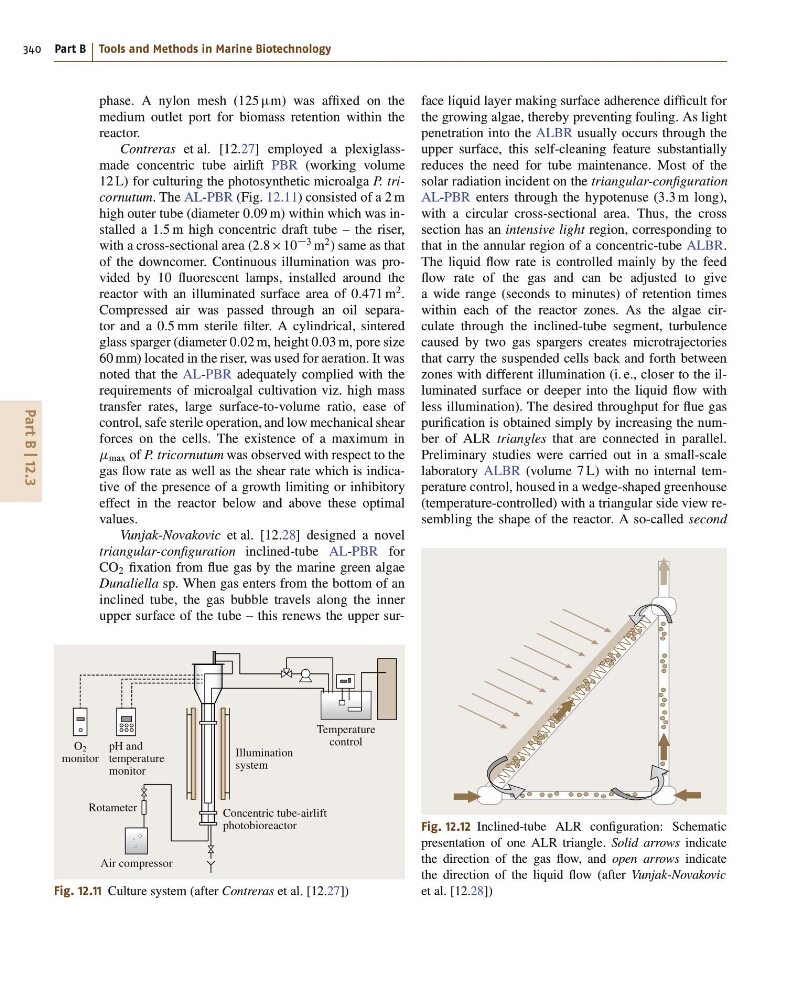
Fig. 12.12 Inclined-tube ALR configuration: Schematic
presentation of one ALR triangle. Solid arrows indicate
the direction of the gas flow, and open arrows indicate
the direction of the liquid flow (after Vunjak-Novakovic
et al. [12.28])
340 Part B Tools and Methods in Marine Biotechnology
phase. A nylon mesh (125 m) was affixed on the
medium outlet port for biomass retention within the
reactor.
Contreras et al. [12.27] employed a plexiglassmade concentric tube airlift PBR (working volume
12 L) for culturing the photosynthetic microalga P. tricornutum. The AL-PBR (Fig. 12.11) consisted of a 2 m
high outer tube (diameter 0:09 m) within which was installed a 1:5 m high concentric draft tube – the riser,
with a cross-sectional area (2:8 10
3 m
2 ) same as that
of the downcomer. Continuous illumination was provided by 10 fluorescent lamps, installed around the
reactor with an illuminated surface area of 0:471 m
2 .
Compressed air was passed through an oil separator and a 0:5 mm sterile filter. A cylindrical, sintered
glass sparger (diameter 0:02 m, height 0:03 m, pore size
60 mm) located in the riser, was used for aeration. It was
noted that the AL-PBR adequately complied with the
requirements of microalgal cultivation viz. high mass
transfer rates, large surface-to-volume ratio, ease of
control, safe sterile operation, and low mechanical shear
forces on the cells. The existence of a maximum in
max of P. tricornutum was observed with respect to the
gas flow rate as well as the shear rate which is indicative of the presence of a growth limiting or inhibitory
effect in the reactor below and above these optimal
values.
Vunjak-Novakovic et al. [12.28] designed a novel
triangular-configuration inclined-tube AL-PBR for
CO 2 fixation from flue gas by the marine green algae
Dunaliella sp. When gas enters from the bottom of an
inclined tube, the gas bubble travels along the inner
upper surface of the tube – this renews the upper surAir compressor
Rotameter
Concentric tube-airlift
photobioreactor
Illumination
system
pH and
temperature
monitor
O 2
monitor
Temperature
control
Fig. 12.11 Culture system (after Contreras et al. [12.27])
face liquid layer making surface adherence difficult for
the growing algae, thereby preventing fouling. As light
penetration into the ALBR usually occurs through the
upper surface, this self-cleaning feature substantially
reduces the need for tube maintenance. Most of the
solar radiation incident on the triangular-configuration
AL-PBR enters through the hypotenuse (3:3 m long),
with a circular cross-sectional area. Thus, the cross
section has an intensive light region, corresponding to
that in the annular region of a concentric-tube ALBR.
The liquid flow rate is controlled mainly by the feed
flow rate of the gas and can be adjusted to give
a wide range (seconds to minutes) of retention times
within each of the reactor zones. As the algae circulate through the inclined-tube segment, turbulence
caused by two gas spargers creates microtrajectories
that carry the suspended cells back and forth between
zones with different illumination (i. e., closer to the illuminated surface or deeper into the liquid flow with
less illumination). The desired throughput for flue gas
purification is obtained simply by increasing the number of ALR triangles that are connected in parallel.
Preliminary studies were carried out in a small-scale
laboratory ALBR (volume 7 L) with no internal temperature control, housed in a wedge-shaped greenhouse
(temperature-controlled) with a triangular side view resembling the shape of the reactor. A so-called second
Fig. 12.12 Inclined-tube ALR configuration: Schematic
presentation of one ALR triangle. Solid arrows indicate
the direction of the gas flow, and open arrows indicate
the direction of the liquid flow (after Vunjak-Novakovic
et al. [12.28])