

Novel Bioreactors for Culturing Marine Organisms 12.3 Airlift Bioreactors (ALBR) and Bubble Column Bioreactors (BCBR) 341
Part B | 12.3
1
8
9
4
5
6
2
3
10
11
14
15
7
13
12
Solar
receptor
Air-lift system
Medium inlet
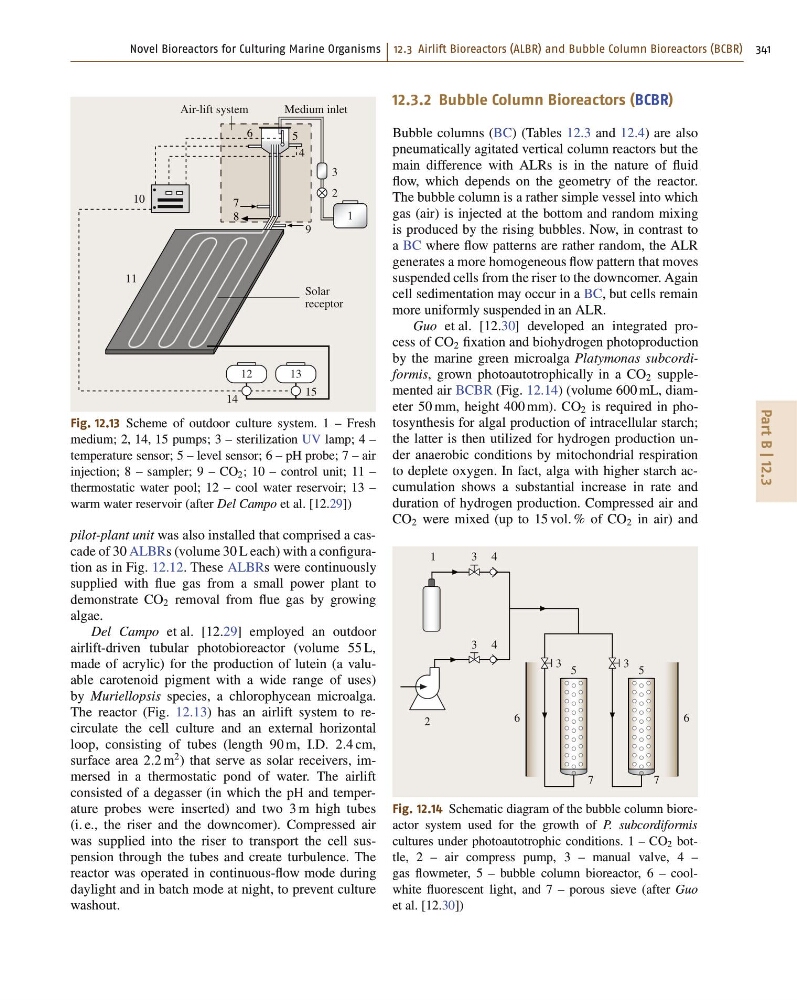
Fig. 12.13 Scheme of outdoor culture system. 1 – Fresh
medium; 2, 14, 15 pumps; 3 – sterilization UV lamp; 4 –
temperature sensor; 5 – level sensor; 6 – pH probe; 7 – air
injection; 8 – sampler; 9 – CO 2 ; 10 – control unit; 11 –
thermostatic water pool; 12 – cool water reservoir; 13 –
warm water reservoir (after Del Campo et al. [12.29])
pilot-plant unit was also installed that comprised a cascade of 30 ALBRs (volume 30 L each) with a configuration as in Fig. 12.12. These ALBRs were continuously
supplied with flue gas from a small power plant to
demonstrate CO 2 removal from flue gas by growing
algae.
Del Campo et al. [12.29] employed an outdoor
airlift-driven tubular photobioreactor (volume 55 L,
made of acrylic) for the production of lutein (a valuable carotenoid pigment with a wide range of uses)
by Muriellopsis species, a chlorophycean microalga.
The reactor (Fig. 12.13) has an airlift system to recirculate the cell culture and an external horizontal
loop, consisting of tubes (length 90 m, I.D. 2:4 cm,
surface area 2:2 m
2 ) that serve as solar receivers, immersed in a thermostatic pond of water. The airlift
consisted of a degasser (in which the pH and temperature probes were inserted) and two 3 m high tubes
(i. e., the riser and the downcomer). Compressed air
was supplied into the riser to transport the cell suspension through the tubes and create turbulence. The
reactor was operated in continuous-flow mode during
daylight and in batch mode at night, to prevent culture
washout.
12.3.2 Bubble Column Bioreactors (BCBR)
Bubble columns (BC) (Tables 12.3 and 12.4) are also
pneumatically agitated vertical column reactors but the
main difference with ALRs is in the nature of fluid
flow, which depends on the geometry of the reactor.
The bubble column is a rather simple vessel into which
gas (air) is injected at the bottom and random mixing
is produced by the rising bubbles. Now, in contrast to
a BC where flow patterns are rather random, the ALR
generates a more homogeneous flow pattern that moves
suspended cells from the riser to the downcomer. Again
cell sedimentation may occur in a BC, but cells remain
more uniformly suspended in an ALR.
Guo et al. [12.30] developed an integrated process of CO 2 fixation and biohydrogen photoproduction
by the marine green microalga Platymonas subcordiformis, grown photoautotrophically in a CO 2 supplemented air BCBR (Fig. 12.14) (volume 600 mL, diameter 50 mm, height 400 mm). CO 2 is required in photosynthesis for algal production of intracellular starch;
the latter is then utilized for hydrogen production under anaerobic conditions by mitochondrial respiration
to deplete oxygen. In fact, alga with higher starch accumulation shows a substantial increase in rate and
duration of hydrogen production. Compressed air and
CO 2 were mixed (up to 15 vol: % of CO 2 in air) and
3
3 5
7
7
4
3 4
6
3 5
6
1
2
Fig. 12.14 Schematic diagram of the bubble column bioreactor system used for the growth of P. subcordiformis
cultures under photoautotrophic conditions. 1 – CO 2 bottle, 2 – air compress pump, 3 – manual valve, 4 –
gas flowmeter, 5 – bubble column bioreactor, 6 – coolwhite fluorescent light, and 7 – porous sieve (after Guo
et al. [12.30])
Part B | 12.3
1
8
9
4
5
6
2
3
10
11
14
15
7
13
12
Solar
receptor
Air-lift system
Medium inlet
Fig. 12.13 Scheme of outdoor culture system. 1 – Fresh
medium; 2, 14, 15 pumps; 3 – sterilization UV lamp; 4 –
temperature sensor; 5 – level sensor; 6 – pH probe; 7 – air
injection; 8 – sampler; 9 – CO 2 ; 10 – control unit; 11 –
thermostatic water pool; 12 – cool water reservoir; 13 –
warm water reservoir (after Del Campo et al. [12.29])
pilot-plant unit was also installed that comprised a cascade of 30 ALBRs (volume 30 L each) with a configuration as in Fig. 12.12. These ALBRs were continuously
supplied with flue gas from a small power plant to
demonstrate CO 2 removal from flue gas by growing
algae.
Del Campo et al. [12.29] employed an outdoor
airlift-driven tubular photobioreactor (volume 55 L,
made of acrylic) for the production of lutein (a valuable carotenoid pigment with a wide range of uses)
by Muriellopsis species, a chlorophycean microalga.
The reactor (Fig. 12.13) has an airlift system to recirculate the cell culture and an external horizontal
loop, consisting of tubes (length 90 m, I.D. 2:4 cm,
surface area 2:2 m
2 ) that serve as solar receivers, immersed in a thermostatic pond of water. The airlift
consisted of a degasser (in which the pH and temperature probes were inserted) and two 3 m high tubes
(i. e., the riser and the downcomer). Compressed air
was supplied into the riser to transport the cell suspension through the tubes and create turbulence. The
reactor was operated in continuous-flow mode during
daylight and in batch mode at night, to prevent culture
washout.
12.3.2 Bubble Column Bioreactors (BCBR)
Bubble columns (BC) (Tables 12.3 and 12.4) are also
pneumatically agitated vertical column reactors but the
main difference with ALRs is in the nature of fluid
flow, which depends on the geometry of the reactor.
The bubble column is a rather simple vessel into which
gas (air) is injected at the bottom and random mixing
is produced by the rising bubbles. Now, in contrast to
a BC where flow patterns are rather random, the ALR
generates a more homogeneous flow pattern that moves
suspended cells from the riser to the downcomer. Again
cell sedimentation may occur in a BC, but cells remain
more uniformly suspended in an ALR.
Guo et al. [12.30] developed an integrated process of CO 2 fixation and biohydrogen photoproduction
by the marine green microalga Platymonas subcordiformis, grown photoautotrophically in a CO 2 supplemented air BCBR (Fig. 12.14) (volume 600 mL, diameter 50 mm, height 400 mm). CO 2 is required in photosynthesis for algal production of intracellular starch;
the latter is then utilized for hydrogen production under anaerobic conditions by mitochondrial respiration
to deplete oxygen. In fact, alga with higher starch accumulation shows a substantial increase in rate and
duration of hydrogen production. Compressed air and
CO 2 were mixed (up to 15 vol: % of CO 2 in air) and
3
3 5
7
7
4
3 4
6
3 5
6
1
2
Fig. 12.14 Schematic diagram of the bubble column bioreactor system used for the growth of P. subcordiformis
cultures under photoautotrophic conditions. 1 – CO 2 bottle, 2 – air compress pump, 3 – manual valve, 4 –
gas flowmeter, 5 – bubble column bioreactor, 6 – coolwhite fluorescent light, and 7 – porous sieve (after Guo
et al. [12.30])