

Part B | 12.2
334 Part B Tools and Methods in Marine Biotechnology
Solenoid
valve
Timer
Timer
Stirrer
Humidifier
Peristaltic
pump
Aeration
tank
Air
lines
Flowmeters
P
Product
Sampling
Medium addition
Tubular
section
Airlift
injector
Air out
Fluorescent
lamp
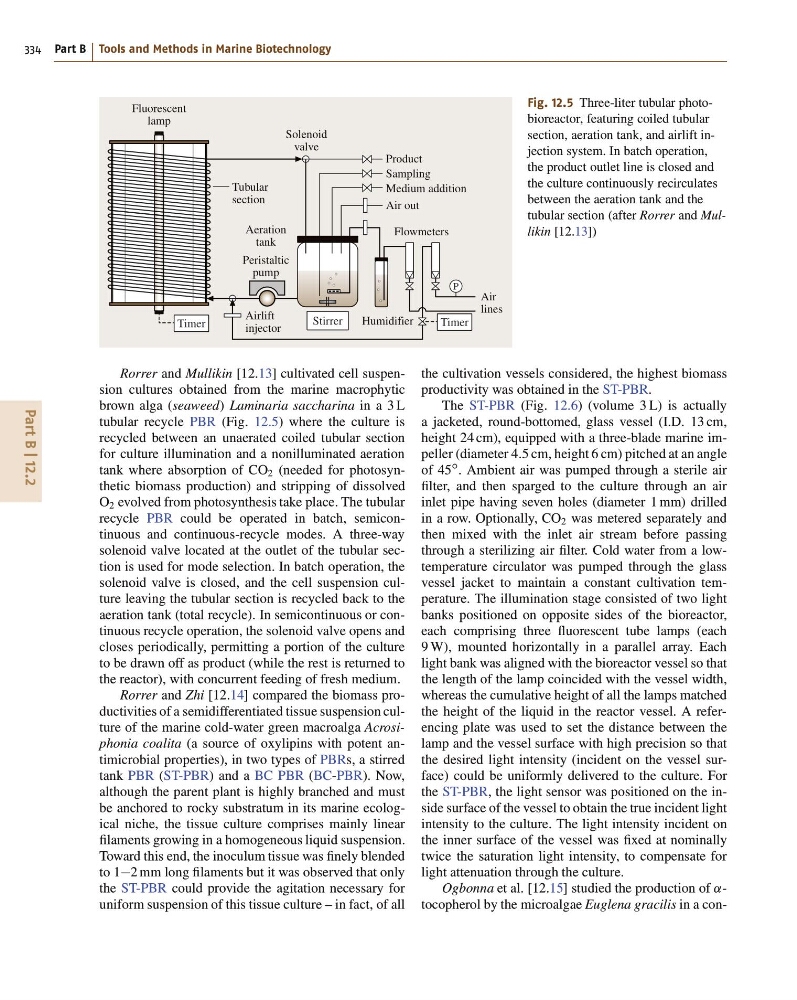
Fig. 12.5 Three-liter tubular photobioreactor, featuring coiled tubular
section, aeration tank, and airlift injection system. In batch operation,
the product outlet line is closed and
the culture continuously recirculates
between the aeration tank and the
tubular section (after Rorrer and Mullikin [12.13])
Rorrer and Mullikin [12.13] cultivated cell suspension cultures obtained from the marine macrophytic
brown alga (seaweed) Laminaria saccharina in a 3 L
tubular recycle PBR (Fig. 12.5) where the culture is
recycled between an unaerated coiled tubular section
for culture illumination and a nonilluminated aeration
tank where absorption of CO 2 (needed for photosynthetic biomass production) and stripping of dissolved
O 2 evolved from photosynthesis take place. The tubular
recycle PBR could be operated in batch, semicontinuous and continuous-recycle modes. A three-way
solenoid valve located at the outlet of the tubular section is used for mode selection. In batch operation, the
solenoid valve is closed, and the cell suspension culture leaving the tubular section is recycled back to the
aeration tank (total recycle). In semicontinuous or continuous recycle operation, the solenoid valve opens and
closes periodically, permitting a portion of the culture
to be drawn off as product (while the rest is returned to
the reactor), with concurrent feeding of fresh medium.
Rorrer and Zhi [12.14] compared the biomass productivities of a semidifferentiated tissue suspension culture of the marine cold-water green macroalga Acrosiphonia coalita (a source of oxylipins with potent antimicrobial properties), in two types of PBRs, a stirred
tank PBR (ST-PBR) and a BC PBR (BC-PBR). Now,
although the parent plant is highly branched and must
be anchored to rocky substratum in its marine ecological niche, the tissue culture comprises mainly linear
filaments growing in a homogeneous liquid suspension.
Toward this end, the inoculum tissue was finely blended
to 12 mm long filaments but it was observed that only
the ST-PBR could provide the agitation necessary for
uniform suspension of this tissue culture – in fact, of all
the cultivation vessels considered, the highest biomass
productivity was obtained in the ST-PBR.
The ST-PBR (Fig. 12.6) (volume 3 L) is actually
a jacketed, round-bottomed, glass vessel (I.D. 13 cm,
height 24 cm), equipped with a three-blade marine impeller (diameter 4:5 cm, height 6 cm) pitched at an angle
of 45
ı . Ambient air was pumped through a sterile air
filter, and then sparged to the culture through an air
inlet pipe having seven holes (diameter 1 mm) drilled
in a row. Optionally, CO 2 was metered separately and
then mixed with the inlet air stream before passing
through a sterilizing air filter. Cold water from a lowtemperature circulator was pumped through the glass
vessel jacket to maintain a constant cultivation temperature. The illumination stage consisted of two light
banks positioned on opposite sides of the bioreactor,
each comprising three fluorescent tube lamps (each
9 W), mounted horizontally in a parallel array. Each
light bank was aligned with the bioreactor vessel so that
the length of the lamp coincided with the vessel width,
whereas the cumulative height of all the lamps matched
the height of the liquid in the reactor vessel. A referencing plate was used to set the distance between the
lamp and the vessel surface with high precision so that
the desired light intensity (incident on the vessel surface) could be uniformly delivered to the culture. For
the ST-PBR, the light sensor was positioned on the inside surface of the vessel to obtain the true incident light
intensity to the culture. The light intensity incident on
the inner surface of the vessel was fixed at nominally
twice the saturation light intensity, to compensate for
light attenuation through the culture.
Ogbonna et al. [12.15] studied the production of ˛tocopherol by the microalgae Euglena gracilis in a con-
334 Part B Tools and Methods in Marine Biotechnology
Solenoid
valve
Timer
Timer
Stirrer
Humidifier
Peristaltic
pump
Aeration
tank
Air
lines
Flowmeters
P
Product
Sampling
Medium addition
Tubular
section
Airlift
injector
Air out
Fluorescent
lamp
Fig. 12.5 Three-liter tubular photobioreactor, featuring coiled tubular
section, aeration tank, and airlift injection system. In batch operation,
the product outlet line is closed and
the culture continuously recirculates
between the aeration tank and the
tubular section (after Rorrer and Mullikin [12.13])
Rorrer and Mullikin [12.13] cultivated cell suspension cultures obtained from the marine macrophytic
brown alga (seaweed) Laminaria saccharina in a 3 L
tubular recycle PBR (Fig. 12.5) where the culture is
recycled between an unaerated coiled tubular section
for culture illumination and a nonilluminated aeration
tank where absorption of CO 2 (needed for photosynthetic biomass production) and stripping of dissolved
O 2 evolved from photosynthesis take place. The tubular
recycle PBR could be operated in batch, semicontinuous and continuous-recycle modes. A three-way
solenoid valve located at the outlet of the tubular section is used for mode selection. In batch operation, the
solenoid valve is closed, and the cell suspension culture leaving the tubular section is recycled back to the
aeration tank (total recycle). In semicontinuous or continuous recycle operation, the solenoid valve opens and
closes periodically, permitting a portion of the culture
to be drawn off as product (while the rest is returned to
the reactor), with concurrent feeding of fresh medium.
Rorrer and Zhi [12.14] compared the biomass productivities of a semidifferentiated tissue suspension culture of the marine cold-water green macroalga Acrosiphonia coalita (a source of oxylipins with potent antimicrobial properties), in two types of PBRs, a stirred
tank PBR (ST-PBR) and a BC PBR (BC-PBR). Now,
although the parent plant is highly branched and must
be anchored to rocky substratum in its marine ecological niche, the tissue culture comprises mainly linear
filaments growing in a homogeneous liquid suspension.
Toward this end, the inoculum tissue was finely blended
to 12 mm long filaments but it was observed that only
the ST-PBR could provide the agitation necessary for
uniform suspension of this tissue culture – in fact, of all
the cultivation vessels considered, the highest biomass
productivity was obtained in the ST-PBR.
The ST-PBR (Fig. 12.6) (volume 3 L) is actually
a jacketed, round-bottomed, glass vessel (I.D. 13 cm,
height 24 cm), equipped with a three-blade marine impeller (diameter 4:5 cm, height 6 cm) pitched at an angle
of 45
ı . Ambient air was pumped through a sterile air
filter, and then sparged to the culture through an air
inlet pipe having seven holes (diameter 1 mm) drilled
in a row. Optionally, CO 2 was metered separately and
then mixed with the inlet air stream before passing
through a sterilizing air filter. Cold water from a lowtemperature circulator was pumped through the glass
vessel jacket to maintain a constant cultivation temperature. The illumination stage consisted of two light
banks positioned on opposite sides of the bioreactor,
each comprising three fluorescent tube lamps (each
9 W), mounted horizontally in a parallel array. Each
light bank was aligned with the bioreactor vessel so that
the length of the lamp coincided with the vessel width,
whereas the cumulative height of all the lamps matched
the height of the liquid in the reactor vessel. A referencing plate was used to set the distance between the
lamp and the vessel surface with high precision so that
the desired light intensity (incident on the vessel surface) could be uniformly delivered to the culture. For
the ST-PBR, the light sensor was positioned on the inside surface of the vessel to obtain the true incident light
intensity to the culture. The light intensity incident on
the inner surface of the vessel was fixed at nominally
twice the saturation light intensity, to compensate for
light attenuation through the culture.
Ogbonna et al. [12.15] studied the production of ˛tocopherol by the microalgae Euglena gracilis in a con-