

Marine Sponges – Molecular Biology and Biotechnology 8.6 Metagenomic Strategies for Natural Product Discovery 233
Part A | 8.6
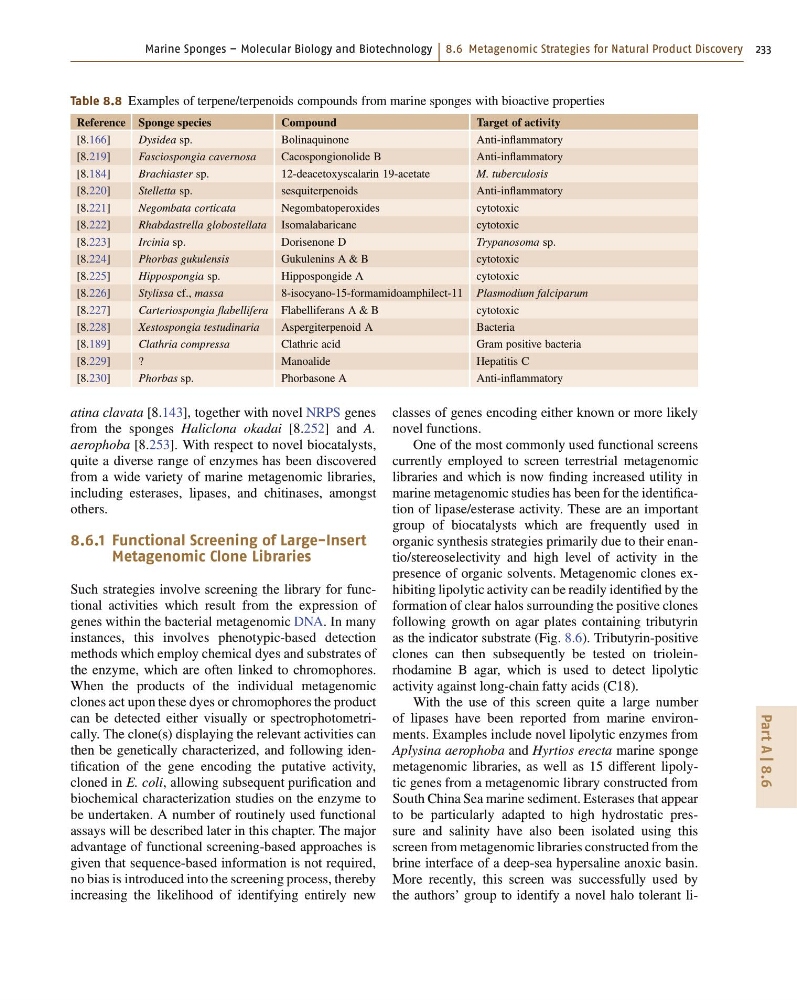
Table 8.8 Examples of terpene/terpenoids compounds from marine sponges with bioactive properties
Reference Sponge species
Compound
Target of activity
[8.166]
Dysidea sp.
Bolinaquinone
Anti-inflammatory
[8.219]
Fasciospongia cavernosa
Cacospongionolide B
Anti-inflammatory
[8.184]
Brachiaster sp.
12-deacetoxyscalarin 19-acetate
M. tuberculosis
[8.220]
Stelletta sp.
sesquiterpenoids
Anti-inflammatory
[8.221]
Negombata corticata
Negombatoperoxides
cytotoxic
[8.222]
Rhabdastrella globostellata Isomalabaricane
cytotoxic
[8.223]
Ircinia sp.
Dorisenone D
Trypanosoma sp.
[8.224]
Phorbas gukulensis
Gukulenins A & B
cytotoxic
[8.225]
Hippospongia sp.
Hippospongide A
cytotoxic
[8.226]
Stylissa cf., massa
8-isocyano-15-formamidoamphilect-11 Plasmodium falciparum
[8.227]
Carteriospongia flabellifera Flabelliferans A & B
cytotoxic
[8.228]
Xestospongia testudinaria
Aspergiterpenoid A
Bacteria
[8.189]
Clathria compressa
Clathric acid
Gram positive bacteria
[8.229]
?
Manoalide
Hepatitis C
[8.230]
Phorbas sp.
Phorbasone A
Anti-inflammatory
atina clavata [8.143], together with novel NRPS genes
from the sponges Haliclona okadai [8.252] and A.
aerophoba [8.253]. With respect to novel biocatalysts,
quite a diverse range of enzymes has been discovered
from a wide variety of marine metagenomic libraries,
including esterases, lipases, and chitinases, amongst
others.
8.6.1 Functional Screening of Large-Insert
Metagenomic Clone Libraries
Such strategies involve screening the library for functional activities which result from the expression of
genes within the bacterial metagenomic DNA. In many
instances, this involves phenotypic-based detection
methods which employ chemical dyes and substrates of
the enzyme, which are often linked to chromophores.
When the products of the individual metagenomic
clones act upon these dyes or chromophores the product
can be detected either visually or spectrophotometrically. The clone(s) displaying the relevant activities can
then be genetically characterized, and following identification of the gene encoding the putative activity,
cloned in E. coli, allowing subsequent purification and
biochemical characterization studies on the enzyme to
be undertaken. A number of routinely used functional
assays will be described later in this chapter. The major
advantage of functional screening-based approaches is
given that sequence-based information is not required,
no bias is introduced into the screening process, thereby
increasing the likelihood of identifying entirely new
classes of genes encoding either known or more likely
novel functions.
One of the most commonly used functional screens
currently employed to screen terrestrial metagenomic
libraries and which is now finding increased utility in
marine metagenomic studies has been for the identification of lipase/esterase activity. These are an important
group of biocatalysts which are frequently used in
organic synthesis strategies primarily due to their enantio/stereoselectivity and high level of activity in the
presence of organic solvents. Metagenomic clones exhibiting lipolytic activity can be readily identified by the
formation of clear halos surrounding the positive clones
following growth on agar plates containing tributyrin
as the indicator substrate (Fig. 8.6). Tributyrin-positive
clones can then subsequently be tested on trioleinrhodamine B agar, which is used to detect lipolytic
activity against long-chain fatty acids (C18).
With the use of this screen quite a large number
of lipases have been reported from marine environments. Examples include novel lipolytic enzymes from
Aplysina aerophoba and Hyrtios erecta marine sponge
metagenomic libraries, as well as 15 different lipolytic genes from a metagenomic library constructed from
South China Sea marine sediment. Esterases that appear
to be particularly adapted to high hydrostatic pressure and salinity have also been isolated using this
screen from metagenomic libraries constructed from the
brine interface of a deep-sea hypersaline anoxic basin.
More recently, this screen was successfully used by
the authors’ group to identify a novel halo tolerant li-
Part A | 8.6
Table 8.8 Examples of terpene/terpenoids compounds from marine sponges with bioactive properties
Reference Sponge species
Compound
Target of activity
[8.166]
Dysidea sp.
Bolinaquinone
Anti-inflammatory
[8.219]
Fasciospongia cavernosa
Cacospongionolide B
Anti-inflammatory
[8.184]
Brachiaster sp.
12-deacetoxyscalarin 19-acetate
M. tuberculosis
[8.220]
Stelletta sp.
sesquiterpenoids
Anti-inflammatory
[8.221]
Negombata corticata
Negombatoperoxides
cytotoxic
[8.222]
Rhabdastrella globostellata Isomalabaricane
cytotoxic
[8.223]
Ircinia sp.
Dorisenone D
Trypanosoma sp.
[8.224]
Phorbas gukulensis
Gukulenins A & B
cytotoxic
[8.225]
Hippospongia sp.
Hippospongide A
cytotoxic
[8.226]
Stylissa cf., massa
8-isocyano-15-formamidoamphilect-11 Plasmodium falciparum
[8.227]
Carteriospongia flabellifera Flabelliferans A & B
cytotoxic
[8.228]
Xestospongia testudinaria
Aspergiterpenoid A
Bacteria
[8.189]
Clathria compressa
Clathric acid
Gram positive bacteria
[8.229]
?
Manoalide
Hepatitis C
[8.230]
Phorbas sp.
Phorbasone A
Anti-inflammatory
atina clavata [8.143], together with novel NRPS genes
from the sponges Haliclona okadai [8.252] and A.
aerophoba [8.253]. With respect to novel biocatalysts,
quite a diverse range of enzymes has been discovered
from a wide variety of marine metagenomic libraries,
including esterases, lipases, and chitinases, amongst
others.
8.6.1 Functional Screening of Large-Insert
Metagenomic Clone Libraries
Such strategies involve screening the library for functional activities which result from the expression of
genes within the bacterial metagenomic DNA. In many
instances, this involves phenotypic-based detection
methods which employ chemical dyes and substrates of
the enzyme, which are often linked to chromophores.
When the products of the individual metagenomic
clones act upon these dyes or chromophores the product
can be detected either visually or spectrophotometrically. The clone(s) displaying the relevant activities can
then be genetically characterized, and following identification of the gene encoding the putative activity,
cloned in E. coli, allowing subsequent purification and
biochemical characterization studies on the enzyme to
be undertaken. A number of routinely used functional
assays will be described later in this chapter. The major
advantage of functional screening-based approaches is
given that sequence-based information is not required,
no bias is introduced into the screening process, thereby
increasing the likelihood of identifying entirely new
classes of genes encoding either known or more likely
novel functions.
One of the most commonly used functional screens
currently employed to screen terrestrial metagenomic
libraries and which is now finding increased utility in
marine metagenomic studies has been for the identification of lipase/esterase activity. These are an important
group of biocatalysts which are frequently used in
organic synthesis strategies primarily due to their enantio/stereoselectivity and high level of activity in the
presence of organic solvents. Metagenomic clones exhibiting lipolytic activity can be readily identified by the
formation of clear halos surrounding the positive clones
following growth on agar plates containing tributyrin
as the indicator substrate (Fig. 8.6). Tributyrin-positive
clones can then subsequently be tested on trioleinrhodamine B agar, which is used to detect lipolytic
activity against long-chain fatty acids (C18).
With the use of this screen quite a large number
of lipases have been reported from marine environments. Examples include novel lipolytic enzymes from
Aplysina aerophoba and Hyrtios erecta marine sponge
metagenomic libraries, as well as 15 different lipolytic genes from a metagenomic library constructed from
South China Sea marine sediment. Esterases that appear
to be particularly adapted to high hydrostatic pressure and salinity have also been isolated using this
screen from metagenomic libraries constructed from the
brine interface of a deep-sea hypersaline anoxic basin.
More recently, this screen was successfully used by
the authors’ group to identify a novel halo tolerant li-