

Part A | 8.2
224 Part A Marine Flora and Fauna
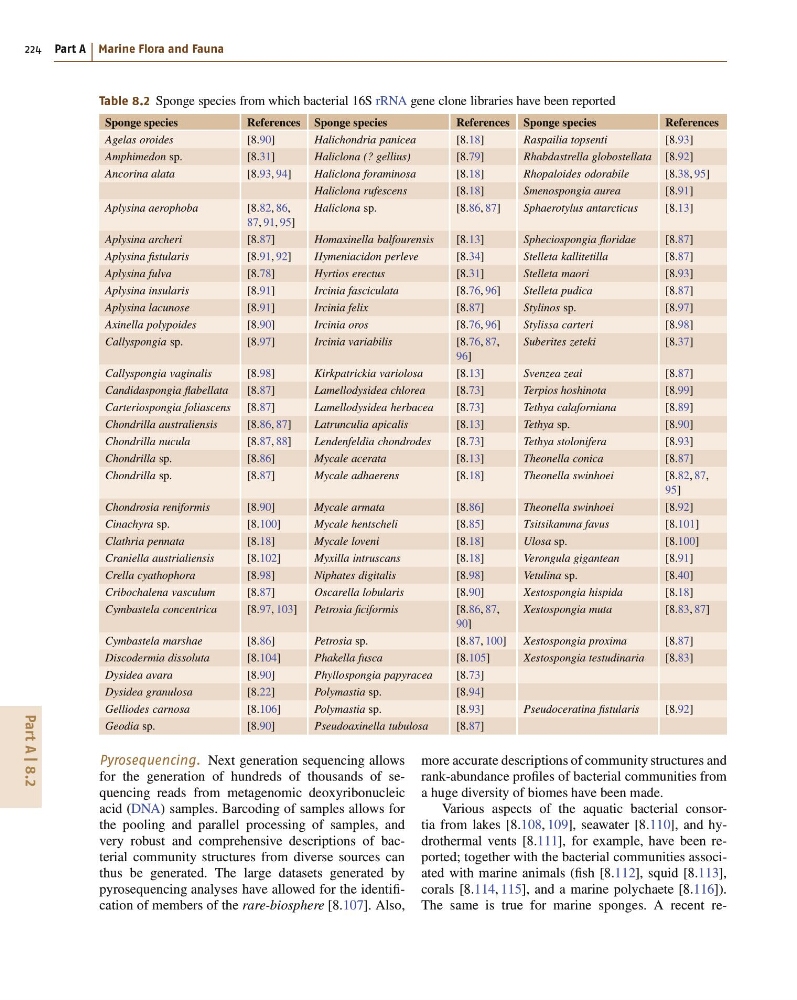
Table 8.2 Sponge species from which bacterial 16S rRNA gene clone libraries have been reported
Sponge species
References Sponge species
References Sponge species
References
Agelas oroides
[8.90]
Halichondria panicea
[8.18]
Raspailia topsenti
[8.93]
Amphimedon sp.
[8.31]
Haliclona (? gellius)
[8.79]
Rhabdastrella globostellata [8.92]
Ancorina alata
[8.93, 94]
Haliclona foraminosa
[8.18]
Rhopaloides odorabile
[8.38, 95]
Haliclona rufescens
[8.18]
Smenospongia aurea
[8.91]
Aplysina aerophoba
[8.82, 86,
87, 91, 95]
Haliclona sp.
[8.86, 87]
Sphaerotylus antarcticus
[8.13]
Aplysina archeri
[8.87]
Homaxinella balfourensis
[8.13]
Spheciospongia floridae
[8.87]
Aplysina fistularis
[8.91, 92]
Hymeniacidon perleve
[8.34]
Stelleta kallitetilla
[8.87]
Aplysina fulva
[8.78]
Hyrtios erectus
[8.31]
Stelleta maori
[8.93]
Aplysina insularis
[8.91]
Ircinia fasciculata
[8.76, 96]
Stelleta pudica
[8.87]
Aplysina lacunose
[8.91]
Ircinia felix
[8.87]
Stylinos sp.
[8.97]
Axinella polypoides
[8.90]
Ircinia oros
[8.76, 96]
Stylissa carteri
[8.98]
Callyspongia sp.
[8.97]
Ircinia variabilis
[8.76, 87,
96]
Suberites zeteki
[8.37]
Callyspongia vaginalis
[8.98]
Kirkpatrickia variolosa
[8.13]
Svenzea zeai
[8.87]
Candidaspongia flabellata
[8.87]
Lamellodysidea chlorea
[8.73]
Terpios hoshinota
[8.99]
Carteriospongia foliascens [8.87]
Lamellodysidea herbacea
[8.73]
Tethya calaforniana
[8.89]
Chondrilla australiensis
[8.86, 87]
Latrunculia apicalis
[8.13]
Tethya sp.
[8.90]
Chondrilla nucula
[8.87, 88]
Lendenfeldia chondrodes
[8.73]
Tethya stolonifera
[8.93]
Chondrilla sp.
[8.86]
Mycale acerata
[8.13]
Theonella conica
[8.87]
Chondrilla sp.
[8.87]
Mycale adhaerens
[8.18]
Theonella swinhoei
[8.82, 87,
95]
Chondrosia reniformis
[8.90]
Mycale armata
[8.86]
Theonella swinhoei
[8.92]
Cinachyra sp.
[8.100]
Mycale hentscheli
[8.85]
Tsitsikamma favus
[8.101]
Clathria pennata
[8.18]
Mycale loveni
[8.18]
Ulosa sp.
[8.100]
Craniella austrialiensis
[8.102]
Myxilla intruscans
[8.18]
Verongula gigantean
[8.91]
Crella cyathophora
[8.98]
Niphates digitalis
[8.98]
Vetulina sp.
[8.40]
Cribochalena vasculum
[8.87]
Oscarella lobularis
[8.90]
Xestospongia hispida
[8.18]
Cymbastela concentrica
[8.97, 103] Petrosia ficiformis
[8.86, 87,
90]
Xestospongia muta
[8.83, 87]
Cymbastela marshae
[8.86]
Petrosia sp.
[8.87, 100] Xestospongia proxima
[8.87]
Discodermia dissoluta
[8.104]
Phakella fusca
[8.105]
Xestospongia testudinaria
[8.83]
Dysidea avara
[8.90]
Phyllospongia papyracea
[8.73]
Dysidea granulosa
[8.22]
Polymastia sp.
[8.94]
Gelliodes carnosa
[8.106]
Polymastia sp.
[8.93]
Pseudoceratina fistularis
[8.92]
Geodia sp.
[8.90]
Pseudoaxinella tubulosa
[8.87]
Pyrosequencing. Next generation sequencing allows
for the generation of hundreds of thousands of sequencing reads from metagenomic deoxyribonucleic
acid (DNA) samples. Barcoding of samples allows for
the pooling and parallel processing of samples, and
very robust and comprehensive descriptions of bacterial community structures from diverse sources can
thus be generated. The large datasets generated by
pyrosequencing analyses have allowed for the identification of members of the rare-biosphere [8.107]. Also,
more accurate descriptions of community structures and
rank-abundance profiles of bacterial communities from
a huge diversity of biomes have been made.
Various aspects of the aquatic bacterial consortia from lakes [8.108, 109], seawater [8.110], and hydrothermal vents [8.111], for example, have been reported; together with the bacterial communities associated with marine animals (fish [8.112], squid [8.113],
corals [8.114, 115], and a marine polychaete [8.116]).
The same is true for marine sponges. A recent re-
224 Part A Marine Flora and Fauna
Table 8.2 Sponge species from which bacterial 16S rRNA gene clone libraries have been reported
Sponge species
References Sponge species
References Sponge species
References
Agelas oroides
[8.90]
Halichondria panicea
[8.18]
Raspailia topsenti
[8.93]
Amphimedon sp.
[8.31]
Haliclona (? gellius)
[8.79]
Rhabdastrella globostellata [8.92]
Ancorina alata
[8.93, 94]
Haliclona foraminosa
[8.18]
Rhopaloides odorabile
[8.38, 95]
Haliclona rufescens
[8.18]
Smenospongia aurea
[8.91]
Aplysina aerophoba
[8.82, 86,
87, 91, 95]
Haliclona sp.
[8.86, 87]
Sphaerotylus antarcticus
[8.13]
Aplysina archeri
[8.87]
Homaxinella balfourensis
[8.13]
Spheciospongia floridae
[8.87]
Aplysina fistularis
[8.91, 92]
Hymeniacidon perleve
[8.34]
Stelleta kallitetilla
[8.87]
Aplysina fulva
[8.78]
Hyrtios erectus
[8.31]
Stelleta maori
[8.93]
Aplysina insularis
[8.91]
Ircinia fasciculata
[8.76, 96]
Stelleta pudica
[8.87]
Aplysina lacunose
[8.91]
Ircinia felix
[8.87]
Stylinos sp.
[8.97]
Axinella polypoides
[8.90]
Ircinia oros
[8.76, 96]
Stylissa carteri
[8.98]
Callyspongia sp.
[8.97]
Ircinia variabilis
[8.76, 87,
96]
Suberites zeteki
[8.37]
Callyspongia vaginalis
[8.98]
Kirkpatrickia variolosa
[8.13]
Svenzea zeai
[8.87]
Candidaspongia flabellata
[8.87]
Lamellodysidea chlorea
[8.73]
Terpios hoshinota
[8.99]
Carteriospongia foliascens [8.87]
Lamellodysidea herbacea
[8.73]
Tethya calaforniana
[8.89]
Chondrilla australiensis
[8.86, 87]
Latrunculia apicalis
[8.13]
Tethya sp.
[8.90]
Chondrilla nucula
[8.87, 88]
Lendenfeldia chondrodes
[8.73]
Tethya stolonifera
[8.93]
Chondrilla sp.
[8.86]
Mycale acerata
[8.13]
Theonella conica
[8.87]
Chondrilla sp.
[8.87]
Mycale adhaerens
[8.18]
Theonella swinhoei
[8.82, 87,
95]
Chondrosia reniformis
[8.90]
Mycale armata
[8.86]
Theonella swinhoei
[8.92]
Cinachyra sp.
[8.100]
Mycale hentscheli
[8.85]
Tsitsikamma favus
[8.101]
Clathria pennata
[8.18]
Mycale loveni
[8.18]
Ulosa sp.
[8.100]
Craniella austrialiensis
[8.102]
Myxilla intruscans
[8.18]
Verongula gigantean
[8.91]
Crella cyathophora
[8.98]
Niphates digitalis
[8.98]
Vetulina sp.
[8.40]
Cribochalena vasculum
[8.87]
Oscarella lobularis
[8.90]
Xestospongia hispida
[8.18]
Cymbastela concentrica
[8.97, 103] Petrosia ficiformis
[8.86, 87,
90]
Xestospongia muta
[8.83, 87]
Cymbastela marshae
[8.86]
Petrosia sp.
[8.87, 100] Xestospongia proxima
[8.87]
Discodermia dissoluta
[8.104]
Phakella fusca
[8.105]
Xestospongia testudinaria
[8.83]
Dysidea avara
[8.90]
Phyllospongia papyracea
[8.73]
Dysidea granulosa
[8.22]
Polymastia sp.
[8.94]
Gelliodes carnosa
[8.106]
Polymastia sp.
[8.93]
Pseudoceratina fistularis
[8.92]
Geodia sp.
[8.90]
Pseudoaxinella tubulosa
[8.87]
Pyrosequencing. Next generation sequencing allows
for the generation of hundreds of thousands of sequencing reads from metagenomic deoxyribonucleic
acid (DNA) samples. Barcoding of samples allows for
the pooling and parallel processing of samples, and
very robust and comprehensive descriptions of bacterial community structures from diverse sources can
thus be generated. The large datasets generated by
pyrosequencing analyses have allowed for the identification of members of the rare-biosphere [8.107]. Also,
more accurate descriptions of community structures and
rank-abundance profiles of bacterial communities from
a huge diversity of biomes have been made.
Various aspects of the aquatic bacterial consortia from lakes [8.108, 109], seawater [8.110], and hydrothermal vents [8.111], for example, have been reported; together with the bacterial communities associated with marine animals (fish [8.112], squid [8.113],
corals [8.114, 115], and a marine polychaete [8.116]).
The same is true for marine sponges. A recent re-