

Marine Sponges – Molecular Biology and Biotechnology 8.2 Sponge-Associated Microorganisms 223
Part A | 8.2
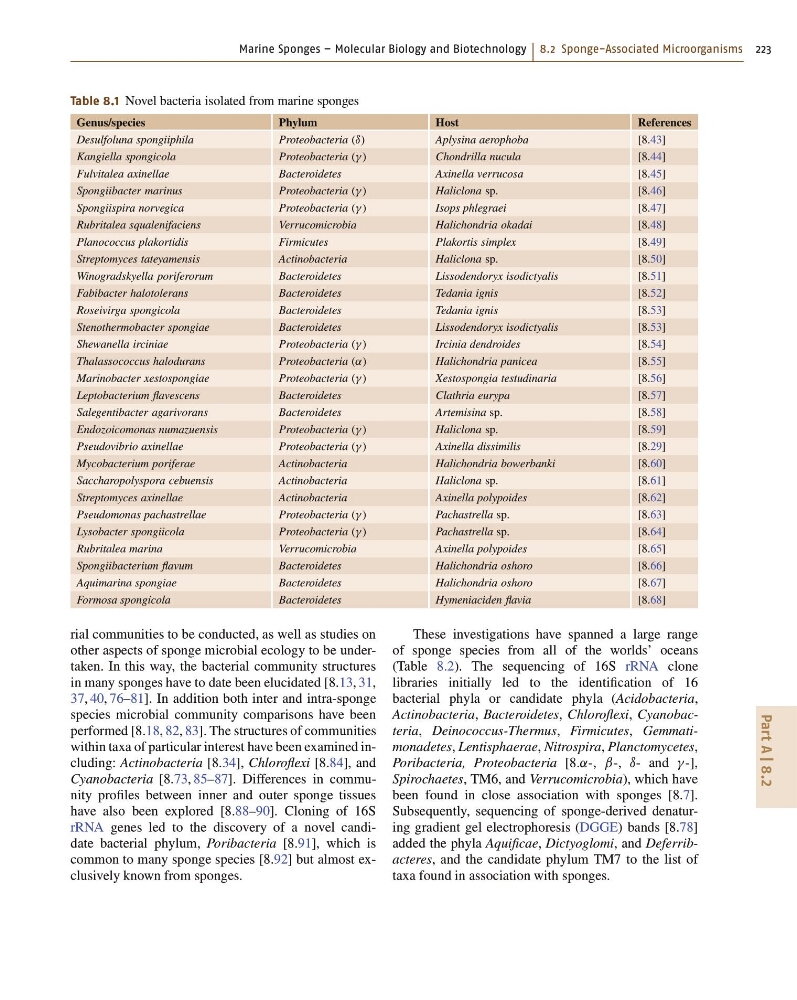
Table 8.1 Novel bacteria isolated from marine sponges
Genus/species
Phylum
Host
References
Desulfoluna spongiiphila
Proteobacteria (ı)
Aplysina aerophoba
[8.43]
Kangiella spongicola
Proteobacteria ( )
Chondrilla nucula
[8.44]
Fulvitalea axinellae
Bacteroidetes
Axinella verrucosa
[8.45]
Spongiibacter marinus
Proteobacteria ( )
Haliclona sp.
[8.46]
Spongiispira norvegica
Proteobacteria ( )
Isops phlegraei
[8.47]
Rubritalea squalenifaciens
Verrucomicrobia
Halichondria okadai
[8.48]
Planococcus plakortidis
Firmicutes
Plakortis simplex
[8.49]
Streptomyces tateyamensis
Actinobacteria
Haliclona sp.
[8.50]
Winogradskyella poriferorum
Bacteroidetes
Lissodendoryx isodictyalis
[8.51]
Fabibacter halotolerans
Bacteroidetes
Tedania ignis
[8.52]
Roseivirga spongicola
Bacteroidetes
Tedania ignis
[8.53]
Stenothermobacter spongiae
Bacteroidetes
Lissodendoryx isodictyalis
[8.53]
Shewanella irciniae
Proteobacteria ( )
Ircinia dendroides
[8.54]
Thalassococcus halodurans
Proteobacteria (˛)
Halichondria panicea
[8.55]
Marinobacter xestospongiae
Proteobacteria ( )
Xestospongia testudinaria
[8.56]
Leptobacterium flavescens
Bacteroidetes
Clathria eurypa
[8.57]
Salegentibacter agarivorans
Bacteroidetes
Artemisina sp.
[8.58]
Endozoicomonas numazuensis
Proteobacteria ( )
Haliclona sp.
[8.59]
Pseudovibrio axinellae
Proteobacteria ( )
Axinella dissimilis
[8.29]
Mycobacterium poriferae
Actinobacteria
Halichondria bowerbanki
[8.60]
Saccharopolyspora cebuensis
Actinobacteria
Haliclona sp.
[8.61]
Streptomyces axinellae
Actinobacteria
Axinella polypoides
[8.62]
Pseudomonas pachastrellae
Proteobacteria ( )
Pachastrella sp.
[8.63]
Lysobacter spongiicola
Proteobacteria ( )
Pachastrella sp.
[8.64]
Rubritalea marina
Verrucomicrobia
Axinella polypoides
[8.65]
Spongiibacterium flavum
Bacteroidetes
Halichondria oshoro
[8.66]
Aquimarina spongiae
Bacteroidetes
Halichondria oshoro
[8.67]
Formosa spongicola
Bacteroidetes
Hymeniaciden flavia
[8.68]
rial communities to be conducted, as well as studies on
other aspects of sponge microbial ecology to be undertaken. In this way, the bacterial community structures
in many sponges have to date been elucidated [8.13, 31,
37, 40, 76–81]. In addition both inter and intra-sponge
species microbial community comparisons have been
performed [8.18, 82, 83]. The structures of communities
within taxa of particular interest have been examined including: Actinobacteria [8.34], Chloroflexi [8.84], and
Cyanobacteria [8.73, 85–87]. Differences in community profiles between inner and outer sponge tissues
have also been explored [8.88–90]. Cloning of 16S
rRNA genes led to the discovery of a novel candidate bacterial phylum, Poribacteria [8.91], which is
common to many sponge species [8.92] but almost exclusively known from sponges.
These investigations have spanned a large range
of sponge species from all of the worlds’ oceans
(Table 8.2). The sequencing of 16S rRNA clone
libraries initially led to the identification of 16
bacterial phyla or candidate phyla (Acidobacteria,
Actinobacteria, Bacteroidetes, Chloroflexi, Cyanobacteria, Deinococcus-Thermus, Firmicutes, Gemmatimonadetes, Lentisphaerae, Nitrospira, Planctomycetes,
Poribacteria, Proteobacteria [8.˛-, ˇ-, ı- and -],
Spirochaetes, TM6, and Verrucomicrobia), which have
been found in close association with sponges [8.7].
Subsequently, sequencing of sponge-derived denaturing gradient gel electrophoresis (DGGE) bands [8.78]
added the phyla Aquificae, Dictyoglomi, and Deferribacteres, and the candidate phylum TM7 to the list of
taxa found in association with sponges.
Part A | 8.2
Table 8.1 Novel bacteria isolated from marine sponges
Genus/species
Phylum
Host
References
Desulfoluna spongiiphila
Proteobacteria (ı)
Aplysina aerophoba
[8.43]
Kangiella spongicola
Proteobacteria ( )
Chondrilla nucula
[8.44]
Fulvitalea axinellae
Bacteroidetes
Axinella verrucosa
[8.45]
Spongiibacter marinus
Proteobacteria ( )
Haliclona sp.
[8.46]
Spongiispira norvegica
Proteobacteria ( )
Isops phlegraei
[8.47]
Rubritalea squalenifaciens
Verrucomicrobia
Halichondria okadai
[8.48]
Planococcus plakortidis
Firmicutes
Plakortis simplex
[8.49]
Streptomyces tateyamensis
Actinobacteria
Haliclona sp.
[8.50]
Winogradskyella poriferorum
Bacteroidetes
Lissodendoryx isodictyalis
[8.51]
Fabibacter halotolerans
Bacteroidetes
Tedania ignis
[8.52]
Roseivirga spongicola
Bacteroidetes
Tedania ignis
[8.53]
Stenothermobacter spongiae
Bacteroidetes
Lissodendoryx isodictyalis
[8.53]
Shewanella irciniae
Proteobacteria ( )
Ircinia dendroides
[8.54]
Thalassococcus halodurans
Proteobacteria (˛)
Halichondria panicea
[8.55]
Marinobacter xestospongiae
Proteobacteria ( )
Xestospongia testudinaria
[8.56]
Leptobacterium flavescens
Bacteroidetes
Clathria eurypa
[8.57]
Salegentibacter agarivorans
Bacteroidetes
Artemisina sp.
[8.58]
Endozoicomonas numazuensis
Proteobacteria ( )
Haliclona sp.
[8.59]
Pseudovibrio axinellae
Proteobacteria ( )
Axinella dissimilis
[8.29]
Mycobacterium poriferae
Actinobacteria
Halichondria bowerbanki
[8.60]
Saccharopolyspora cebuensis
Actinobacteria
Haliclona sp.
[8.61]
Streptomyces axinellae
Actinobacteria
Axinella polypoides
[8.62]
Pseudomonas pachastrellae
Proteobacteria ( )
Pachastrella sp.
[8.63]
Lysobacter spongiicola
Proteobacteria ( )
Pachastrella sp.
[8.64]
Rubritalea marina
Verrucomicrobia
Axinella polypoides
[8.65]
Spongiibacterium flavum
Bacteroidetes
Halichondria oshoro
[8.66]
Aquimarina spongiae
Bacteroidetes
Halichondria oshoro
[8.67]
Formosa spongicola
Bacteroidetes
Hymeniaciden flavia
[8.68]
rial communities to be conducted, as well as studies on
other aspects of sponge microbial ecology to be undertaken. In this way, the bacterial community structures
in many sponges have to date been elucidated [8.13, 31,
37, 40, 76–81]. In addition both inter and intra-sponge
species microbial community comparisons have been
performed [8.18, 82, 83]. The structures of communities
within taxa of particular interest have been examined including: Actinobacteria [8.34], Chloroflexi [8.84], and
Cyanobacteria [8.73, 85–87]. Differences in community profiles between inner and outer sponge tissues
have also been explored [8.88–90]. Cloning of 16S
rRNA genes led to the discovery of a novel candidate bacterial phylum, Poribacteria [8.91], which is
common to many sponge species [8.92] but almost exclusively known from sponges.
These investigations have spanned a large range
of sponge species from all of the worlds’ oceans
(Table 8.2). The sequencing of 16S rRNA clone
libraries initially led to the identification of 16
bacterial phyla or candidate phyla (Acidobacteria,
Actinobacteria, Bacteroidetes, Chloroflexi, Cyanobacteria, Deinococcus-Thermus, Firmicutes, Gemmatimonadetes, Lentisphaerae, Nitrospira, Planctomycetes,
Poribacteria, Proteobacteria [8.˛-, ˇ-, ı- and -],
Spirochaetes, TM6, and Verrucomicrobia), which have
been found in close association with sponges [8.7].
Subsequently, sequencing of sponge-derived denaturing gradient gel electrophoresis (DGGE) bands [8.78]
added the phyla Aquificae, Dictyoglomi, and Deferribacteres, and the candidate phylum TM7 to the list of
taxa found in association with sponges.