

Part A | 7.2
194 Part A Marine Flora and Fauna
n-BuLi, THF, –78 °C
then Hg(OTf) 2
4 steps
PhI(OAc) 2 , I 2
hexane/CH 2 Cl 2
2 steps
R = Me, hippuristanol
R = H, 24-desmethylhippuristanol
AcO
H
H H
O
O
O
PO
H
H
H
O
HO
PO
HO
R
R
OTHP
H
Hecogenin acetate
BnO
H
H
H
O
OH
BnO
H
H
H
H
O
HO
HO
O
R
H
HO
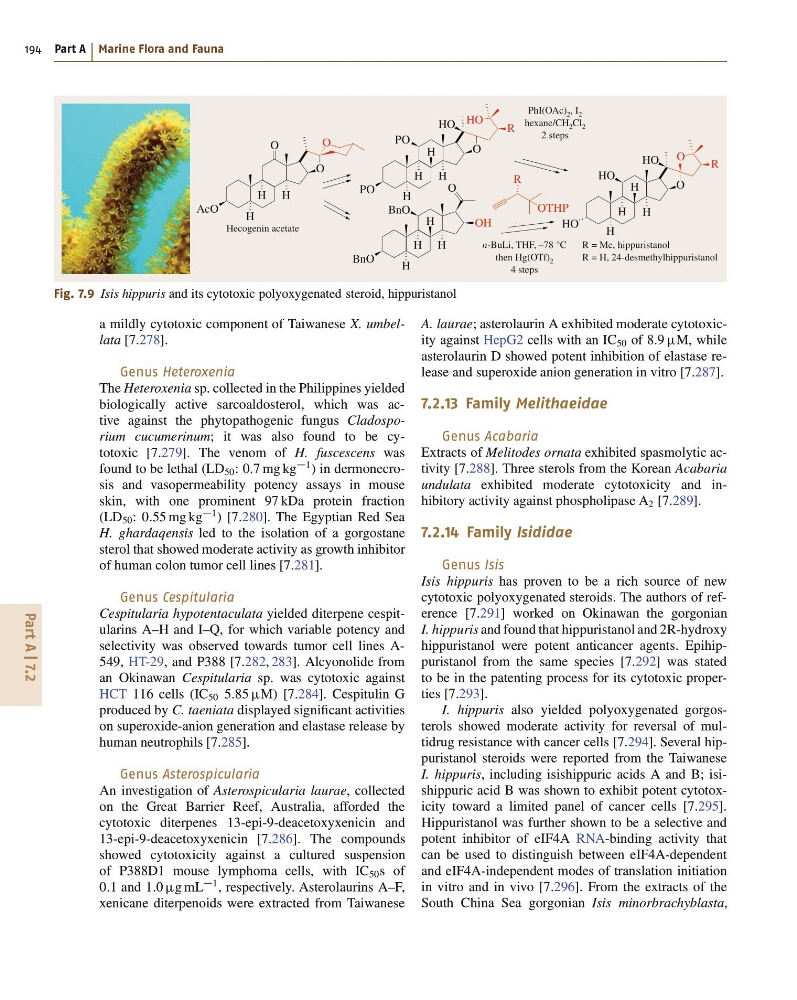
Fig. 7.9 Isis hippuris and its cytotoxic polyoxygenated steroid, hippuristanol
a mildly cytotoxic component of Taiwanese X. umbellata [7.278].
Genus Heteroxenia
The Heteroxenia sp. collected in the Philippines yielded
biologically active sarcoaldosterol, which was active against the phytopathogenic fungus Cladosporium cucumerinum; it was also found to be cytotoxic [7.279]. The venom of H. fuscescens was
found to be lethal (LD 50 : 0:7 mg kg
1 ) in dermonecrosis and vasopermeability potency assays in mouse
skin, with one prominent 97 kDa protein fraction
(LD 50 : 0:55 mg kg
1 ) [7.280]. The Egyptian Red Sea
H. ghardaqensis led to the isolation of a gorgostane
sterol that showed moderate activity as growth inhibitor
of human colon tumor cell lines [7.281].
Genus Cespitularia
Cespitularia hypotentaculata yielded diterpene cespitularins A–H and I–Q, for which variable potency and
selectivity was observed towards tumor cell lines A549, HT-29, and P388 [7.282, 283]. Alcyonolide from
an Okinawan Cespitularia sp. was cytotoxic against
HCT 116 cells (IC 50 5:85 M) [7.284]. Cespitulin G
produced by C. taeniata displayed significant activities
on superoxide-anion generation and elastase release by
human neutrophils [7.285].
Genus Asterospicularia
An investigation of Asterospicularia laurae, collected
on the Great Barrier Reef, Australia, afforded the
cytotoxic diterpenes 13-epi-9-deacetoxyxenicin and
13-epi-9-deacetoxyxenicin [7.286]. The compounds
showed cytotoxicity against a cultured suspension
of P388D1 mouse lymphoma cells, with IC 50 s of
0:1 and 1:0 g mL
1 , respectively. Asterolaurins A–F,
xenicane diterpenoids were extracted from Taiwanese
A. laurae; asterolaurin A exhibited moderate cytotoxicity against HepG2 cells with an IC 50 of 8:9 M, while
asterolaurin D showed potent inhibition of elastase release and superoxide anion generation in vitro [7.287].
7.2.13 Family Melithaeidae
Genus Acabaria
Extracts of Melitodes ornata exhibited spasmolytic activity [7.288]. Three sterols from the Korean Acabaria
undulata exhibited moderate cytotoxicity and inhibitory activity against phospholipase A 2 [7.289].
7.2.14 Family Isididae
Genus Isis
Isis hippuris has proven to be a rich source of new
cytotoxic polyoxygenated steroids. The authors of reference [7.291] worked on Okinawan the gorgonian
I. hippuris and found that hippuristanol and 2R-hydroxy
hippuristanol were potent anticancer agents. Epihippuristanol from the same species [7.292] was stated
to be in the patenting process for its cytotoxic properties [7.293].
I. hippuris also yielded polyoxygenated gorgosterols showed moderate activity for reversal of multidrug resistance with cancer cells [7.294]. Several hippuristanol steroids were reported from the Taiwanese
I. hippuris, including isishippuric acids A and B; isishippuric acid B was shown to exhibit potent cytotoxicity toward a limited panel of cancer cells [7.295].
Hippuristanol was further shown to be a selective and
potent inhibitor of eIF4A RNA-binding activity that
can be used to distinguish between eIF4A-dependent
and eIF4A-independent modes of translation initiation
in vitro and in vivo [7.296]. From the extracts of the
South China Sea gorgonian Isis minorbrachyblasta,
194 Part A Marine Flora and Fauna
n-BuLi, THF, –78 °C
then Hg(OTf) 2
4 steps
PhI(OAc) 2 , I 2
hexane/CH 2 Cl 2
2 steps
R = Me, hippuristanol
R = H, 24-desmethylhippuristanol
AcO
H
H H
O
O
O
PO
H
H
H
O
HO
PO
HO
R
R
OTHP
H
Hecogenin acetate
BnO
H
H
H
O
OH
BnO
H
H
H
H
O
HO
HO
O
R
H
HO
Fig. 7.9 Isis hippuris and its cytotoxic polyoxygenated steroid, hippuristanol
a mildly cytotoxic component of Taiwanese X. umbellata [7.278].
Genus Heteroxenia
The Heteroxenia sp. collected in the Philippines yielded
biologically active sarcoaldosterol, which was active against the phytopathogenic fungus Cladosporium cucumerinum; it was also found to be cytotoxic [7.279]. The venom of H. fuscescens was
found to be lethal (LD 50 : 0:7 mg kg
1 ) in dermonecrosis and vasopermeability potency assays in mouse
skin, with one prominent 97 kDa protein fraction
(LD 50 : 0:55 mg kg
1 ) [7.280]. The Egyptian Red Sea
H. ghardaqensis led to the isolation of a gorgostane
sterol that showed moderate activity as growth inhibitor
of human colon tumor cell lines [7.281].
Genus Cespitularia
Cespitularia hypotentaculata yielded diterpene cespitularins A–H and I–Q, for which variable potency and
selectivity was observed towards tumor cell lines A549, HT-29, and P388 [7.282, 283]. Alcyonolide from
an Okinawan Cespitularia sp. was cytotoxic against
HCT 116 cells (IC 50 5:85 M) [7.284]. Cespitulin G
produced by C. taeniata displayed significant activities
on superoxide-anion generation and elastase release by
human neutrophils [7.285].
Genus Asterospicularia
An investigation of Asterospicularia laurae, collected
on the Great Barrier Reef, Australia, afforded the
cytotoxic diterpenes 13-epi-9-deacetoxyxenicin and
13-epi-9-deacetoxyxenicin [7.286]. The compounds
showed cytotoxicity against a cultured suspension
of P388D1 mouse lymphoma cells, with IC 50 s of
0:1 and 1:0 g mL
1 , respectively. Asterolaurins A–F,
xenicane diterpenoids were extracted from Taiwanese
A. laurae; asterolaurin A exhibited moderate cytotoxicity against HepG2 cells with an IC 50 of 8:9 M, while
asterolaurin D showed potent inhibition of elastase release and superoxide anion generation in vitro [7.287].
7.2.13 Family Melithaeidae
Genus Acabaria
Extracts of Melitodes ornata exhibited spasmolytic activity [7.288]. Three sterols from the Korean Acabaria
undulata exhibited moderate cytotoxicity and inhibitory activity against phospholipase A 2 [7.289].
7.2.14 Family Isididae
Genus Isis
Isis hippuris has proven to be a rich source of new
cytotoxic polyoxygenated steroids. The authors of reference [7.291] worked on Okinawan the gorgonian
I. hippuris and found that hippuristanol and 2R-hydroxy
hippuristanol were potent anticancer agents. Epihippuristanol from the same species [7.292] was stated
to be in the patenting process for its cytotoxic properties [7.293].
I. hippuris also yielded polyoxygenated gorgosterols showed moderate activity for reversal of multidrug resistance with cancer cells [7.294]. Several hippuristanol steroids were reported from the Taiwanese
I. hippuris, including isishippuric acids A and B; isishippuric acid B was shown to exhibit potent cytotoxicity toward a limited panel of cancer cells [7.295].
Hippuristanol was further shown to be a selective and
potent inhibitor of eIF4A RNA-binding activity that
can be used to distinguish between eIF4A-dependent
and eIF4A-independent modes of translation initiation
in vitro and in vivo [7.296]. From the extracts of the
South China Sea gorgonian Isis minorbrachyblasta,