

Corals 7.2 Potential Pharmaceuticals from Soft Corals 195
Part A | 7.2
O
O
HO
NH
NH
OH
OH
O
O
OH
O
O
O
H
OH
OH
OH
OH
OH
OH
OH
O
OH
OH
OH
OH
OH
OH
OH
HO
HO
HO
HO
HO
HO
OH
OH
OH
OH
OH
OH
OH
OH
OH
OH
O
O
O
OH
H 2 N
O
OH
OH
HO
HO
OH
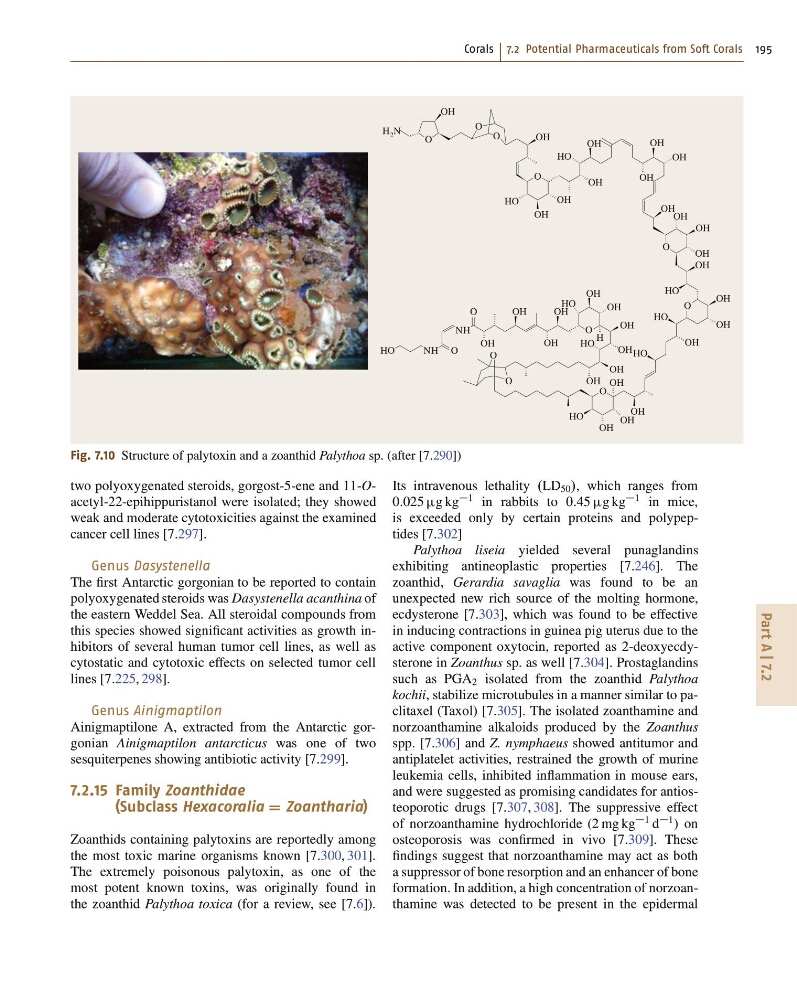
Fig. 7.10 Structure of palytoxin and a zoanthid Palythoa sp. (after [7.290])
two polyoxygenated steroids, gorgost-5-ene and 11-Oacetyl-22-epihippuristanol were isolated; they showed
weak and moderate cytotoxicities against the examined
cancer cell lines [7.297].
Genus Dasystenella
The first Antarctic gorgonian to be reported to contain
polyoxygenated steroids was Dasystenella acanthina of
the eastern Weddel Sea. All steroidal compounds from
this species showed significant activities as growth inhibitors of several human tumor cell lines, as well as
cytostatic and cytotoxic effects on selected tumor cell
lines [7.225, 298].
Genus Ainigmaptilon
Ainigmaptilone A, extracted from the Antarctic gorgonian Ainigmaptilon antarcticus was one of two
sesquiterpenes showing antibiotic activity [7.299].
7.2.15 Family Zoanthidae
(Subclass Hexacoralia D Zoantharia)
Zoanthids containing palytoxins are reportedly among
the most toxic marine organisms known [7.300, 301].
The extremely poisonous palytoxin, as one of the
most potent known toxins, was originally found in
the zoanthid Palythoa toxica (for a review, see [7.6]).
Its intravenous lethality .LD 50 /, which ranges from
0:025 g kg
1 in rabbits to 0:45 g kg
1 in mice,
is exceeded only by certain proteins and polypeptides [7.302]
Palythoa liseia yielded several punaglandins
exhibiting antineoplastic properties [7.246]. The
zoanthid, Gerardia savaglia was found to be an
unexpected new rich source of the molting hormone,
ecdysterone [7.303], which was found to be effective
in inducing contractions in guinea pig uterus due to the
active component oxytocin, reported as 2-deoxyecdysterone in Zoanthus sp. as well [7.304]. Prostaglandins
such as PGA 2 isolated from the zoanthid Palythoa
kochii, stabilize microtubules in a manner similar to paclitaxel (Taxol) [7.305]. The isolated zoanthamine and
norzoanthamine alkaloids produced by the Zoanthus
spp. [7.306] and Z. nymphaeus showed antitumor and
antiplatelet activities, restrained the growth of murine
leukemia cells, inhibited inflammation in mouse ears,
and were suggested as promising candidates for antiosteoporotic drugs [7.307, 308]. The suppressive effect
of norzoanthamine hydrochloride (2 mg kg
1 d
1 ) on
osteoporosis was confirmed in vivo [7.309]. These
findings suggest that norzoanthamine may act as both
a suppressor of bone resorption and an enhancer of bone
formation. In addition, a high concentration of norzoanthamine was detected to be present in the epidermal
Part A | 7.2
O
O
HO
NH
NH
OH
OH
O
O
OH
O
O
O
H
OH
OH
OH
OH
OH
OH
OH
O
OH
OH
OH
OH
OH
OH
OH
HO
HO
HO
HO
HO
HO
OH
OH
OH
OH
OH
OH
OH
OH
OH
OH
O
O
O
OH
H 2 N
O
OH
OH
HO
HO
OH
Fig. 7.10 Structure of palytoxin and a zoanthid Palythoa sp. (after [7.290])
two polyoxygenated steroids, gorgost-5-ene and 11-Oacetyl-22-epihippuristanol were isolated; they showed
weak and moderate cytotoxicities against the examined
cancer cell lines [7.297].
Genus Dasystenella
The first Antarctic gorgonian to be reported to contain
polyoxygenated steroids was Dasystenella acanthina of
the eastern Weddel Sea. All steroidal compounds from
this species showed significant activities as growth inhibitors of several human tumor cell lines, as well as
cytostatic and cytotoxic effects on selected tumor cell
lines [7.225, 298].
Genus Ainigmaptilon
Ainigmaptilone A, extracted from the Antarctic gorgonian Ainigmaptilon antarcticus was one of two
sesquiterpenes showing antibiotic activity [7.299].
7.2.15 Family Zoanthidae
(Subclass Hexacoralia D Zoantharia)
Zoanthids containing palytoxins are reportedly among
the most toxic marine organisms known [7.300, 301].
The extremely poisonous palytoxin, as one of the
most potent known toxins, was originally found in
the zoanthid Palythoa toxica (for a review, see [7.6]).
Its intravenous lethality .LD 50 /, which ranges from
0:025 g kg
1 in rabbits to 0:45 g kg
1 in mice,
is exceeded only by certain proteins and polypeptides [7.302]
Palythoa liseia yielded several punaglandins
exhibiting antineoplastic properties [7.246]. The
zoanthid, Gerardia savaglia was found to be an
unexpected new rich source of the molting hormone,
ecdysterone [7.303], which was found to be effective
in inducing contractions in guinea pig uterus due to the
active component oxytocin, reported as 2-deoxyecdysterone in Zoanthus sp. as well [7.304]. Prostaglandins
such as PGA 2 isolated from the zoanthid Palythoa
kochii, stabilize microtubules in a manner similar to paclitaxel (Taxol) [7.305]. The isolated zoanthamine and
norzoanthamine alkaloids produced by the Zoanthus
spp. [7.306] and Z. nymphaeus showed antitumor and
antiplatelet activities, restrained the growth of murine
leukemia cells, inhibited inflammation in mouse ears,
and were suggested as promising candidates for antiosteoporotic drugs [7.307, 308]. The suppressive effect
of norzoanthamine hydrochloride (2 mg kg
1 d
1 ) on
osteoporosis was confirmed in vivo [7.309]. These
findings suggest that norzoanthamine may act as both
a suppressor of bone resorption and an enhancer of bone
formation. In addition, a high concentration of norzoanthamine was detected to be present in the epidermal