

Seaweed Flora of the European North Atlantic and Mediterranean 6.3 Seaweeds Biodiversity and Potential 117
Part A | 6.3
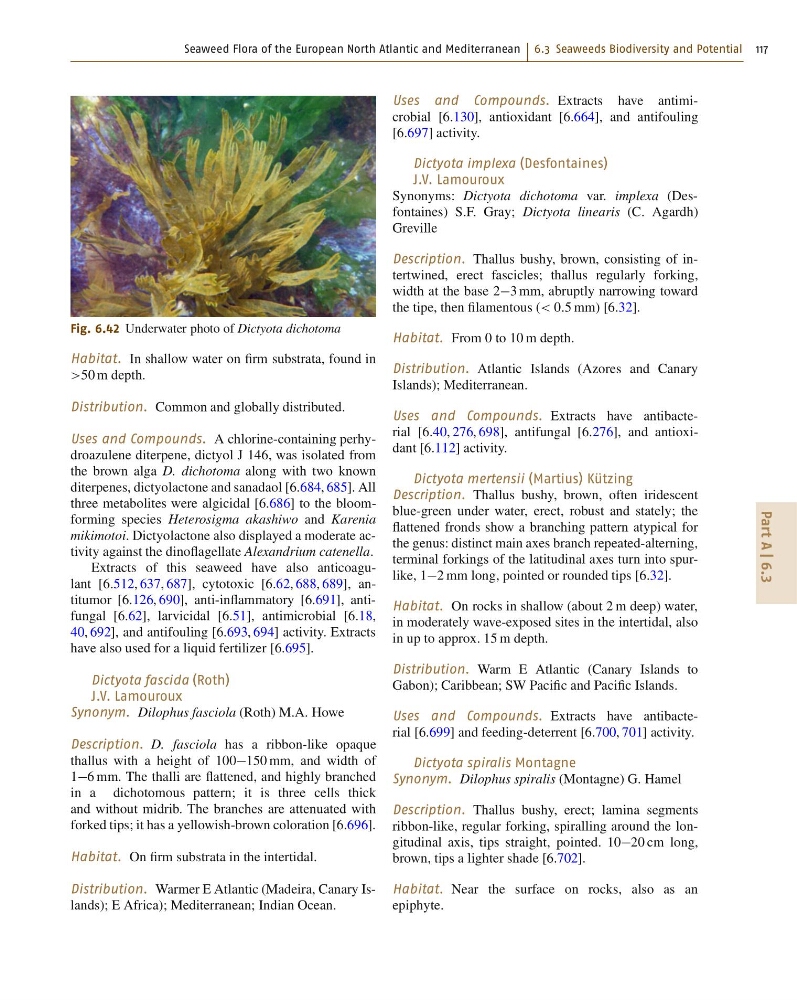
Fig. 6.42 Underwater photo of Dictyota dichotoma
Habitat. In shallow water on firm substrata, found in
>50 m depth.
Distribution. Common and globally distributed.
Uses and Compounds. A chlorine-containing perhydroazulene diterpene, dictyol J 146, was isolated from
the brown alga D. dichotoma along with two known
diterpenes, dictyolactone and sanadaol [6.684, 685]. All
three metabolites were algicidal [6.686] to the bloomforming species Heterosigma akashiwo and Karenia
mikimotoi. Dictyolactone also displayed a moderate activity against the dinoflagellate Alexandrium catenella.
Extracts of this seaweed have also anticoagulant [6.512, 637, 687], cytotoxic [6.62, 688, 689], antitumor [6.126, 690], anti-inflammatory [6.691], antifungal [6.62], larvicidal [6.51], antimicrobial [6.18,
40, 692], and antifouling [6.693, 694] activity. Extracts
have also used for a liquid fertilizer [6.695].
Dictyota fascida (Roth)
J.V. Lamouroux
Synonym. Dilophus fasciola (Roth) M.A. Howe
Description. D. fasciola has a ribbon-like opaque
thallus with a height of 100150 mm, and width of
16 mm. The thalli are flattened, and highly branched
in a dichotomous pattern; it is three cells thick
and without midrib. The branches are attenuated with
forked tips; it has a yellowish-brown coloration [6.696].
Habitat. On firm substrata in the intertidal.
Distribution. Warmer E Atlantic (Madeira, Canary Islands); E Africa); Mediterranean; Indian Ocean.
Uses and Compounds. Extracts have antimicrobial [6.130], antioxidant [6.664], and antifouling
[6.697] activity.
Dictyota implexa (Desfontaines)
J.V. Lamouroux
Synonyms: Dictyota dichotoma var. implexa (Desfontaines) S.F. Gray; Dictyota linearis (C. Agardh)
Greville
Description. Thallus bushy, brown, consisting of intertwined, erect fascicles; thallus regularly forking,
width at the base 23 mm, abruptly narrowing toward
the tipe, then filamentous (< 0:5 mm) [6.32].
Habitat. From 0 to 10 m depth.
Distribution. Atlantic Islands (Azores and Canary
Islands); Mediterranean.
Uses and Compounds. Extracts have antibacterial [6.40, 276, 698], antifungal [6.276], and antioxidant [6.112] activity.
Dictyota mertensii (Martius) Kützing
Description. Thallus bushy, brown, often iridescent
blue-green under water, erect, robust and stately; the
flattened fronds show a branching pattern atypical for
the genus: distinct main axes branch repeated-alterning,
terminal forkings of the latitudinal axes turn into spurlike, 12 mm long, pointed or rounded tips [6.32].
Habitat. On rocks in shallow (about 2 m deep) water,
in moderately wave-exposed sites in the intertidal, also
in up to approx. 15 m depth.
Distribution. Warm E Atlantic (Canary Islands to
Gabon); Caribbean; SW Pacific and Pacific Islands.
Uses and Compounds. Extracts have antibacterial [6.699] and feeding-deterrent [6.700, 701] activity.
Dictyota spiralis Montagne
Synonym. Dilophus spiralis (Montagne) G. Hamel
Description. Thallus bushy, erect; lamina segments
ribbon-like, regular forking, spiralling around the longitudinal axis, tips straight, pointed. 1020 cm long,
brown, tips a lighter shade [6.702].
Habitat. Near the surface on rocks, also as an
epiphyte.
Part A | 6.3
Fig. 6.42 Underwater photo of Dictyota dichotoma
Habitat. In shallow water on firm substrata, found in
>50 m depth.
Distribution. Common and globally distributed.
Uses and Compounds. A chlorine-containing perhydroazulene diterpene, dictyol J 146, was isolated from
the brown alga D. dichotoma along with two known
diterpenes, dictyolactone and sanadaol [6.684, 685]. All
three metabolites were algicidal [6.686] to the bloomforming species Heterosigma akashiwo and Karenia
mikimotoi. Dictyolactone also displayed a moderate activity against the dinoflagellate Alexandrium catenella.
Extracts of this seaweed have also anticoagulant [6.512, 637, 687], cytotoxic [6.62, 688, 689], antitumor [6.126, 690], anti-inflammatory [6.691], antifungal [6.62], larvicidal [6.51], antimicrobial [6.18,
40, 692], and antifouling [6.693, 694] activity. Extracts
have also used for a liquid fertilizer [6.695].
Dictyota fascida (Roth)
J.V. Lamouroux
Synonym. Dilophus fasciola (Roth) M.A. Howe
Description. D. fasciola has a ribbon-like opaque
thallus with a height of 100150 mm, and width of
16 mm. The thalli are flattened, and highly branched
in a dichotomous pattern; it is three cells thick
and without midrib. The branches are attenuated with
forked tips; it has a yellowish-brown coloration [6.696].
Habitat. On firm substrata in the intertidal.
Distribution. Warmer E Atlantic (Madeira, Canary Islands); E Africa); Mediterranean; Indian Ocean.
Uses and Compounds. Extracts have antimicrobial [6.130], antioxidant [6.664], and antifouling
[6.697] activity.
Dictyota implexa (Desfontaines)
J.V. Lamouroux
Synonyms: Dictyota dichotoma var. implexa (Desfontaines) S.F. Gray; Dictyota linearis (C. Agardh)
Greville
Description. Thallus bushy, brown, consisting of intertwined, erect fascicles; thallus regularly forking,
width at the base 23 mm, abruptly narrowing toward
the tipe, then filamentous (< 0:5 mm) [6.32].
Habitat. From 0 to 10 m depth.
Distribution. Atlantic Islands (Azores and Canary
Islands); Mediterranean.
Uses and Compounds. Extracts have antibacterial [6.40, 276, 698], antifungal [6.276], and antioxidant [6.112] activity.
Dictyota mertensii (Martius) Kützing
Description. Thallus bushy, brown, often iridescent
blue-green under water, erect, robust and stately; the
flattened fronds show a branching pattern atypical for
the genus: distinct main axes branch repeated-alterning,
terminal forkings of the latitudinal axes turn into spurlike, 12 mm long, pointed or rounded tips [6.32].
Habitat. On rocks in shallow (about 2 m deep) water,
in moderately wave-exposed sites in the intertidal, also
in up to approx. 15 m depth.
Distribution. Warm E Atlantic (Canary Islands to
Gabon); Caribbean; SW Pacific and Pacific Islands.
Uses and Compounds. Extracts have antibacterial [6.699] and feeding-deterrent [6.700, 701] activity.
Dictyota spiralis Montagne
Synonym. Dilophus spiralis (Montagne) G. Hamel
Description. Thallus bushy, erect; lamina segments
ribbon-like, regular forking, spiralling around the longitudinal axis, tips straight, pointed. 1020 cm long,
brown, tips a lighter shade [6.702].
Habitat. Near the surface on rocks, also as an
epiphyte.