

Part A | 6.3
116 Part A Marine Flora and Fauna
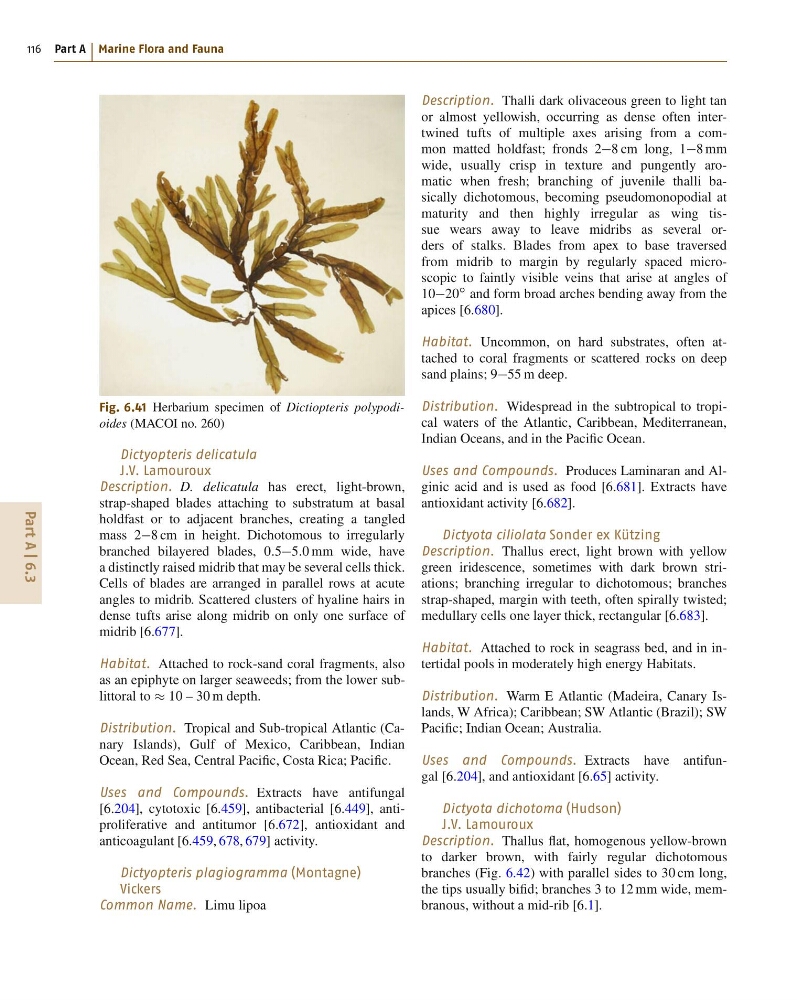
Fig. 6.41 Herbarium specimen of Dictiopteris polypodioides (MACOI no. 260)
Dictyopteris delicatula
J.V. Lamouroux
Description. D. delicatula has erect, light-brown,
strap-shaped blades attaching to substratum at basal
holdfast or to adjacent branches, creating a tangled
mass 28 cm in height. Dichotomous to irregularly
branched bilayered blades, 0:55:0 mm wide, have
a distinctly raised midrib that may be several cells thick.
Cells of blades are arranged in parallel rows at acute
angles to midrib. Scattered clusters of hyaline hairs in
dense tufts arise along midrib on only one surface of
midrib [6.677].
Habitat. Attached to rock-sand coral fragments, also
as an epiphyte on larger seaweeds; from the lower sublittoral to 10 – 30 m depth.
Distribution. Tropical and Sub-tropical Atlantic (Canary Islands), Gulf of Mexico, Caribbean, Indian
Ocean, Red Sea, Central Pacific, Costa Rica; Pacific.
Uses and Compounds. Extracts have antifungal
[6.204], cytotoxic [6.459], antibacterial [6.449], antiproliferative and antitumor [6.672], antioxidant and
anticoagulant [6.459, 678, 679] activity.
Dictyopteris plagiogramma (Montagne)
Vickers
Common Name. Limu lipoa
Description. Thalli dark olivaceous green to light tan
or almost yellowish, occurring as dense often intertwined tufts of multiple axes arising from a common matted holdfast; fronds 28 cm long, 18 mm
wide, usually crisp in texture and pungently aromatic when fresh; branching of juvenile thalli basically dichotomous, becoming pseudomonopodial at
maturity and then highly irregular as wing tissue wears away to leave midribs as several orders of stalks. Blades from apex to base traversed
from midrib to margin by regularly spaced microscopic to faintly visible veins that arise at angles of
1020
ı and form broad arches bending away from the
apices [6.680].
Habitat. Uncommon, on hard substrates, often attached to coral fragments or scattered rocks on deep
sand plains; 955 m deep.
Distribution. Widespread in the subtropical to tropical waters of the Atlantic, Caribbean, Mediterranean,
Indian Oceans, and in the Pacific Ocean.
Uses and Compounds. Produces Laminaran and Alginic acid and is used as food [6.681]. Extracts have
antioxidant activity [6.682].
Dictyota ciliolata Sonder ex Kützing
Description. Thallus erect, light brown with yellow
green iridescence, sometimes with dark brown striations; branching irregular to dichotomous; branches
strap-shaped, margin with teeth, often spirally twisted;
medullary cells one layer thick, rectangular [6.683].
Habitat. Attached to rock in seagrass bed, and in intertidal pools in moderately high energy Habitats.
Distribution. Warm E Atlantic (Madeira, Canary Islands, W Africa); Caribbean; SW Atlantic (Brazil); SW
Pacific; Indian Ocean; Australia.
Uses and Compounds. Extracts have antifungal [6.204], and antioxidant [6.65] activity.
Dictyota dichotoma (Hudson)
J.V. Lamouroux
Description. Thallus flat, homogenous yellow-brown
to darker brown, with fairly regular dichotomous
branches (Fig. 6.42) with parallel sides to 30 cm long,
the tips usually bifid; branches 3 to 12 mm wide, membranous, without a mid-rib [6.1].
116 Part A Marine Flora and Fauna
Fig. 6.41 Herbarium specimen of Dictiopteris polypodioides (MACOI no. 260)
Dictyopteris delicatula
J.V. Lamouroux
Description. D. delicatula has erect, light-brown,
strap-shaped blades attaching to substratum at basal
holdfast or to adjacent branches, creating a tangled
mass 28 cm in height. Dichotomous to irregularly
branched bilayered blades, 0:55:0 mm wide, have
a distinctly raised midrib that may be several cells thick.
Cells of blades are arranged in parallel rows at acute
angles to midrib. Scattered clusters of hyaline hairs in
dense tufts arise along midrib on only one surface of
midrib [6.677].
Habitat. Attached to rock-sand coral fragments, also
as an epiphyte on larger seaweeds; from the lower sublittoral to 10 – 30 m depth.
Distribution. Tropical and Sub-tropical Atlantic (Canary Islands), Gulf of Mexico, Caribbean, Indian
Ocean, Red Sea, Central Pacific, Costa Rica; Pacific.
Uses and Compounds. Extracts have antifungal
[6.204], cytotoxic [6.459], antibacterial [6.449], antiproliferative and antitumor [6.672], antioxidant and
anticoagulant [6.459, 678, 679] activity.
Dictyopteris plagiogramma (Montagne)
Vickers
Common Name. Limu lipoa
Description. Thalli dark olivaceous green to light tan
or almost yellowish, occurring as dense often intertwined tufts of multiple axes arising from a common matted holdfast; fronds 28 cm long, 18 mm
wide, usually crisp in texture and pungently aromatic when fresh; branching of juvenile thalli basically dichotomous, becoming pseudomonopodial at
maturity and then highly irregular as wing tissue wears away to leave midribs as several orders of stalks. Blades from apex to base traversed
from midrib to margin by regularly spaced microscopic to faintly visible veins that arise at angles of
1020
ı and form broad arches bending away from the
apices [6.680].
Habitat. Uncommon, on hard substrates, often attached to coral fragments or scattered rocks on deep
sand plains; 955 m deep.
Distribution. Widespread in the subtropical to tropical waters of the Atlantic, Caribbean, Mediterranean,
Indian Oceans, and in the Pacific Ocean.
Uses and Compounds. Produces Laminaran and Alginic acid and is used as food [6.681]. Extracts have
antioxidant activity [6.682].
Dictyota ciliolata Sonder ex Kützing
Description. Thallus erect, light brown with yellow
green iridescence, sometimes with dark brown striations; branching irregular to dichotomous; branches
strap-shaped, margin with teeth, often spirally twisted;
medullary cells one layer thick, rectangular [6.683].
Habitat. Attached to rock in seagrass bed, and in intertidal pools in moderately high energy Habitats.
Distribution. Warm E Atlantic (Madeira, Canary Islands, W Africa); Caribbean; SW Atlantic (Brazil); SW
Pacific; Indian Ocean; Australia.
Uses and Compounds. Extracts have antifungal [6.204], and antioxidant [6.65] activity.
Dictyota dichotoma (Hudson)
J.V. Lamouroux
Description. Thallus flat, homogenous yellow-brown
to darker brown, with fairly regular dichotomous
branches (Fig. 6.42) with parallel sides to 30 cm long,
the tips usually bifid; branches 3 to 12 mm wide, membranous, without a mid-rib [6.1].