

Seaweed Flora of the European North Atlantic and Mediterranean 6.3 Seaweeds Biodiversity and Potential 115
Part A | 6.3
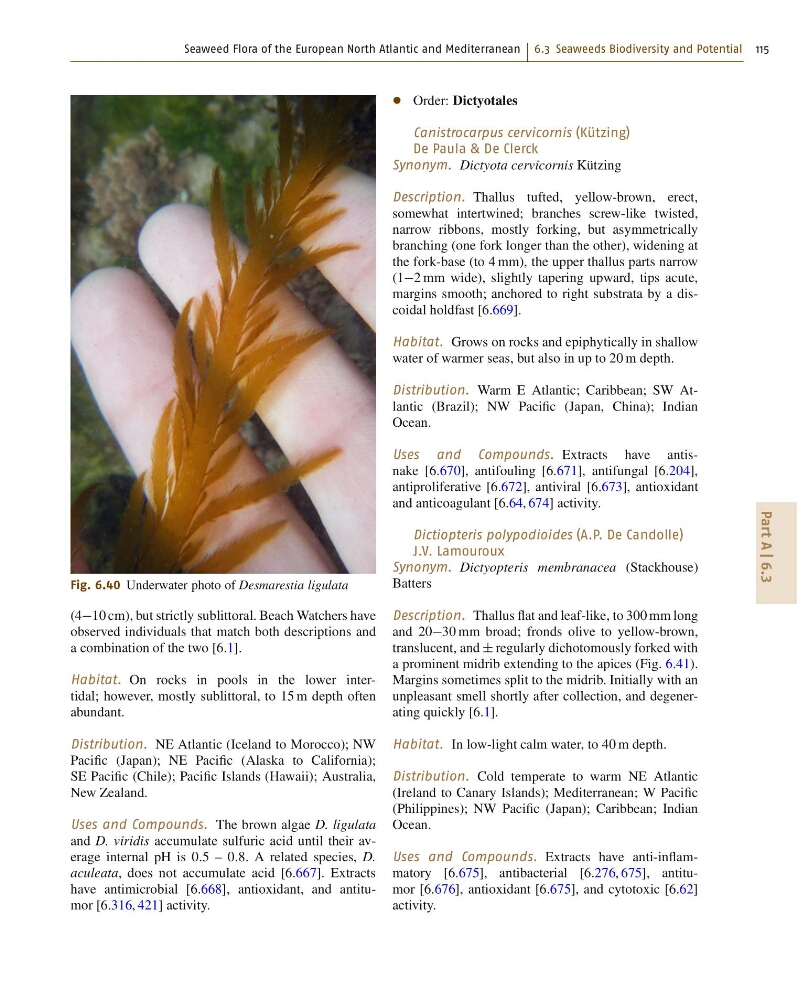
Fig. 6.40 Underwater photo of Desmarestia ligulata
(410 cm), but strictly sublittoral. Beach Watchers have
observed individuals that match both descriptions and
a combination of the two [6.1].
Habitat. On rocks in pools in the lower intertidal; however, mostly sublittoral, to 15 m depth often
abundant.
Distribution. NE Atlantic (Iceland to Morocco); NW
Pacific (Japan); NE Pacific (Alaska to California);
SE Pacific (Chile); Pacific Islands (Hawaii); Australia,
New Zealand.
Uses and Compounds. The brown algae D. ligulata
and D. viridis accumulate sulfuric acid until their average internal pH is 0:5 – 0:8. A related species, D.
aculeata, does not accumulate acid [6.667]. Extracts
have antimicrobial [6.668], antioxidant, and antitumor [6.316, 421] activity.
Order: Dictyotales
Canistrocarpus cervicornis (Kützing)
De Paula & De Clerck
Synonym. Dictyota cervicornis Kützing
Description. Thallus tufted, yellow-brown, erect,
somewhat intertwined; branches screw-like twisted,
narrow ribbons, mostly forking, but asymmetrically
branching (one fork longer than the other), widening at
the fork-base (to 4 mm), the upper thallus parts narrow
(12 mm wide), slightly tapering upward, tips acute,
margins smooth; anchored to right substrata by a discoidal holdfast [6.669].
Habitat. Grows on rocks and epiphytically in shallow
water of warmer seas, but also in up to 20 m depth.
Distribution. Warm E Atlantic; Caribbean; SW Atlantic (Brazil); NW Pacific (Japan, China); Indian
Ocean.
Uses and Compounds. Extracts have antisnake [6.670], antifouling [6.671], antifungal [6.204],
antiproliferative [6.672], antiviral [6.673], antioxidant
and anticoagulant [6.64, 674] activity.
Dictiopteris polypodioides (A.P. De Candolle)
J.V. Lamouroux
Synonym. Dictyopteris membranacea (Stackhouse)
Batters
Description. Thallus flat and leaf-like, to 300 mm long
and 2030 mm broad; fronds olive to yellow-brown,
translucent, and ˙ regularly dichotomously forked with
a prominent midrib extending to the apices (Fig. 6.41).
Margins sometimes split to the midrib. Initially with an
unpleasant smell shortly after collection, and degenerating quickly [6.1].
Habitat. In low-light calm water, to 40 m depth.
Distribution. Cold temperate to warm NE Atlantic
(Ireland to Canary Islands); Mediterranean; W Pacific
(Philippines); NW Pacific (Japan); Caribbean; Indian
Ocean.
Uses and Compounds. Extracts have anti-inflammatory [6.675], antibacterial [6.276, 675], antitumor [6.676], antioxidant [6.675], and cytotoxic [6.62]
activity.
Part A | 6.3
Fig. 6.40 Underwater photo of Desmarestia ligulata
(410 cm), but strictly sublittoral. Beach Watchers have
observed individuals that match both descriptions and
a combination of the two [6.1].
Habitat. On rocks in pools in the lower intertidal; however, mostly sublittoral, to 15 m depth often
abundant.
Distribution. NE Atlantic (Iceland to Morocco); NW
Pacific (Japan); NE Pacific (Alaska to California);
SE Pacific (Chile); Pacific Islands (Hawaii); Australia,
New Zealand.
Uses and Compounds. The brown algae D. ligulata
and D. viridis accumulate sulfuric acid until their average internal pH is 0:5 – 0:8. A related species, D.
aculeata, does not accumulate acid [6.667]. Extracts
have antimicrobial [6.668], antioxidant, and antitumor [6.316, 421] activity.
Order: Dictyotales
Canistrocarpus cervicornis (Kützing)
De Paula & De Clerck
Synonym. Dictyota cervicornis Kützing
Description. Thallus tufted, yellow-brown, erect,
somewhat intertwined; branches screw-like twisted,
narrow ribbons, mostly forking, but asymmetrically
branching (one fork longer than the other), widening at
the fork-base (to 4 mm), the upper thallus parts narrow
(12 mm wide), slightly tapering upward, tips acute,
margins smooth; anchored to right substrata by a discoidal holdfast [6.669].
Habitat. Grows on rocks and epiphytically in shallow
water of warmer seas, but also in up to 20 m depth.
Distribution. Warm E Atlantic; Caribbean; SW Atlantic (Brazil); NW Pacific (Japan, China); Indian
Ocean.
Uses and Compounds. Extracts have antisnake [6.670], antifouling [6.671], antifungal [6.204],
antiproliferative [6.672], antiviral [6.673], antioxidant
and anticoagulant [6.64, 674] activity.
Dictiopteris polypodioides (A.P. De Candolle)
J.V. Lamouroux
Synonym. Dictyopteris membranacea (Stackhouse)
Batters
Description. Thallus flat and leaf-like, to 300 mm long
and 2030 mm broad; fronds olive to yellow-brown,
translucent, and ˙ regularly dichotomously forked with
a prominent midrib extending to the apices (Fig. 6.41).
Margins sometimes split to the midrib. Initially with an
unpleasant smell shortly after collection, and degenerating quickly [6.1].
Habitat. In low-light calm water, to 40 m depth.
Distribution. Cold temperate to warm NE Atlantic
(Ireland to Canary Islands); Mediterranean; W Pacific
(Philippines); NW Pacific (Japan); Caribbean; Indian
Ocean.
Uses and Compounds. Extracts have anti-inflammatory [6.675], antibacterial [6.276, 675], antitumor [6.676], antioxidant [6.675], and cytotoxic [6.62]
activity.