

Seaweed Flora of the European North Atlantic and Mediterranean 6.3 Seaweeds Biodiversity and Potential 71
Part A | 6.3
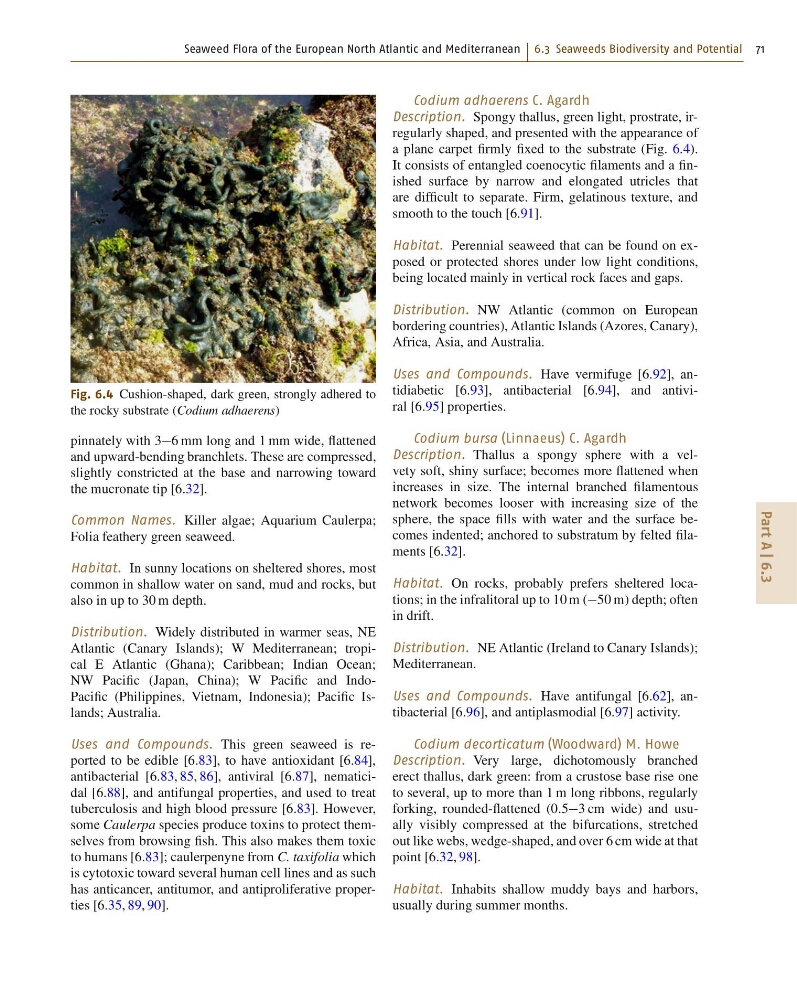
Fig. 6.4 Cushion-shaped, dark green, strongly adhered to
the rocky substrate (Codium adhaerens)
pinnately with 36 mm long and 1 mm wide, flattened
and upward-bending branchlets. These are compressed,
slightly constricted at the base and narrowing toward
the mucronate tip [6.32].
Common Names. Killer algae; Aquarium Caulerpa;
Folia feathery green seaweed.
Habitat. In sunny locations on sheltered shores, most
common in shallow water on sand, mud and rocks, but
also in up to 30 m depth.
Distribution. Widely distributed in warmer seas, NE
Atlantic (Canary Islands); W Mediterranean; tropical E Atlantic (Ghana); Caribbean; Indian Ocean;
NW Pacific (Japan, China); W Pacific and IndoPacific (Philippines, Vietnam, Indonesia); Pacific Islands; Australia.
Uses and Compounds. This green seaweed is reported to be edible [6.83], to have antioxidant [6.84],
antibacterial [6.83, 85, 86], antiviral [6.87], nematicidal [6.88], and antifungal properties, and used to treat
tuberculosis and high blood pressure [6.83]. However,
some Caulerpa species produce toxins to protect themselves from browsing fish. This also makes them toxic
to humans [6.83]; caulerpenyne from C. taxifolia which
is cytotoxic toward several human cell lines and as such
has anticancer, antitumor, and antiproliferative properties [6.35, 89, 90].
Codium adhaerens C. Agardh
Description. Spongy thallus, green light, prostrate, irregularly shaped, and presented with the appearance of
a plane carpet firmly fixed to the substrate (Fig. 6.4).
It consists of entangled coenocytic filaments and a finished surface by narrow and elongated utricles that
are difficult to separate. Firm, gelatinous texture, and
smooth to the touch [6.91].
Habitat. Perennial seaweed that can be found on exposed or protected shores under low light conditions,
being located mainly in vertical rock faces and gaps.
Distribution. NW Atlantic (common on European
bordering countries), Atlantic Islands (Azores, Canary),
Africa, Asia, and Australia.
Uses and Compounds. Have vermifuge [6.92], antidiabetic [6.93], antibacterial [6.94], and antiviral [6.95] properties.
Codium bursa (Linnaeus) C. Agardh
Description. Thallus a spongy sphere with a velvety soft, shiny surface; becomes more flattened when
increases in size. The internal branched filamentous
network becomes looser with increasing size of the
sphere, the space fills with water and the surface becomes indented; anchored to substratum by felted filaments [6.32].
Habitat. On rocks, probably prefers sheltered locations; in the infralitoral up to 10 m (50 m) depth; often
in drift.
Distribution. NE Atlantic (Ireland to Canary Islands);
Mediterranean.
Uses and Compounds. Have antifungal [6.62], antibacterial [6.96], and antiplasmodial [6.97] activity.
Codium decorticatum (Woodward) M. Howe
Description. Very large, dichotomously branched
erect thallus, dark green: from a crustose base rise one
to several, up to more than 1 m long ribbons, regularly
forking, rounded-flattened (0:53 cm wide) and usually visibly compressed at the bifurcations, stretched
out like webs, wedge-shaped, and over 6 cm wide at that
point [6.32, 98].
Habitat. Inhabits shallow muddy bays and harbors,
usually during summer months.
Part A | 6.3
Fig. 6.4 Cushion-shaped, dark green, strongly adhered to
the rocky substrate (Codium adhaerens)
pinnately with 36 mm long and 1 mm wide, flattened
and upward-bending branchlets. These are compressed,
slightly constricted at the base and narrowing toward
the mucronate tip [6.32].
Common Names. Killer algae; Aquarium Caulerpa;
Folia feathery green seaweed.
Habitat. In sunny locations on sheltered shores, most
common in shallow water on sand, mud and rocks, but
also in up to 30 m depth.
Distribution. Widely distributed in warmer seas, NE
Atlantic (Canary Islands); W Mediterranean; tropical E Atlantic (Ghana); Caribbean; Indian Ocean;
NW Pacific (Japan, China); W Pacific and IndoPacific (Philippines, Vietnam, Indonesia); Pacific Islands; Australia.
Uses and Compounds. This green seaweed is reported to be edible [6.83], to have antioxidant [6.84],
antibacterial [6.83, 85, 86], antiviral [6.87], nematicidal [6.88], and antifungal properties, and used to treat
tuberculosis and high blood pressure [6.83]. However,
some Caulerpa species produce toxins to protect themselves from browsing fish. This also makes them toxic
to humans [6.83]; caulerpenyne from C. taxifolia which
is cytotoxic toward several human cell lines and as such
has anticancer, antitumor, and antiproliferative properties [6.35, 89, 90].
Codium adhaerens C. Agardh
Description. Spongy thallus, green light, prostrate, irregularly shaped, and presented with the appearance of
a plane carpet firmly fixed to the substrate (Fig. 6.4).
It consists of entangled coenocytic filaments and a finished surface by narrow and elongated utricles that
are difficult to separate. Firm, gelatinous texture, and
smooth to the touch [6.91].
Habitat. Perennial seaweed that can be found on exposed or protected shores under low light conditions,
being located mainly in vertical rock faces and gaps.
Distribution. NW Atlantic (common on European
bordering countries), Atlantic Islands (Azores, Canary),
Africa, Asia, and Australia.
Uses and Compounds. Have vermifuge [6.92], antidiabetic [6.93], antibacterial [6.94], and antiviral [6.95] properties.
Codium bursa (Linnaeus) C. Agardh
Description. Thallus a spongy sphere with a velvety soft, shiny surface; becomes more flattened when
increases in size. The internal branched filamentous
network becomes looser with increasing size of the
sphere, the space fills with water and the surface becomes indented; anchored to substratum by felted filaments [6.32].
Habitat. On rocks, probably prefers sheltered locations; in the infralitoral up to 10 m (50 m) depth; often
in drift.
Distribution. NE Atlantic (Ireland to Canary Islands);
Mediterranean.
Uses and Compounds. Have antifungal [6.62], antibacterial [6.96], and antiplasmodial [6.97] activity.
Codium decorticatum (Woodward) M. Howe
Description. Very large, dichotomously branched
erect thallus, dark green: from a crustose base rise one
to several, up to more than 1 m long ribbons, regularly
forking, rounded-flattened (0:53 cm wide) and usually visibly compressed at the bifurcations, stretched
out like webs, wedge-shaped, and over 6 cm wide at that
point [6.32, 98].
Habitat. Inhabits shallow muddy bays and harbors,
usually during summer months.