

657
20.4 Fisheries and Fishes Resources
20.4.1 Parnaíba River Delta
Although small-scale industrial fishery is observed in the coastal adjacent areas,
fishing activities in the Parnaíba Delta itself are almost exclusively artisanal. The
mangrove uçá-crab and the common snook represent approximately 90% of total
fishing products (Farias et al. 2015) (Figs. 20.15b and 20.18a–d). The Delta fishery
production in 2006 was ~3500 tons (IBAMA 2008a). Finfishes represented 60% of
the total production, followed by shrimps (20%), crabs (17%) and oysters (3%)
(IBAMA 2008a). A compilation of total finfish production in the Delta from 1999
to 2006 shows that highwaterman catfish (Hypophthalamus edentatus), longnose
stingray ray (Dasyatis guttata) (Fig. 20.15a), mullets (Mugil spp.) (Fig. 20.7ab, )
and serra mackerel Scomberomorus brasiliensis (Fig. 20.15f) production exceeded
100 tons each during the period. While whitemouth croaker (Micropogonias furnieri) (Fig. 20.7e) and crucifix sea catfish (Sciades proops) productions exceeded
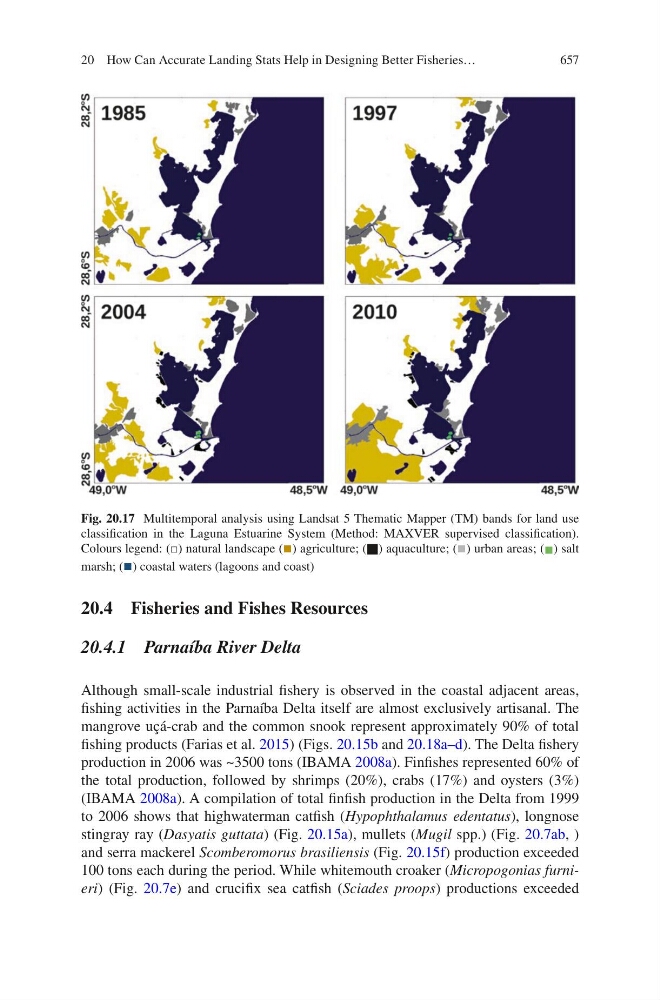
Fig. 20.17 Multitemporal analysis using Landsat 5 Thematic Mapper (TM) bands for land use
classification in the Laguna Estuarine System (Method: MAXVER supervised classification).
Colours legend: (□) natural landscape (■) agriculture; (■) aquaculture; (■) urban areas; (■) salt
marsh; (■) coastal waters (lagoons and coast)
20 How Can Accurate Landing Stats Help in Designing Better Fisheries…