

658
400 tons each (Farias et al. 2015). According to ESTATPESCA data, Piauí State
produced more than 6000 tons of fisheries per year between 1999 and 2010, with a
maximum of 10,456 tons in 2008 (ESTATPESCA 2010). The most important fisheries resources are the uçá-crab, lane snapper (Lutjanus synagris), serra mackerel,
king mackerel (Scomberomorus cavalla), blackfin tuna (Thunnus atlanticus) and
acoupa weakfish (Cynoscion acoupa) (Fig. 20.7c and Table 20.1).
The period of highest rainfall is recognized as also being the time of greater fishing productivity in the region. The contribution of a large volumes of freshwater into
the estuaries increases nutrient loads and productivity, therefore increasing the
abundance and diversity of species (Mai and Leobmann 2010; Melo 2012; Lima
2012; Melo et al. 2015). It functions as spawning, growth, protection and feeding
grounds of many fish species (Fernandes 2015). The common snook, caught in
mesh size of 12 cm between knots, showed highest productivities between February
and July 2014, coinciding with the rainy season in the Parnaíba Delta (Farias et al.
2015). Mullets, being omnivorous and pelagic, showed higher production in the
months of lower turbidity and higher primary productivity (Farias et al. 2015).
However, no significant differences in catches of freshwater shrimps between dry
and rainy seasons were observed.
Fisheries at night are limited by the absence of adequate navigation equipment or
land-based references, even inside the estuarine system. When possible, they target
mainly mullets M. curema and M. rubrioculus (mullets). Another important fishing
resource is the broadband anchovy Anchoviella lepidonstole captured with artisanal
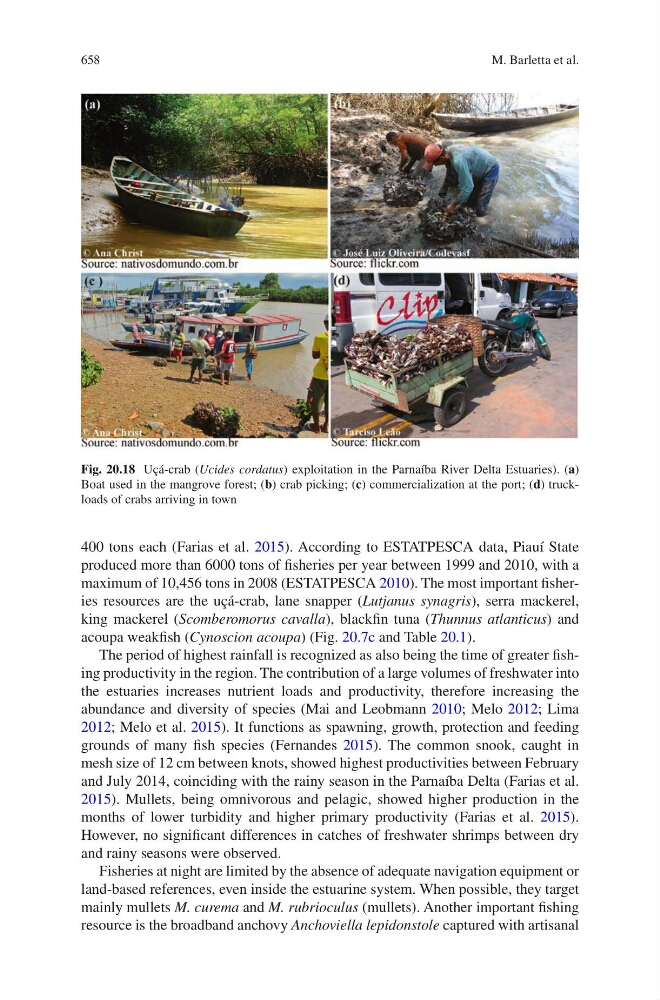
Fig. 20.18 Uçá-crab (Ucides cordatus) exploitation in the Parnaíba River Delta Estuaries). (a)
Boat used in the mangrove forest; (b) crab picking; (c) commercialization at the port; (d) truckloads of crabs arriving in town
M. Barletta et al.