

653
biodiversity of native fish populations and reduction of biological production,
including fisheries yields (Costa 2003; Silva 2009).
Anthropogenic modifications in the lower São Francisco River decreased the
magnitude of its flow, which current is only 800 m
3
s
−1
(natural average river flow
2.846 m
3
s
−1
). Together with the loss of seasonal and interannual pulses, the flow is
now stable. Therefore, an increase of the saline intrusion in the stagnant estuary that
changes the original conditions is observed (Medeiros et al. 2008). The construction
of dams and their reservoirs across the entire drainage basin are also changing the
river water quality and the composition of biogenic matter of coastal zones, affecting productivity, trophic interactions and exportation of materials to the ocean
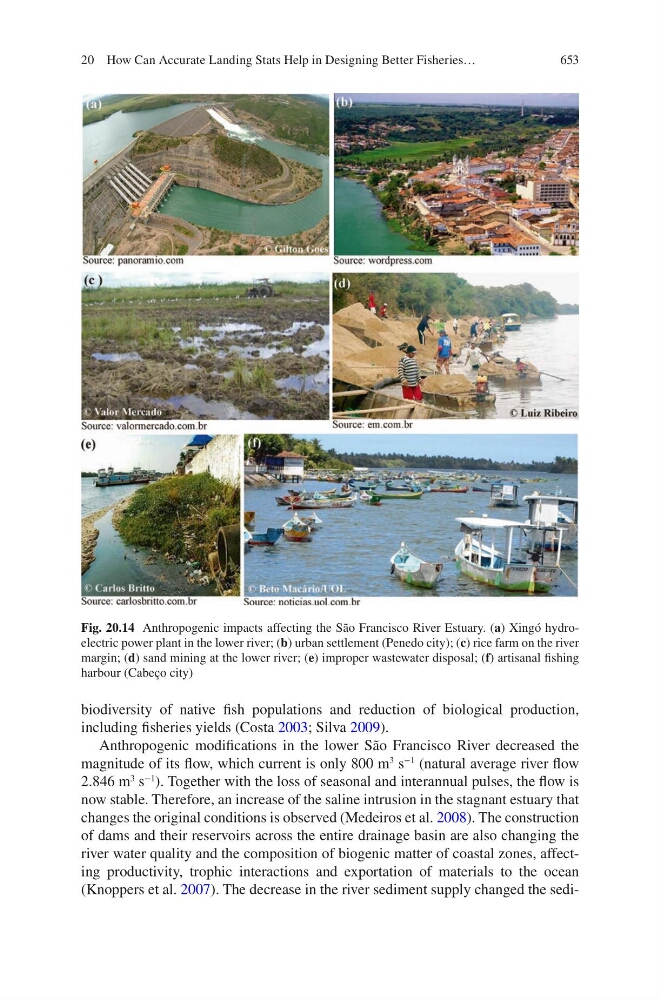
(Knoppers et al. 2007). The decrease in the river sediment supply changed the sediFig. 20.14 Anthropogenic impacts affecting the São Francisco River Estuary. (a) Xingó hydroelectric power plant in the lower river; (b) urban settlement (Penedo city); (c) rice farm on the river
margin; (d) sand mining at the lower river; (e) improper wastewater disposal; (f) artisanal fishing
harbour (Cabeço city)
20 How Can Accurate Landing Stats Help in Designing Better Fisheries…