

652
genetic development, but especially when juveniles (Figs. 20.7a–f and 20.15a–f).
The use of the river mouth area as nursery for commercial species as mullets Mugil
spp. and Brazilian mojarra Eugerres brasilianus is observed in the south coast of
Alagoas State (Paiva et al. 2013).
The São Francisco River has been severely degraded by dredging of the main
channel for sand, improper wastewater disposal, building and operation of artisanal
fishing harbours (Fig. 20.14d–f). However, the main impacts is damming for developing systems of hydroelectric power plants along the entire river’s course
(Fig. 20.14a) (MMA 2004a). Since 1950, interventions in the main channel triggered a series of impacts on the water regime of the river. The change in water
potential energy caused by successive impoundments, withdrawal of water for irrigation, deforestation, intensification of erosion, soil sealing, among others, resulted
in changes in water and sediments transport and deposition (Lima et al. 2001;
Felippe et al. 2009; Ribeiro et al. 2010) (Table 20.1). The damming of major rivers
to build hydroelectric power plants causes a series of changes in limnological characteristics in dammed areas and stretches downstream, as well as the decline in
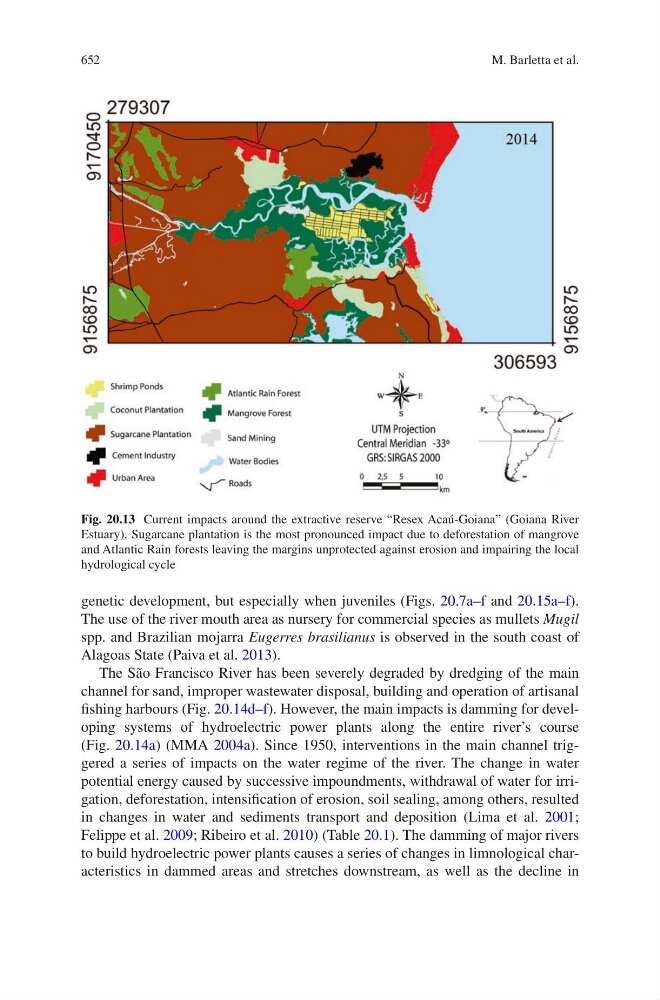
Fig. 20.13 Current impacts around the extractive reserve “Resex Acaú-Goiana” (Goiana River
Estuary). Sugarcane plantation is the most pronounced impact due to deforestation of mangrove
and Atlantic Rain forests leaving the margins unprotected against erosion and impairing the local
hydrological cycle
M. Barletta et al.