

647
uses and ontogenetic phases of endangered species as Epinephelus itajara (Atlantic
goliath grouper), Trichechus manatus manatus (manatee), Chelonia mydas and
Lepidochelys olivacea (sea turtles) (Table 20.1) (Barletta and Costa 2009). Fishing
with gillnets and interaction with plastic debris were considered the most important
threats to the sea turtle populations that feed, mate and nest in the area (Table 20.1)
(Guebert et al. 2013).
Economic activities such as sugarcane plantations and milling, aquaculture,
limestone mining for cement production, dredging for sand and land development
are among the modifications that influence the estuarine ecosystem and water quality (Figs. 20.11a–f, 20.12a–d, 20.13, and Table 20.1) (Barletta and Costa 2009). The
Goiana Estuary receives wastewater effluents from the sugarcane planting and milling industry and sewage from urban settlements (Costa et al. 2009). These are
known as potential sources of, for example, mercury to subsistence and commercial
fishery resources, such as cutlassfish Trichiurus lepturus and the shellfish A. brasiliana (Barletta et al. 2012; Costa et al. 2009; Silva-Cavalcanti et al. 2016) (Table 20.1).
Although tissue contamination are below World Health Organization critical limits
for human consumption, further contamination can increase mercury levels, making
this fisheries resources unsafe for frequent consumption, especially by pregnant
women and children (Costa et al. 2009).
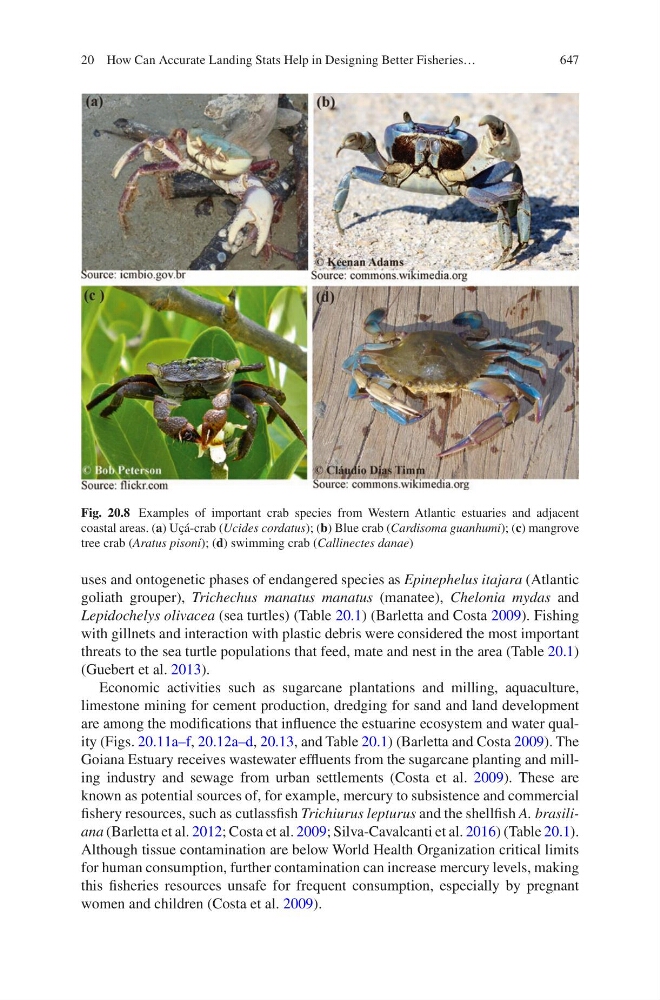
Fig. 20.8 Examples of important crab species from Western Atlantic estuaries and adjacent
coastal areas. (a) Uçá-crab (Ucides cordatus); (b) Blue crab (Cardisoma guanhumi); (c) mangrove
tree crab (Aratus pisoni); (d) swimming crab (Callinectes danae)
20 How Can Accurate Landing Stats Help in Designing Better Fisheries…