

648
Contamination by plastic debris and microplastics (<5 mm) is a concern in the
main channel and tidal creeks of the mangrove flooded forest in the Goiana Estuary
(Table 20.1) (Ivar do Sul et al. 2014; Lima et al. 2014, 2015, 2016). These solid
wastes have multiple and complex sources, being related to urban settlements, tourism, continental sources, land runoff and especially fisheries. In addition, when precipitation increases the estuary is a powerful exporter of this contaminant to the
marine environment (Lima et al. 2014). For example, microplastics density were
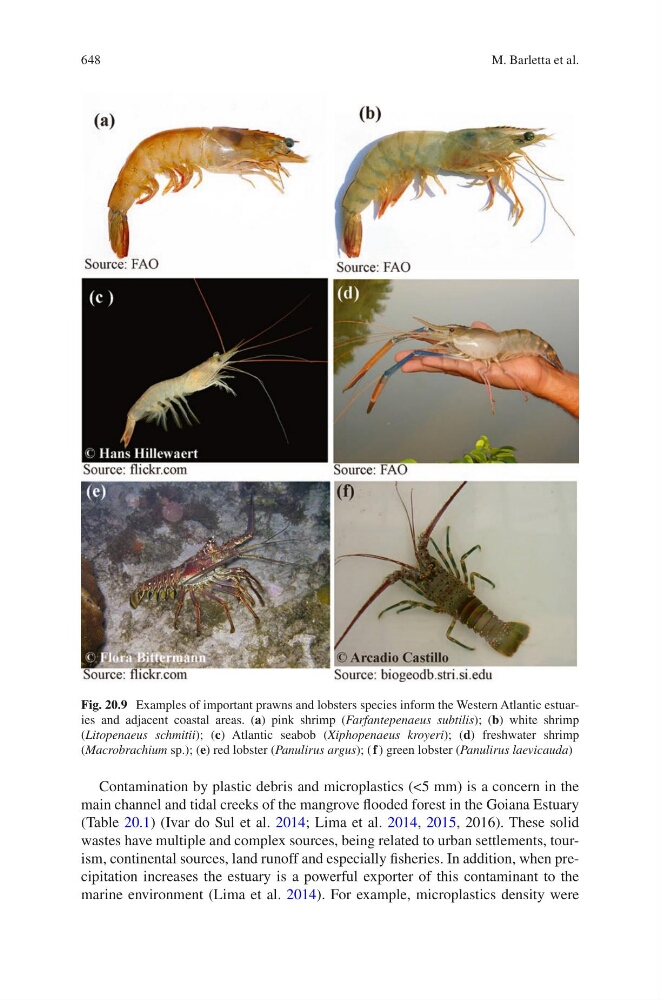
Fig. 20.9 Examples of important prawns and lobsters species inform the Western Atlantic estuaries and adjacent coastal areas. (a) pink shrimp (Farfantepenaeus subtilis); (b) white shrimp
(Litopenaeus schmitii); (c) Atlantic seabob (Xiphopenaeus kroyeri); (d) freshwater shrimp
(Macrobrachium sp.); (e) red lobster (Panulirus argus); ( f ) green lobster (Panulirus laevicauda)
M. Barletta et al.