

228
australis) (Fig. 7.8) is the only native plant species growing healthily together with
S. densiflora in areas with pH ca. 4 (Curado et al. 2010), although some other species
from the genera Juncus, Typha and Scirpus can grow in these areas although occupying much less surface than the two mentioned dominant species. At present, S.
densiflora is able to form monospecific communities in some areas under tidal influence of the joint estuary of Odiel and Tinto rivers (Fig. 7.9). In contrast, this species
is not able to colonize by seeds areas outside the tidal influence where pH and heavy
metal pollution limit its expansion along the Tinto river, and it has been found that
some metals such as Cr or Al may affect S. densiflora seed germination dynamic
(Curado et al. 2010). On the other hand, it has been observed that this species hardly
colonizes by rhizomes the Tinto river upstream areas, outside the tidal influence
(Curado, unpublished data). In the lower marshes limits, in addition, well developed
S. maritima prairies have showed to be able to efficiently prevent S. densiflora invasion at low elevation in the tidal gradient (Castillo et al. 2008a). Considering this, it
seems that the invasion area of S. densiflora is almost limited in the Odiel Marshes.
As it was previously described, S. densiflora shows a higher capability to retain
metals around its roots and to control the uptake and transport of metals, mediated
by higher formation of plaques of Fe/Mn (hydro) oxides on its roots. This fact would
be quite helpful for phytostabilization purposes and it should be taken into account
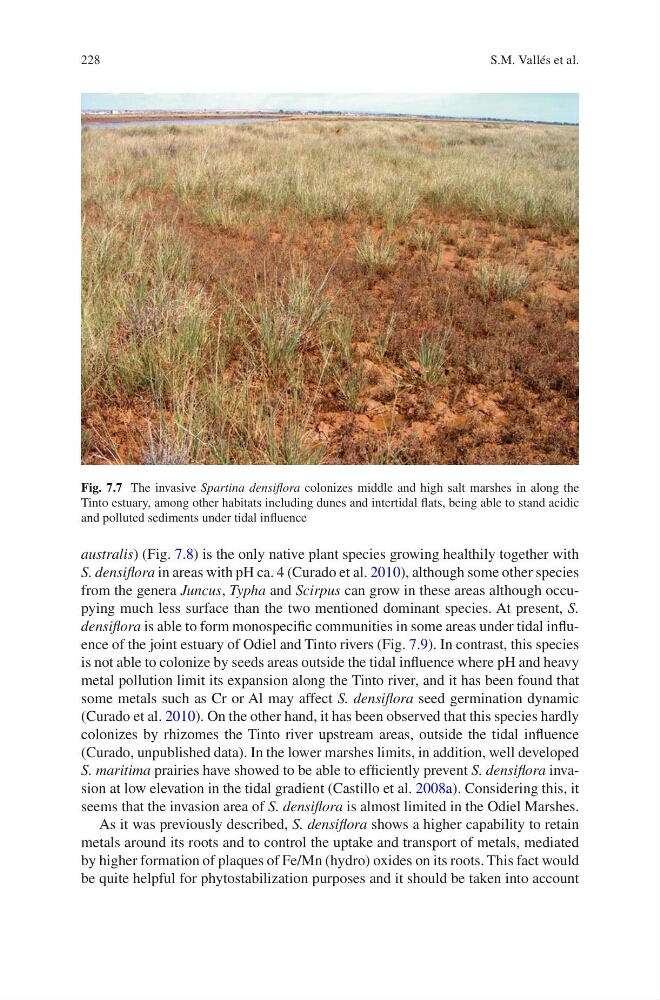
Fig. 7.7 The invasive Spartina densiflora colonizes middle and high salt marshes in along the
Tinto estuary, among other habitats including dunes and intertidal flats, being able to stand acidic
and polluted sediments under tidal influence
S.M. Vallés et al.
australis) (Fig. 7.8) is the only native plant species growing healthily together with
S. densiflora in areas with pH ca. 4 (Curado et al. 2010), although some other species
from the genera Juncus, Typha and Scirpus can grow in these areas although occupying much less surface than the two mentioned dominant species. At present, S.
densiflora is able to form monospecific communities in some areas under tidal influence of the joint estuary of Odiel and Tinto rivers (Fig. 7.9). In contrast, this species
is not able to colonize by seeds areas outside the tidal influence where pH and heavy
metal pollution limit its expansion along the Tinto river, and it has been found that
some metals such as Cr or Al may affect S. densiflora seed germination dynamic
(Curado et al. 2010). On the other hand, it has been observed that this species hardly
colonizes by rhizomes the Tinto river upstream areas, outside the tidal influence
(Curado, unpublished data). In the lower marshes limits, in addition, well developed
S. maritima prairies have showed to be able to efficiently prevent S. densiflora invasion at low elevation in the tidal gradient (Castillo et al. 2008a). Considering this, it
seems that the invasion area of S. densiflora is almost limited in the Odiel Marshes.
As it was previously described, S. densiflora shows a higher capability to retain
metals around its roots and to control the uptake and transport of metals, mediated
by higher formation of plaques of Fe/Mn (hydro) oxides on its roots. This fact would
be quite helpful for phytostabilization purposes and it should be taken into account
Fig. 7.7 The invasive Spartina densiflora colonizes middle and high salt marshes in along the
Tinto estuary, among other habitats including dunes and intertidal flats, being able to stand acidic
and polluted sediments under tidal influence
S.M. Vallés et al.