

154
4.8 How Development Could Change the Environment
The area is highly impacted by anthropogenic factors, showing several factors such
as rubbish, construction materials, wood, paint cans and other aspects of soil degradation such as erosion. Studies done by Longo et al. (2012) regarding the Indicators
of Soil Degradation in Urban Factors: Physical and Chemical Parameters, they
stated that the degradation of certain environment can promote significant changes
in physical and chemical parameters of forest soil could hinder the process of restoring
its ecosystem. Development plays a huge role in the changes of the environment.
The process of Urbanization also link with a lot of process such as deforestation,
land reclamation and land clearance (Longo 2012). Urban development also
includes heavy machinery that could affect heavily on the environment (Meyer
1988). Rapid urbanization has altered hydrology. Storm (Heavy rain) will increase
the surface runoff over the urbanized area due to less infiltration and percolation
into the ground and less interception by vegetation. Hence, resulting in more flash
flood (Meyer 1988; Mead 1988).
Rivers, over time become smaller and smaller due to vegetation colonization
with sedimentation and erosion. Urban river systems are constantly being filled in.
Heavy rain has caused higher buildup of sediments and vegetation colonizing mudflat (Muller and Blij 2010).
Moreover, there is a study done by Al-Dousari et al. (2012) regarding the Effects
of Atmospheric Lead on Soil Microbiota in Kuwait, they said that the roadside soil
is a major sink of heavy metals (e.g. lead, zinc, cadmium, chromium, nickel and
copper) and hydrocarbons pollutants (e.g. gasoline, gas, oil and kerosene) in the
environment such as roadside soils (Sandal 1996; Robertson and Alongi 1992;
Silvestre 1992; Thia-Eng 1987). These factors/discharged that had a direct impact
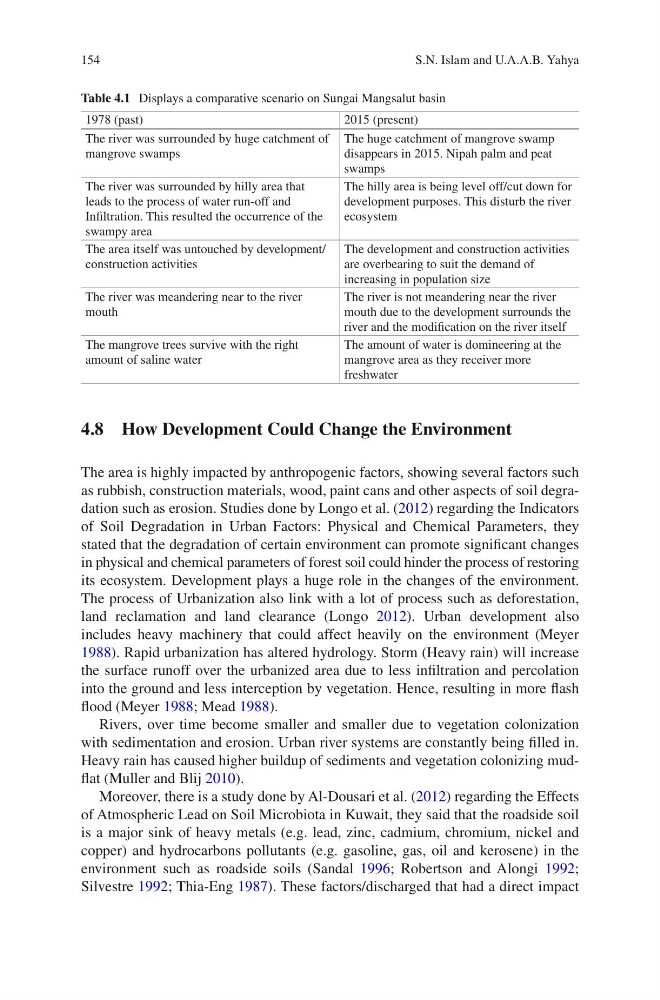
Table 4.1 Displays a comparative scenario on Sungai Mangsalut basin
1978 (past)
2015 (present)
The river was surrounded by huge catchment of
mangrove swamps
The huge catchment of mangrove swamp
disappears in 2015. Nipah palm and peat
swamps
The river was surrounded by hilly area that
leads to the process of water run-off and
Infiltration. This resulted the occurrence of the
swampy area
The hilly area is being level off/cut down for
development purposes. This disturb the river
ecosystem
The area itself was untouched by development/
construction activities
The development and construction activities
are overbearing to suit the demand of
increasing in population size
The river was meandering near to the river
mouth
The river is not meandering near the river
mouth due to the development surrounds the
river and the modification on the river itself
The mangrove trees survive with the right
amount of saline water
The amount of water is domineering at the
mangrove area as they receiver more
freshwater
S.N. Islam and U.A.A.B. Yahya
4.8 How Development Could Change the Environment
The area is highly impacted by anthropogenic factors, showing several factors such
as rubbish, construction materials, wood, paint cans and other aspects of soil degradation such as erosion. Studies done by Longo et al. (2012) regarding the Indicators
of Soil Degradation in Urban Factors: Physical and Chemical Parameters, they
stated that the degradation of certain environment can promote significant changes
in physical and chemical parameters of forest soil could hinder the process of restoring
its ecosystem. Development plays a huge role in the changes of the environment.
The process of Urbanization also link with a lot of process such as deforestation,
land reclamation and land clearance (Longo 2012). Urban development also
includes heavy machinery that could affect heavily on the environment (Meyer
1988). Rapid urbanization has altered hydrology. Storm (Heavy rain) will increase
the surface runoff over the urbanized area due to less infiltration and percolation
into the ground and less interception by vegetation. Hence, resulting in more flash
flood (Meyer 1988; Mead 1988).
Rivers, over time become smaller and smaller due to vegetation colonization
with sedimentation and erosion. Urban river systems are constantly being filled in.
Heavy rain has caused higher buildup of sediments and vegetation colonizing mudflat (Muller and Blij 2010).
Moreover, there is a study done by Al-Dousari et al. (2012) regarding the Effects
of Atmospheric Lead on Soil Microbiota in Kuwait, they said that the roadside soil
is a major sink of heavy metals (e.g. lead, zinc, cadmium, chromium, nickel and
copper) and hydrocarbons pollutants (e.g. gasoline, gas, oil and kerosene) in the
environment such as roadside soils (Sandal 1996; Robertson and Alongi 1992;
Silvestre 1992; Thia-Eng 1987). These factors/discharged that had a direct impact
Table 4.1 Displays a comparative scenario on Sungai Mangsalut basin
1978 (past)
2015 (present)
The river was surrounded by huge catchment of
mangrove swamps
The huge catchment of mangrove swamp
disappears in 2015. Nipah palm and peat
swamps
The river was surrounded by hilly area that
leads to the process of water run-off and
Infiltration. This resulted the occurrence of the
swampy area
The hilly area is being level off/cut down for
development purposes. This disturb the river
ecosystem
The area itself was untouched by development/
construction activities
The development and construction activities
are overbearing to suit the demand of
increasing in population size
The river was meandering near to the river
mouth
The river is not meandering near the river
mouth due to the development surrounds the
river and the modification on the river itself
The mangrove trees survive with the right
amount of saline water
The amount of water is domineering at the
mangrove area as they receiver more
freshwater
S.N. Islam and U.A.A.B. Yahya