

336
D.G. Chen
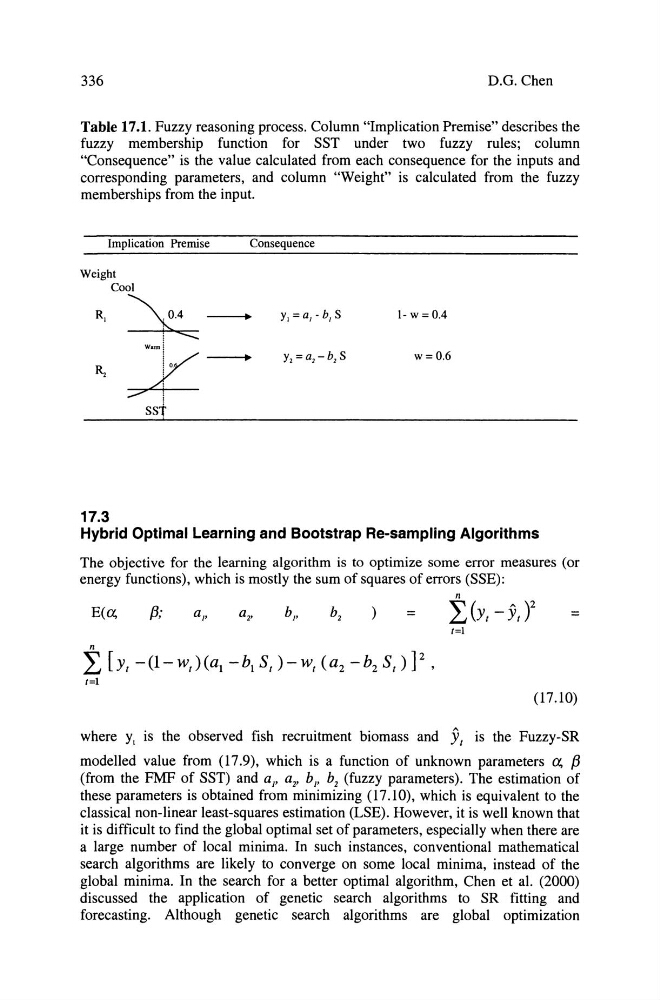
Table 17.1. Fuzzy reasoning process. Column "Implication Premise" describes the
fuzzy membership function for SST under two fuzzy rules; column
"Consequence" is the value calculated from each consequence for the inputs and
corresponding parameters, and column "Weight" is calculated from the fuzzy
memberships from the input.
Implication Premise
Consequence
Weight
Cool
,,~~
~ ;:r~
sst
17.3
y, = a, - b, S
y,=a,-b,S
1- w = 0.4
w=0.6
Hybrid Optimal Learning and Bootstrap Re-sampling Aigorithms
The objective for the leaming algorithm is to optimize some error measures (or
energy functions), wh ich is mostly the sum of squares of errors (SSE):
E(a;
ß;
=
=
n
L [Yt - (1- w t )(a l - bj St ) - w t (a 2 - b 2 St ) F '
t=1
(17.10)
where y, is the observed fish recruitment biomass and Y t is the Fuzzy-SR
mode lIed value from (17.9), which is a function of unknown parameters a; ß
(from the FMF of SST) and a J , a 2 , b J , b 2 (fuzzy parameters). The estimation of
these parameters is obtained from minimizing (17.10), which is equivalent to the
classical non-linear least-squares estimation (LSE). However, it is weIl known that
it is difficult to find the global optimal set of parameters, especially when there are
a large number of local minima. In such instances, conventionaI mathematical
search algorithms are likely to converge on some local minima, instead of the
global minima. In the search for a better optimal algorithm, Chen et al. (2000)
discussed the application of genetic search algorithms to SR fitting and
forecasting. Although genetic search algorithms are global optimization
D.G. Chen
Table 17.1. Fuzzy reasoning process. Column "Implication Premise" describes the
fuzzy membership function for SST under two fuzzy rules; column
"Consequence" is the value calculated from each consequence for the inputs and
corresponding parameters, and column "Weight" is calculated from the fuzzy
memberships from the input.
Implication Premise
Consequence
Weight
Cool
,,~~
~ ;:r~
sst
17.3
y, = a, - b, S
y,=a,-b,S
1- w = 0.4
w=0.6
Hybrid Optimal Learning and Bootstrap Re-sampling Aigorithms
The objective for the leaming algorithm is to optimize some error measures (or
energy functions), wh ich is mostly the sum of squares of errors (SSE):
E(a;
ß;
=
=
n
L [Yt - (1- w t )(a l - bj St ) - w t (a 2 - b 2 St ) F '
t=1
(17.10)
where y, is the observed fish recruitment biomass and Y t is the Fuzzy-SR
mode lIed value from (17.9), which is a function of unknown parameters a; ß
(from the FMF of SST) and a J , a 2 , b J , b 2 (fuzzy parameters). The estimation of
these parameters is obtained from minimizing (17.10), which is equivalent to the
classical non-linear least-squares estimation (LSE). However, it is weIl known that
it is difficult to find the global optimal set of parameters, especially when there are
a large number of local minima. In such instances, conventionaI mathematical
search algorithms are likely to converge on some local minima, instead of the
global minima. In the search for a better optimal algorithm, Chen et al. (2000)
discussed the application of genetic search algorithms to SR fitting and
forecasting. Although genetic search algorithms are global optimization