

94
R.H. Waring and W.E. Winner
100
0 VPD
t2I DROUGHT
a: 80
•
77%
-c
FREEZING
9:
....J
-c
::::l
Z
Z
~
60
~
z
0
i=
o
::::l
40
Cl
w
a:
Iz
W
U
a: 20
w
a..
1A
2
3
SITE
4
5
6
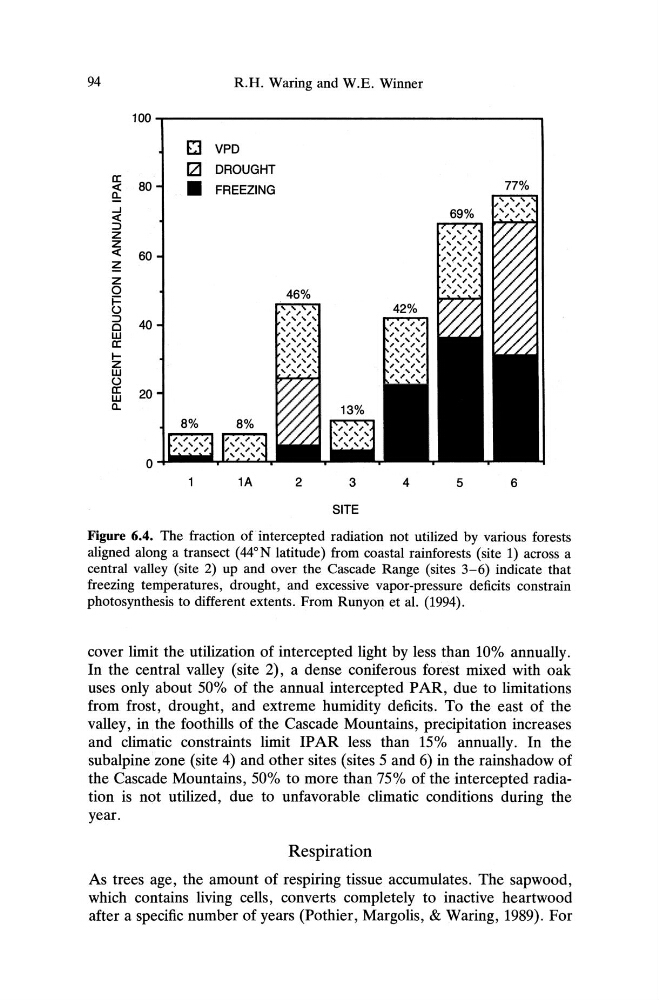
Figure 6.4. The fraction of intercepted radiation not utilized by various forests
aligned along a transect (MON latitude) from coastal rainforests (site 1) across a
central valley (site 2) up and over the Cascade Range (sites 3-6) indicate that
freezing temperatures, drought, and excessive vapor-pressure deficits constrain
photosynthesis to different extents. From Runyon et al. (1994).
cover limit the utilization of intercepted light by less than 10% annually.
In the central valley (site 2), a dense coniferous forest mixed with oak
uses only about 50% of the annual intercepted PAR, due to limitations
from frost, drought, and extreme humidity deficits. To the east of the
valley, in .the foothills of the Cascade Mountains, precipitation increases
and climatic constraints limit IPAR less than 15% annually. In the
subalpinezone (site 4) and other sites (sites 5 and 6) in the rainshadow of
the Cascade Mountains, 50% to more than 75% of the intercepted radiation is not utilized, due to unfavorable climatic conditions during the
year.
Respiration
As trees age, the amount of respiring tissue accumulates. The sapwood,
which contains living cells, converts completely to inactive heartwood
after a specific number of years (Pothier, Margolis, & Waring, 1989). For
R.H. Waring and W.E. Winner
100
0 VPD
t2I DROUGHT
a: 80
•
77%
-c
FREEZING
9:
....J
-c
::::l
Z
Z
~
60
~
z
0
i=
o
::::l
40
Cl
w
a:
Iz
W
U
a: 20
w
a..
1A
2
3
SITE
4
5
6
Figure 6.4. The fraction of intercepted radiation not utilized by various forests
aligned along a transect (MON latitude) from coastal rainforests (site 1) across a
central valley (site 2) up and over the Cascade Range (sites 3-6) indicate that
freezing temperatures, drought, and excessive vapor-pressure deficits constrain
photosynthesis to different extents. From Runyon et al. (1994).
cover limit the utilization of intercepted light by less than 10% annually.
In the central valley (site 2), a dense coniferous forest mixed with oak
uses only about 50% of the annual intercepted PAR, due to limitations
from frost, drought, and extreme humidity deficits. To the east of the
valley, in .the foothills of the Cascade Mountains, precipitation increases
and climatic constraints limit IPAR less than 15% annually. In the
subalpinezone (site 4) and other sites (sites 5 and 6) in the rainshadow of
the Cascade Mountains, 50% to more than 75% of the intercepted radiation is not utilized, due to unfavorable climatic conditions during the
year.
Respiration
As trees age, the amount of respiring tissue accumulates. The sapwood,
which contains living cells, converts completely to inactive heartwood
after a specific number of years (Pothier, Margolis, & Waring, 1989). For