

289
interior of the open ocean can be considered long-term storage of blue carbon, but
is difficult to quantify solely from observations. We should therefore model the
blue-carbon exports to the ocean interior, which can be validated from sedimenttrap observations. All of these considerations can be challenging given the different
time scales and models used, but they could be achieved through transdisciplinary
approaches involving specialists in hydrology, geochemistry, oceanography, marine
ecology, and ecological modeling.
Finally, field and experimental data are indispensable for verifying a blue-carbon
dynamics model. The fate of organic matter should be assessed experimentally
through decomposition experiments and empirically using sediment traps. Sediment
organic carbon contents and sedimentation rates should be measured across different reef environments with and without mangrove forests and seagrass meadows.
References
Abo K, Sugimatsu K, Hori M, Yoshida G, Shimabukuro H, Yagi H, Nakayama A, Tarutani K
(2018) Quantifying the fate of captured carbon: from seagrass meadow to deep sea. In: Kuwae
T, Hori M (eds) Blue carbon in shallow coastal ecosystems: carbon dynamics, policy, and
implementation. Springer, Singapore, pp 251–271
Bates NR (2002) Seasonal variability of the effect of coral reefs on seawater CO 2 and air–sea CO 2
exchange. Limnol Oceanogr 47:43–52
Bates NR, Samuels L, Merlivat L (2001) Biogeochemical and physical factors influencing seawater fCO 2 and air–sea CO 2 exchange on the Bermuda coral reef. Limnol Oceanogr 46:833–846
90
80
70
60
90
95
100
85
80
70
75
65
50
40
30
20
10
0
90
80
70
60
50
Iriomote Is.
Sekisei lagoon
DOC (µmol L -1 )
DOC (µmol L -1 )
Ishigaki Is.
X (km)
X (km)
Y (km)
Y (km)
40
30
20
10
0
3
2
1
0
9
a
b
8
7
6
5
4
3
2
1
0
300
280
260
240
220
200
180
160
140
120
100
80
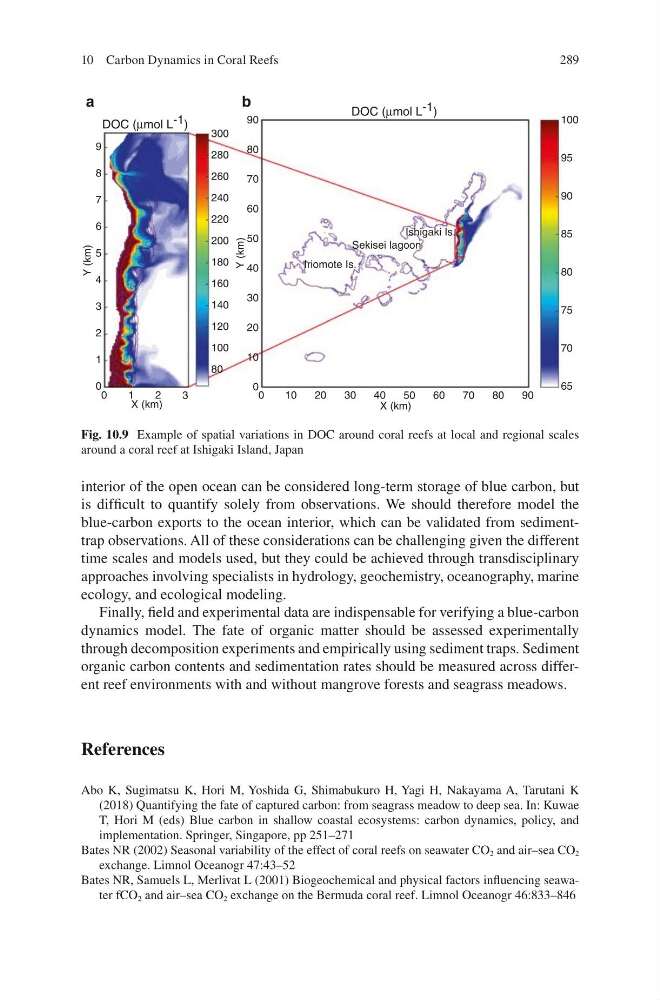
Fig. 10.9 Example of spatial variations in DOC around coral reefs at local and regional scales
around a coral reef at Ishigaki Island, Japan
10 Carbon Dynamics in Coral Reefs
interior of the open ocean can be considered long-term storage of blue carbon, but
is difficult to quantify solely from observations. We should therefore model the
blue-carbon exports to the ocean interior, which can be validated from sedimenttrap observations. All of these considerations can be challenging given the different
time scales and models used, but they could be achieved through transdisciplinary
approaches involving specialists in hydrology, geochemistry, oceanography, marine
ecology, and ecological modeling.
Finally, field and experimental data are indispensable for verifying a blue-carbon
dynamics model. The fate of organic matter should be assessed experimentally
through decomposition experiments and empirically using sediment traps. Sediment
organic carbon contents and sedimentation rates should be measured across different reef environments with and without mangrove forests and seagrass meadows.
References
Abo K, Sugimatsu K, Hori M, Yoshida G, Shimabukuro H, Yagi H, Nakayama A, Tarutani K
(2018) Quantifying the fate of captured carbon: from seagrass meadow to deep sea. In: Kuwae
T, Hori M (eds) Blue carbon in shallow coastal ecosystems: carbon dynamics, policy, and
implementation. Springer, Singapore, pp 251–271
Bates NR (2002) Seasonal variability of the effect of coral reefs on seawater CO 2 and air–sea CO 2
exchange. Limnol Oceanogr 47:43–52
Bates NR, Samuels L, Merlivat L (2001) Biogeochemical and physical factors influencing seawater fCO 2 and air–sea CO 2 exchange on the Bermuda coral reef. Limnol Oceanogr 46:833–846
90
80
70
60
90
95
100
85
80
70
75
65
50
40
30
20
10
0
90
80
70
60
50
Iriomote Is.
Sekisei lagoon
DOC (µmol L -1 )
DOC (µmol L -1 )
Ishigaki Is.
X (km)
X (km)
Y (km)
Y (km)
40
30
20
10
0
3
2
1
0
9
a
b
8
7
6
5
4
3
2
1
0
300
280
260
240
220
200
180
160
140
120
100
80
Fig. 10.9 Example of spatial variations in DOC around coral reefs at local and regional scales
around a coral reef at Ishigaki Island, Japan
10 Carbon Dynamics in Coral Reefs