

177
isotopes of carbon, have mass numbers of 12 and 13, respectively.
12
C and
13
C
account for approximately 99% and 1%, respectively, of naturally occurring carbon.
The metric of their relative abundance is called δ
13
C, which is the
13
C/
12
C ratio normalized to an arbitrary standard and expressed on a per mil (i.e., parts per thousand)
basis. Stable isotope ratios change during various processes, a change referred to as
“isotope fractionation”. Therefore, the δ
13
C value, for example, reflects the history
of carbon transformations in an ecosystem. When seagrasses take up atmospheric
CO 2 , isotope fractionation occurs because atmospheric CO 2 is dissolved in the water
and then assimilated by the seagrasses. The origin and fate of substances can therefore be evaluated by using the differences in their stable isotope ratios. δ
13
C is conventionally used in the study of carbon cycling in ecosystems.
It is possible to evaluate whether seagrasses actually assimilate atmospheric CO 2
in addition to DIC by comparing the δ
13
C values of their carbon sources with that of
the seagrass itself. However, this approach is not applicable unless there is a difference in δ
13
C among the carbon sources (Fig. 6.18). In this case, because the δ
13
C
value of DIC (especially in low-salinity water) and that of atmospheric CO 2 overlap,
it is impossible to distinguish between these contributions. In addition, the fact that
isotope fractionation occurs during the process of carbon assimilation confounds
the use of this method to infer carbon sources (Hemminga and Mateo 1996).
The radioactive form of carbon,
14
C, is also a useful tracer of carbon, but its natural abundance is very small. Roughly one of every 10
12
carbon atoms is
14
C.
14
C is
produced by collisions between nitrogen atoms (
14
N) and neutrons generated by
cosmic rays in the upper atmosphere. The amount of
14
C is almost constant in the
atmosphere (Fig. 6.19). However,
14
C is released into the atmosphere by nuclear
tests and other anthropogenic activities (see Sect. 6.3.2).
14
C is oxidized to
14
CO 2 in
the atmosphere and may then be transferred to the biosphere via photosynthesis.
Because
14
C decays with a half-life of approximately 5730 years, the
14
C concentration decreases with time, and the change of
14
C (Δ
14
C) is therefore a powerful
method for dating in various fields such as paleoenvironmental studies and
archeology. Accelerator mass spectrometry is used for
14
C analysis, and recently
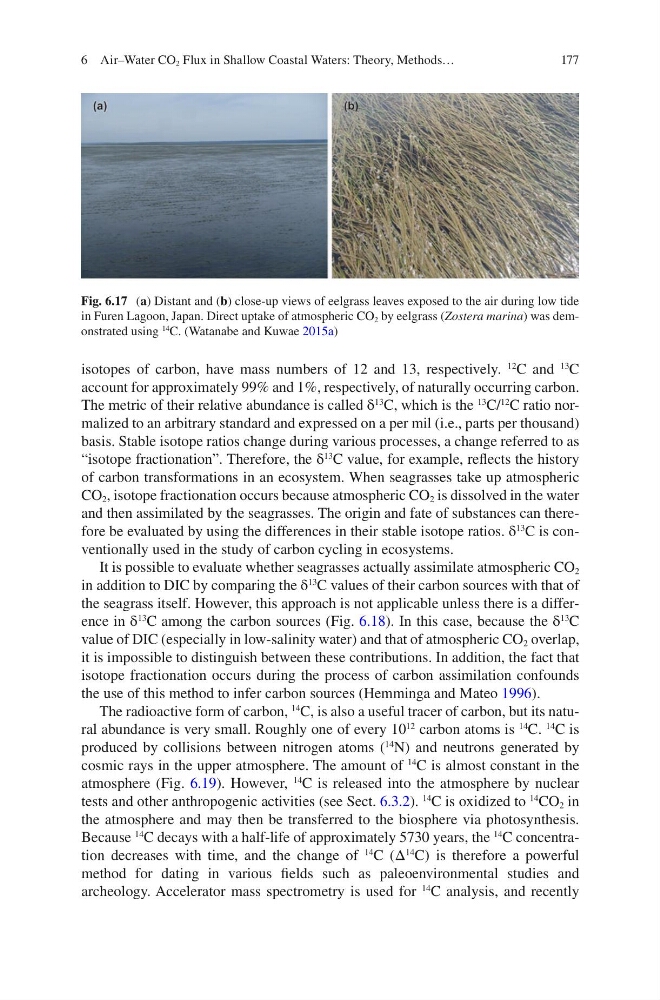
Fig. 6.17 (a) Distant and (b) close-up views of eelgrass leaves exposed to the air during low tide
in Furen Lagoon, Japan. Direct uptake of atmospheric CO 2 by eelgrass (Zostera marina) was demonstrated using
14
C. (Watanabe and Kuwae 2015a)
6 Air–Water CO 2 Flux in Shallow Coastal Waters: Theory, Methods…
isotopes of carbon, have mass numbers of 12 and 13, respectively.
12
C and
13
C
account for approximately 99% and 1%, respectively, of naturally occurring carbon.
The metric of their relative abundance is called δ
13
C, which is the
13
C/
12
C ratio normalized to an arbitrary standard and expressed on a per mil (i.e., parts per thousand)
basis. Stable isotope ratios change during various processes, a change referred to as
“isotope fractionation”. Therefore, the δ
13
C value, for example, reflects the history
of carbon transformations in an ecosystem. When seagrasses take up atmospheric
CO 2 , isotope fractionation occurs because atmospheric CO 2 is dissolved in the water
and then assimilated by the seagrasses. The origin and fate of substances can therefore be evaluated by using the differences in their stable isotope ratios. δ
13
C is conventionally used in the study of carbon cycling in ecosystems.
It is possible to evaluate whether seagrasses actually assimilate atmospheric CO 2
in addition to DIC by comparing the δ
13
C values of their carbon sources with that of
the seagrass itself. However, this approach is not applicable unless there is a difference in δ
13
C among the carbon sources (Fig. 6.18). In this case, because the δ
13
C
value of DIC (especially in low-salinity water) and that of atmospheric CO 2 overlap,
it is impossible to distinguish between these contributions. In addition, the fact that
isotope fractionation occurs during the process of carbon assimilation confounds
the use of this method to infer carbon sources (Hemminga and Mateo 1996).
The radioactive form of carbon,
14
C, is also a useful tracer of carbon, but its natural abundance is very small. Roughly one of every 10
12
carbon atoms is
14
C.
14
C is
produced by collisions between nitrogen atoms (
14
N) and neutrons generated by
cosmic rays in the upper atmosphere. The amount of
14
C is almost constant in the
atmosphere (Fig. 6.19). However,
14
C is released into the atmosphere by nuclear
tests and other anthropogenic activities (see Sect. 6.3.2).
14
C is oxidized to
14
CO 2 in
the atmosphere and may then be transferred to the biosphere via photosynthesis.
Because
14
C decays with a half-life of approximately 5730 years, the
14
C concentration decreases with time, and the change of
14
C (Δ
14
C) is therefore a powerful
method for dating in various fields such as paleoenvironmental studies and
archeology. Accelerator mass spectrometry is used for
14
C analysis, and recently
Fig. 6.17 (a) Distant and (b) close-up views of eelgrass leaves exposed to the air during low tide
in Furen Lagoon, Japan. Direct uptake of atmospheric CO 2 by eelgrass (Zostera marina) was demonstrated using
14
C. (Watanabe and Kuwae 2015a)
6 Air–Water CO 2 Flux in Shallow Coastal Waters: Theory, Methods…