

133
(Widdows et al. 2004; Sanders et al. 2010), 21–244.7 g C m
−2
year
−1
in salt marshes
(Chmura et al. 2003; Choi and Wang 2004; Duarte et al. 2005; Callaway et al. 2012;
Ouyang and Lee 2014; Arriola and Cable 2017; Macreadie et al. 2017), and 45 g C
m
−2
year
−1
in estuaries (Duarte et al. 2005). Thus, the accumulation rate of sedimentary carbon in tidal flats is comparable with that in salt marshes and estuaries.
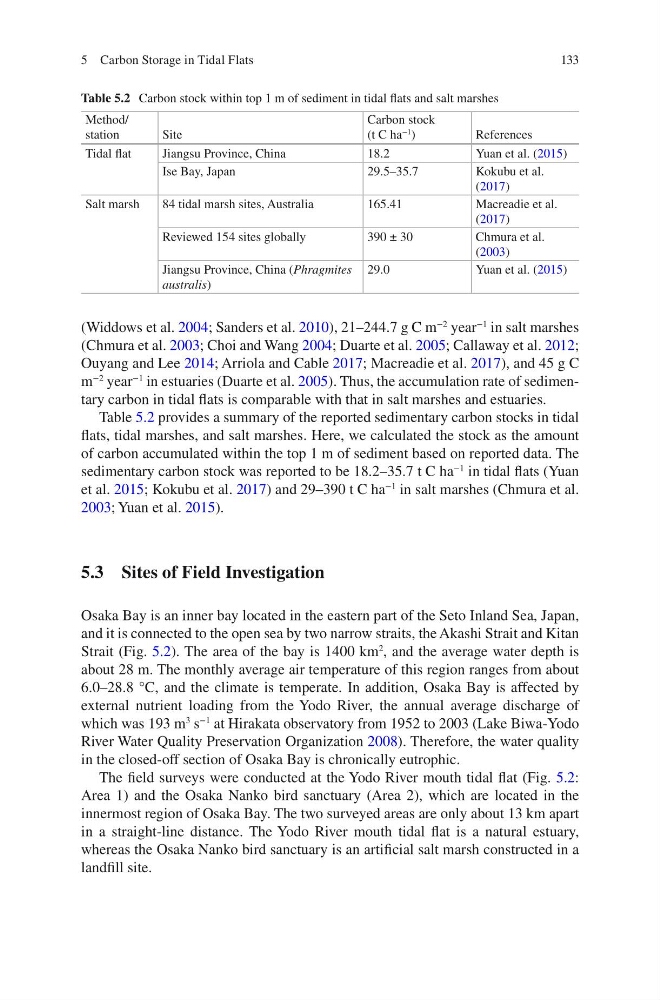
Table 5.2 provides a summary of the reported sedimentary carbon stocks in tidal
flats, tidal marshes, and salt marshes. Here, we calculated the stock as the amount
of carbon accumulated within the top 1 m of sediment based on reported data. The
sedimentary carbon stock was reported to be 18.2–35.7 t C ha
−1
in tidal flats (Yuan
et al. 2015; Kokubu et al. 2017) and 29–390 t C ha
−1
in salt marshes (Chmura et al.
2003; Yuan et al. 2015).
5.3 Sites of Field Investigation
Osaka Bay is an inner bay located in the eastern part of the Seto Inland Sea, Japan,
and it is connected to the open sea by two narrow straits, the Akashi Strait and Kitan
Strait (Fig. 5.2). The area of the bay is 1400 km
2
, and the average water depth is
about 28 m. The monthly average air temperature of this region ranges from about
6.0–28.8 °C, and the climate is temperate. In addition, Osaka Bay is affected by
external nutrient loading from the Yodo River, the annual average discharge of
which was 193 m
3
s
−1
at Hirakata observatory from 1952 to 2003 (Lake Biwa-Yodo
River Water Quality Preservation Organization 2008). Therefore, the water quality
in the closed-off section of Osaka Bay is chronically eutrophic.
The field surveys were conducted at the Yodo River mouth tidal flat (Fig. 5.2:
Area 1) and the Osaka Nanko bird sanctuary (Area 2), which are located in the
innermost region of Osaka Bay. The two surveyed areas are only about 13 km apart
in a straight-line distance. The Yodo River mouth tidal flat is a natural estuary,
whereas the Osaka Nanko bird sanctuary is an artificial salt marsh constructed in a
landfill site.
Table 5.2 Carbon stock within top 1 m of sediment in tidal flats and salt marshes
Method/
station
Site
Carbon stock
(t C ha
−1 )
References
Tidal flat
Jiangsu Province, China
18.2
Yuan et al. (2015)
Ise Bay, Japan
29.5–35.7
Kokubu et al.
(2017)
Salt marsh
84 tidal marsh sites, Australia
165.41
Macreadie et al.
(2017)
Reviewed 154 sites globally
390 ± 30
Chmura et al.
(2003)
Jiangsu Province, China (Phragmites
australis)
29.0
Yuan et al. (2015)
5 Carbon Storage in Tidal Flats
(Widdows et al. 2004; Sanders et al. 2010), 21–244.7 g C m
−2
year
−1
in salt marshes
(Chmura et al. 2003; Choi and Wang 2004; Duarte et al. 2005; Callaway et al. 2012;
Ouyang and Lee 2014; Arriola and Cable 2017; Macreadie et al. 2017), and 45 g C
m
−2
year
−1
in estuaries (Duarte et al. 2005). Thus, the accumulation rate of sedimentary carbon in tidal flats is comparable with that in salt marshes and estuaries.
Table 5.2 provides a summary of the reported sedimentary carbon stocks in tidal
flats, tidal marshes, and salt marshes. Here, we calculated the stock as the amount
of carbon accumulated within the top 1 m of sediment based on reported data. The
sedimentary carbon stock was reported to be 18.2–35.7 t C ha
−1
in tidal flats (Yuan
et al. 2015; Kokubu et al. 2017) and 29–390 t C ha
−1
in salt marshes (Chmura et al.
2003; Yuan et al. 2015).
5.3 Sites of Field Investigation
Osaka Bay is an inner bay located in the eastern part of the Seto Inland Sea, Japan,
and it is connected to the open sea by two narrow straits, the Akashi Strait and Kitan
Strait (Fig. 5.2). The area of the bay is 1400 km
2
, and the average water depth is
about 28 m. The monthly average air temperature of this region ranges from about
6.0–28.8 °C, and the climate is temperate. In addition, Osaka Bay is affected by
external nutrient loading from the Yodo River, the annual average discharge of
which was 193 m
3
s
−1
at Hirakata observatory from 1952 to 2003 (Lake Biwa-Yodo
River Water Quality Preservation Organization 2008). Therefore, the water quality
in the closed-off section of Osaka Bay is chronically eutrophic.
The field surveys were conducted at the Yodo River mouth tidal flat (Fig. 5.2:
Area 1) and the Osaka Nanko bird sanctuary (Area 2), which are located in the
innermost region of Osaka Bay. The two surveyed areas are only about 13 km apart
in a straight-line distance. The Yodo River mouth tidal flat is a natural estuary,
whereas the Osaka Nanko bird sanctuary is an artificial salt marsh constructed in a
landfill site.
Table 5.2 Carbon stock within top 1 m of sediment in tidal flats and salt marshes
Method/
station
Site
Carbon stock
(t C ha
−1 )
References
Tidal flat
Jiangsu Province, China
18.2
Yuan et al. (2015)
Ise Bay, Japan
29.5–35.7
Kokubu et al.
(2017)
Salt marsh
84 tidal marsh sites, Australia
165.41
Macreadie et al.
(2017)
Reviewed 154 sites globally
390 ± 30
Chmura et al.
(2003)
Jiangsu Province, China (Phragmites
australis)
29.0
Yuan et al. (2015)
5 Carbon Storage in Tidal Flats