

109
These issues undoubtedly open up an important field to study the role of methyl
jasmonate and ethylene in reproduction and to depict as yet unexplored underlying
molecular and genetic mechanism(s) of volatile emissions in red seaweeds.
5.6 Genetic ‘Dissection’ of Volatile Emission
in the Reproduction of Macroalgae
The study of whole genome has identified genes related with aspects of life cycles
and stress tolerance mechanisms of several marine algae. Albeit genomic information is still scarce, it has allowed assigning genes and gene families to particular
events, confirming gene functions experimentally and providing insights into the
biology of these organisms (Cock et al. 2010; Collén et al. 2007; Barbier et al.
2005).
Despite the importance of volatile growth regulators in the success of forming
reproductive structures and spore germination in seaweeds, not many have been
identified at a molecular level to date, and little is known about the role of genes in
these processes. Pursuant to our description, we understand that a feature of reproduction in algae should be the activation of multiple responses involving gene interactions and cross talk with many molecular pathways. This is where the main
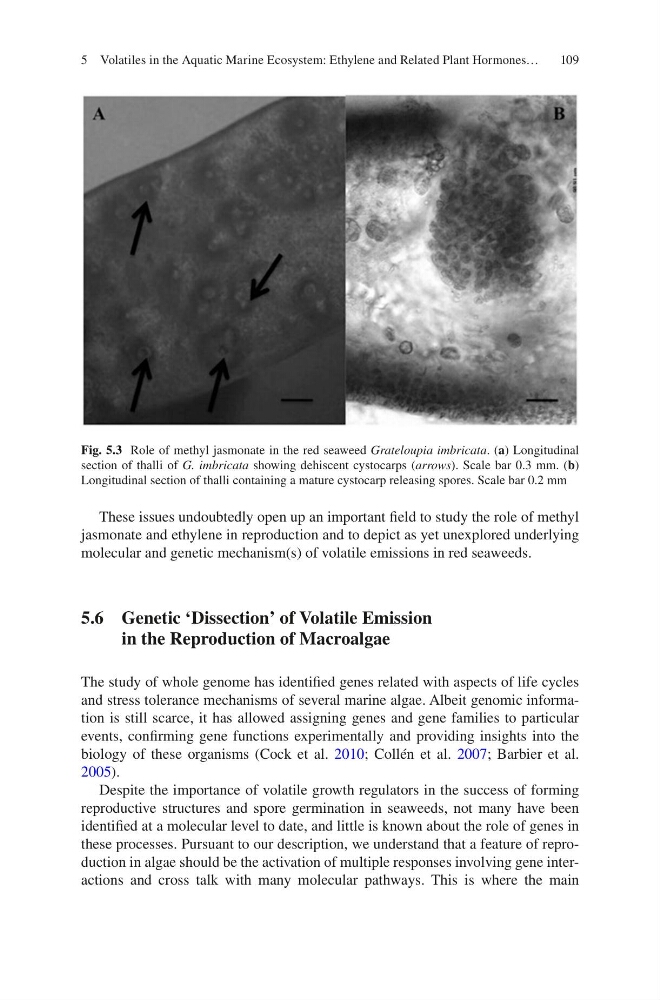
Fig. 5.3 Role of methyl jasmonate in the red seaweed Grateloupia imbricata. (a) Longitudinal
section of thalli of G. imbricata showing dehiscent cystocarps (arrows). Scale bar 0.3 mm. (b)
Longitudinal section of thalli containing a mature cystocarp releasing spores. Scale bar 0.2 mm
5 Volatiles in the Aquatic Marine Ecosystem: Ethylene and Related Plant Hormones…
These issues undoubtedly open up an important field to study the role of methyl
jasmonate and ethylene in reproduction and to depict as yet unexplored underlying
molecular and genetic mechanism(s) of volatile emissions in red seaweeds.
5.6 Genetic ‘Dissection’ of Volatile Emission
in the Reproduction of Macroalgae
The study of whole genome has identified genes related with aspects of life cycles
and stress tolerance mechanisms of several marine algae. Albeit genomic information is still scarce, it has allowed assigning genes and gene families to particular
events, confirming gene functions experimentally and providing insights into the
biology of these organisms (Cock et al. 2010; Collén et al. 2007; Barbier et al.
2005).
Despite the importance of volatile growth regulators in the success of forming
reproductive structures and spore germination in seaweeds, not many have been
identified at a molecular level to date, and little is known about the role of genes in
these processes. Pursuant to our description, we understand that a feature of reproduction in algae should be the activation of multiple responses involving gene interactions and cross talk with many molecular pathways. This is where the main
Fig. 5.3 Role of methyl jasmonate in the red seaweed Grateloupia imbricata. (a) Longitudinal
section of thalli of G. imbricata showing dehiscent cystocarps (arrows). Scale bar 0.3 mm. (b)
Longitudinal section of thalli containing a mature cystocarp releasing spores. Scale bar 0.2 mm
5 Volatiles in the Aquatic Marine Ecosystem: Ethylene and Related Plant Hormones…