

107
initial stimulation of ethylene receptors and their saturation after prolonged exposure (Garcia-Jimenez et al. 2013; Garcia-Jimenez and Robaina 2012). Recently, the
formation of spermatia and zygotospores in the gametophytes of Pyropia yezoensis
after the exogenous treatment with the ethylene precursor ACC was reported (Uji
et al. 2016).
The term jasmonates is used to describe lipid derivatives synthesised via the
octadecanoid pathway and is mainly represented by JA, JA derivatives and its ester
methyl jasmonate (Wasternack 2007; Baldwin et al. 2006; Liechti et al. 2006;
Liechti and Farmer 2006; Matsui 2006). In particular, methyl jasmonate is derived
from linolenic acid, via lipoxygenase, in which the synthesis of methyl jasmonate
activates the oxidative metabolism of polyunsaturated fatty acids, generating reactive oxygen species (in the form of O 2 , H 2 O 2 or OH–) and oxidised derivatives of
polyunsaturated fatty acids (Weinberger et al. 2011; Miller et al. 2010). The redoxactive compound 1-phenyl-3-pyrazolidinone (phenidone) inhibits lipoxygenase
activity by reducing the active form to an inactive form (Bruinsma et al. 2010).
As in higher plants where the presence of jasmonic acid and its derivative has
been found to regulate various physiological processes of plant development, such
as in the maturation and germination of pollen grains, and it may also have a role in
anther dehiscence (Liechti and Farmer 2006; Devoto and Turner 2003), a burst of
endogenous jasmonates was seen in cystocarps containing thalli compared with
infertile thalli of the red seaweed Grateloupia imbricata (Garcia-Jimenez et al.
2016).
Likewise, in the course of in vitro maturation of the cystocarps of G. imbricata,
the rates of jasmonates release after an exogenous methyl jasmonate treatment were
significantly higher in thalli containing mature cystocarps than in those ones with
immature cystocarps (Table 5.2). We have reported that these higher levels of
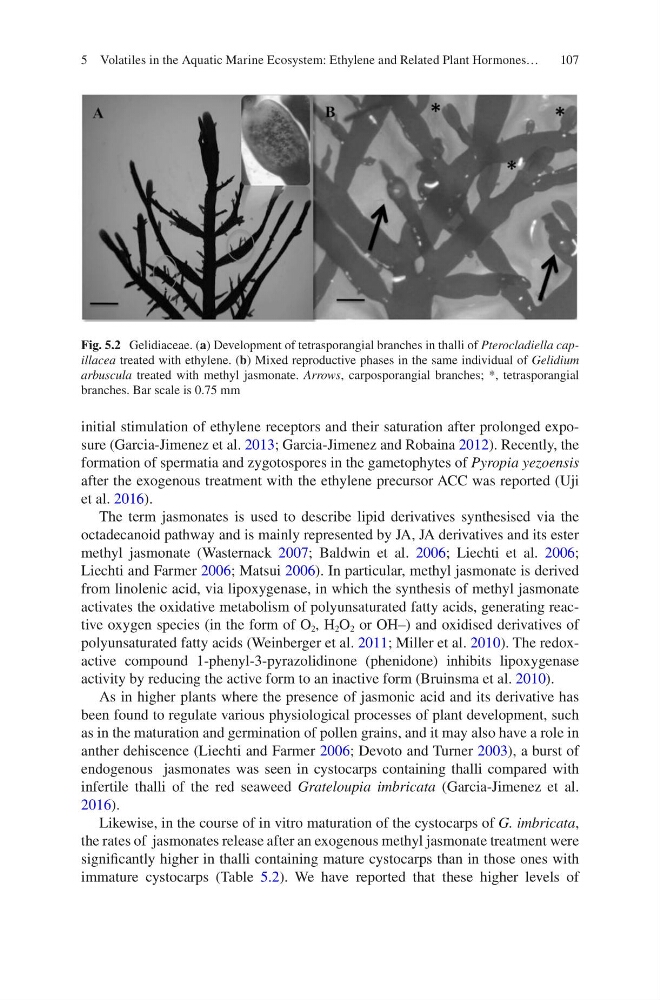
Fig. 5.2 Gelidiaceae. (a) Development of tetrasporangial branches in thalli of Pterocladiella capillacea treated with ethylene. (b) Mixed reproductive phases in the same individual of Gelidium
arbuscula treated with methyl jasmonate. Arrows, carposporangial branches; *, tetrasporangial
branches. Bar scale is 0.75 mm
5 Volatiles in the Aquatic Marine Ecosystem: Ethylene and Related Plant Hormones…
initial stimulation of ethylene receptors and their saturation after prolonged exposure (Garcia-Jimenez et al. 2013; Garcia-Jimenez and Robaina 2012). Recently, the
formation of spermatia and zygotospores in the gametophytes of Pyropia yezoensis
after the exogenous treatment with the ethylene precursor ACC was reported (Uji
et al. 2016).
The term jasmonates is used to describe lipid derivatives synthesised via the
octadecanoid pathway and is mainly represented by JA, JA derivatives and its ester
methyl jasmonate (Wasternack 2007; Baldwin et al. 2006; Liechti et al. 2006;
Liechti and Farmer 2006; Matsui 2006). In particular, methyl jasmonate is derived
from linolenic acid, via lipoxygenase, in which the synthesis of methyl jasmonate
activates the oxidative metabolism of polyunsaturated fatty acids, generating reactive oxygen species (in the form of O 2 , H 2 O 2 or OH–) and oxidised derivatives of
polyunsaturated fatty acids (Weinberger et al. 2011; Miller et al. 2010). The redoxactive compound 1-phenyl-3-pyrazolidinone (phenidone) inhibits lipoxygenase
activity by reducing the active form to an inactive form (Bruinsma et al. 2010).
As in higher plants where the presence of jasmonic acid and its derivative has
been found to regulate various physiological processes of plant development, such
as in the maturation and germination of pollen grains, and it may also have a role in
anther dehiscence (Liechti and Farmer 2006; Devoto and Turner 2003), a burst of
endogenous jasmonates was seen in cystocarps containing thalli compared with
infertile thalli of the red seaweed Grateloupia imbricata (Garcia-Jimenez et al.
2016).
Likewise, in the course of in vitro maturation of the cystocarps of G. imbricata,
the rates of jasmonates release after an exogenous methyl jasmonate treatment were
significantly higher in thalli containing mature cystocarps than in those ones with
immature cystocarps (Table 5.2). We have reported that these higher levels of
Fig. 5.2 Gelidiaceae. (a) Development of tetrasporangial branches in thalli of Pterocladiella capillacea treated with ethylene. (b) Mixed reproductive phases in the same individual of Gelidium
arbuscula treated with methyl jasmonate. Arrows, carposporangial branches; *, tetrasporangial
branches. Bar scale is 0.75 mm
5 Volatiles in the Aquatic Marine Ecosystem: Ethylene and Related Plant Hormones…