

18. Glaciation and Avian Evolution
283
1000
Melospiza melodia
800
>U
C
Q)
600
::l
0Q)
...
LL
Expected
400
200
o
2
3
4
5
6
7
8
9
10
11+
Differences
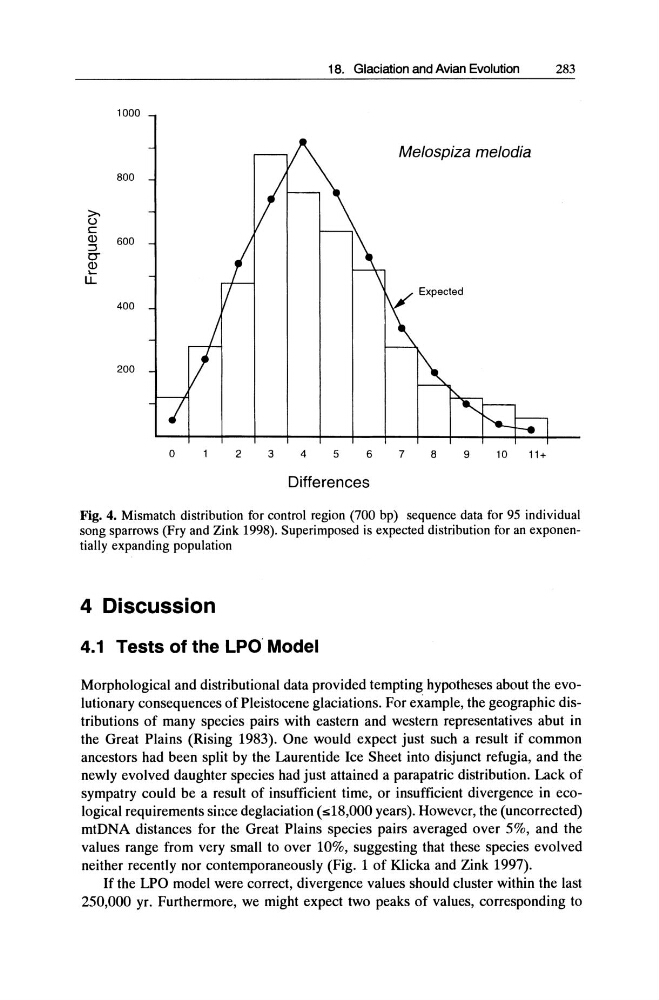
Fig. 4. Mismatch distribution for control region (700 bp) sequence data for 95 individual
song sparrows (Fry and Zink 1998). Superimposed is expected distribution for an exponentially expanding population
4 Discussion
4.1 Tests of the LPO' Model
Morphological and distributional data provided tempting hypotheses about the evolutionary consequences of Pleistocene glaciations. For example, the geographic distributions of many species pairs with eastern and western representatives abut in
the Great Plains (Rising 1983). One would expect just such a result if common
ancestors had been split by the Laurentide Ice Sheet into disjunct refugia, and the
newly evolved daughter species had just attained a parapatric distribution. Lack of
sympatry could be a result of insufficient time, or insufficient divergence in ecological requirements since deglaciation (s18,000 years). However, the (uncorrected)
mtDNA distances for the Great Plains species pairs averaged over 5%, and the
values range from very small to over 10%, suggesting that these species evolved
neither recently nor contemporaneously (Fig. 1 of Klicka and Zink 1997).
If the LPO model were correct, divergence values should cluster within the last
250,000 yr. Furthermore, we might expect two peaks of values, corresponding to
283
1000
Melospiza melodia
800
>U
C
Q)
600
::l
0Q)
...
LL
Expected
400
200
o
2
3
4
5
6
7
8
9
10
11+
Differences
Fig. 4. Mismatch distribution for control region (700 bp) sequence data for 95 individual
song sparrows (Fry and Zink 1998). Superimposed is expected distribution for an exponentially expanding population
4 Discussion
4.1 Tests of the LPO' Model
Morphological and distributional data provided tempting hypotheses about the evolutionary consequences of Pleistocene glaciations. For example, the geographic distributions of many species pairs with eastern and western representatives abut in
the Great Plains (Rising 1983). One would expect just such a result if common
ancestors had been split by the Laurentide Ice Sheet into disjunct refugia, and the
newly evolved daughter species had just attained a parapatric distribution. Lack of
sympatry could be a result of insufficient time, or insufficient divergence in ecological requirements since deglaciation (s18,000 years). However, the (uncorrected)
mtDNA distances for the Great Plains species pairs averaged over 5%, and the
values range from very small to over 10%, suggesting that these species evolved
neither recently nor contemporaneously (Fig. 1 of Klicka and Zink 1997).
If the LPO model were correct, divergence values should cluster within the last
250,000 yr. Furthermore, we might expect two peaks of values, corresponding to