

364
C. Corselli
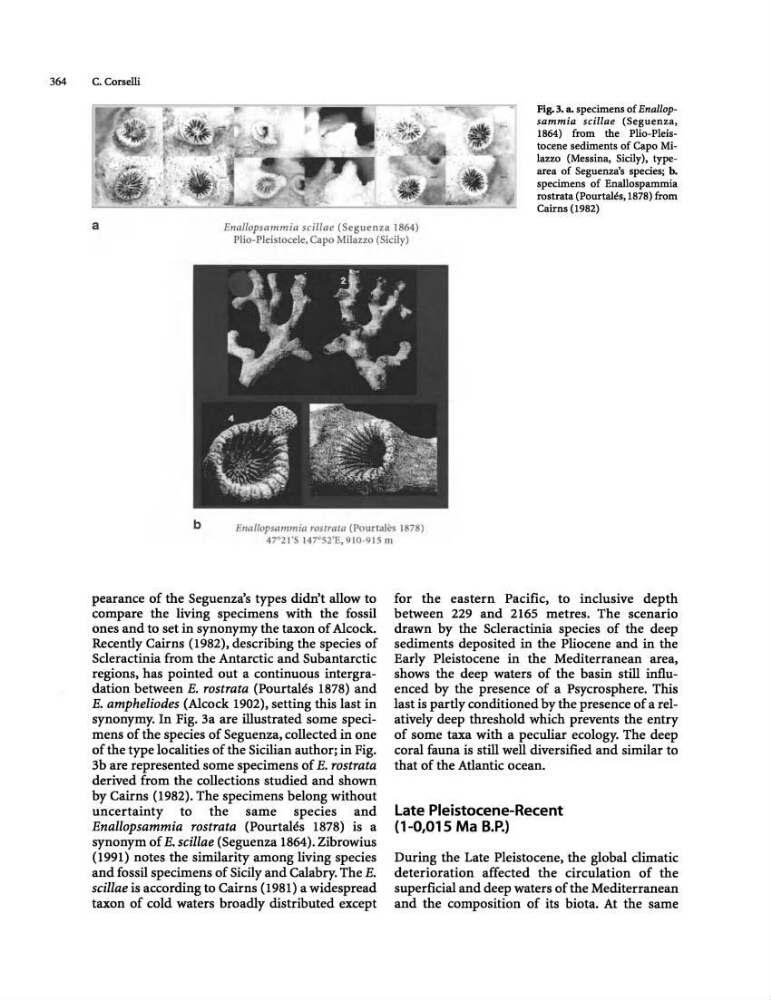
Fig. 3. a. specimens of Enallopsammia scillae (Seguenza,
1864) from the Plio-Pleistocene sediments of Capo Milazzo (Messina, Sicily), typearea of Seguenza's species; b.
specimens of Enallospammia
rostrata (Pourtales, 1878) from
Cairns (1982)
a
Enallopsammia scillae (Seg uenza 1864)
Plio-Pleistocele, Capo Milazzo (Sicily)
b
Errallopsammia r05trala (Pourta]es I 7 )
47°21'S 147 Q 52'E, 910-915 m
pearance of the Seguenza's types didn't allow to
compare the living specimens with the fossil
ones and to set in synonymy the taxon of Alcock.
Recently Cairns (1982), describing the species of
Scleractinia from the Antarctic and Subantarctic
regions, has pointed out a continuous intergradation between E. rostrata (Pourtales 1878) and
E. ampheliodes (Alcock 1902), setting this last in
synonymy. In Fig. 3a are illustrated some specimens of the species of Seguenza, collected in one
of the type localities of the Sicilian author; in Fig.
3b are represented some specimens of E. rostrata
derived from the collections studied and shown
by Cairns (1982). The specimens belong without
uncertainty to the same species and
Enallopsammia rostrata (PourtaIes 1878) is a
synonym of E. scillae (Seguenza 1864). Zibrowius
(1991) notes the similarity among living species
and fossil specimens of Sicily and Calabry. The E.
scillae is according to Cairns (1981) a widespread
taxon of cold waters broadly distributed except
for the eastern Pacific, to inclusive depth
between 229 and 2165 metres. The scenario
drawn by the Scleractinia species of the deep
sediments deposited in the Pliocene and in the
Early Pleistocene in the Mediterranean area,
shows the deep waters of the basin still influenced by the presence of a Psycrosphere. This
last is partly conditioned by the presence of a relatively deep threshold which prevents the entry
of some taxa with a peculiar ecology. The deep
coral fauna is still well diversified and similar to
that of the Atlantic ocean.
Late Pleistocene-Recent
(1-0,015 Ma B.P.)
During the Late Pleistocene, the global climatic
deterioration affected the circulation of the
superficial and deep waters of the Mediterranean
and the composition of its biota. At the same
C. Corselli
Fig. 3. a. specimens of Enallopsammia scillae (Seguenza,
1864) from the Plio-Pleistocene sediments of Capo Milazzo (Messina, Sicily), typearea of Seguenza's species; b.
specimens of Enallospammia
rostrata (Pourtales, 1878) from
Cairns (1982)
a
Enallopsammia scillae (Seg uenza 1864)
Plio-Pleistocele, Capo Milazzo (Sicily)
b
Errallopsammia r05trala (Pourta]es I 7 )
47°21'S 147 Q 52'E, 910-915 m
pearance of the Seguenza's types didn't allow to
compare the living specimens with the fossil
ones and to set in synonymy the taxon of Alcock.
Recently Cairns (1982), describing the species of
Scleractinia from the Antarctic and Subantarctic
regions, has pointed out a continuous intergradation between E. rostrata (Pourtales 1878) and
E. ampheliodes (Alcock 1902), setting this last in
synonymy. In Fig. 3a are illustrated some specimens of the species of Seguenza, collected in one
of the type localities of the Sicilian author; in Fig.
3b are represented some specimens of E. rostrata
derived from the collections studied and shown
by Cairns (1982). The specimens belong without
uncertainty to the same species and
Enallopsammia rostrata (PourtaIes 1878) is a
synonym of E. scillae (Seguenza 1864). Zibrowius
(1991) notes the similarity among living species
and fossil specimens of Sicily and Calabry. The E.
scillae is according to Cairns (1981) a widespread
taxon of cold waters broadly distributed except
for the eastern Pacific, to inclusive depth
between 229 and 2165 metres. The scenario
drawn by the Scleractinia species of the deep
sediments deposited in the Pliocene and in the
Early Pleistocene in the Mediterranean area,
shows the deep waters of the basin still influenced by the presence of a Psycrosphere. This
last is partly conditioned by the presence of a relatively deep threshold which prevents the entry
of some taxa with a peculiar ecology. The deep
coral fauna is still well diversified and similar to
that of the Atlantic ocean.
Late Pleistocene-Recent
(1-0,015 Ma B.P.)
During the Late Pleistocene, the global climatic
deterioration affected the circulation of the
superficial and deep waters of the Mediterranean
and the composition of its biota. At the same