

Change and Diversity: the Mediterranean Deep Corals from the Miocene to the Present
363
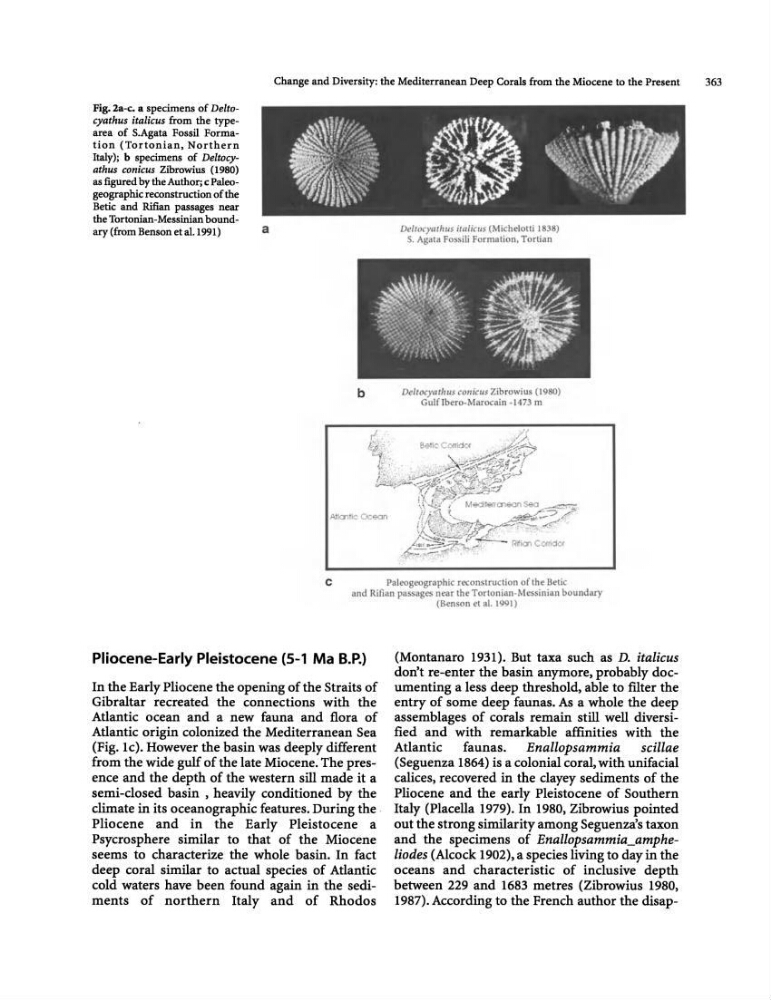
Fig. 2a-c. a specimens of Deltocyathus italicus from the typearea of S.Agata Fossil Formation (Tortonian, Northern
Italy); b specimens of Deltocyathus conicus Zibrowius (I980)
as figured by the Author; c Paleogeographic reconstruction of the
Betic and Rifian passages near
the Tortonian-Messinian boundary (from Benson et al. 1991)
a
DellOcyalhus ;/atiCl/s (Michelotti 1838)
S. Agala Fossili Formation, Torlian
b
DeltocyatlllJs cOllicus Zibrowiu (1980)
Gulf rb ero-Marocai n -1473 m
C
Paleogeographic reconstructio n of the Betic
and Rifian passages near the Tor tonian -Messinian boundary
(Benson et 31. 1991)
Pliocene-Early Pleistocene (5-1 Ma B.P.)
In the Early Pliocene the opening of the Straits of
Gibraltar recreated the connections with the
Atlantic ocean and a new fauna and flora of
Atlantic origin colonized the Mediterranean Sea
(Fig. Ie). However the basin was deeply different
from the wide gulf of the late Miocene. The presence and the depth of the western sill made it a
semi-closed basin , heavily conditioned by the
climate in its oceanographic features. During the .
Pliocene and in the Early Pleistocene a
Psycrosphere similar to that of the Miocene
seems to characterize the whole basin. In fact
deep coral similar to actual species of Atlantic
cold waters have been found again in the sediments of northern Italy and of Rhodos
(Montanaro 1931). But taxa such as D. italicus
don't re-enter the basin anymore, probably documenting a less deep threshold, able to f:tlter the
entry of some deep faunas. As a whole the deep
assemblages of corals remain still well diversified and with remarkable affinities with the
Atlantic faunas. Enallopsammia scillae
(Seguenza 1864) is a colonial coral, with unifacial
calices, recovered in the clayey sediments of the
Pliocene and the early Pleistocene of Southern
Italy (Placella 1979), In 1980, Zibrowius pointed
out the strong similarity among Seguenza's taxon
and the specimens of Enallopsammia_ampheliodes (Alcock 1902), a species living to day in the
oceans and characteristic of inclusive depth
between 229 and 1683 metres (Zibrowius 1980,
1987). According to the French author the disap-
363
Fig. 2a-c. a specimens of Deltocyathus italicus from the typearea of S.Agata Fossil Formation (Tortonian, Northern
Italy); b specimens of Deltocyathus conicus Zibrowius (I980)
as figured by the Author; c Paleogeographic reconstruction of the
Betic and Rifian passages near
the Tortonian-Messinian boundary (from Benson et al. 1991)
a
DellOcyalhus ;/atiCl/s (Michelotti 1838)
S. Agala Fossili Formation, Torlian
b
DeltocyatlllJs cOllicus Zibrowiu (1980)
Gulf rb ero-Marocai n -1473 m
C
Paleogeographic reconstructio n of the Betic
and Rifian passages near the Tor tonian -Messinian boundary
(Benson et 31. 1991)
Pliocene-Early Pleistocene (5-1 Ma B.P.)
In the Early Pliocene the opening of the Straits of
Gibraltar recreated the connections with the
Atlantic ocean and a new fauna and flora of
Atlantic origin colonized the Mediterranean Sea
(Fig. Ie). However the basin was deeply different
from the wide gulf of the late Miocene. The presence and the depth of the western sill made it a
semi-closed basin , heavily conditioned by the
climate in its oceanographic features. During the .
Pliocene and in the Early Pleistocene a
Psycrosphere similar to that of the Miocene
seems to characterize the whole basin. In fact
deep coral similar to actual species of Atlantic
cold waters have been found again in the sediments of northern Italy and of Rhodos
(Montanaro 1931). But taxa such as D. italicus
don't re-enter the basin anymore, probably documenting a less deep threshold, able to f:tlter the
entry of some deep faunas. As a whole the deep
assemblages of corals remain still well diversified and with remarkable affinities with the
Atlantic faunas. Enallopsammia scillae
(Seguenza 1864) is a colonial coral, with unifacial
calices, recovered in the clayey sediments of the
Pliocene and the early Pleistocene of Southern
Italy (Placella 1979), In 1980, Zibrowius pointed
out the strong similarity among Seguenza's taxon
and the specimens of Enallopsammia_ampheliodes (Alcock 1902), a species living to day in the
oceans and characteristic of inclusive depth
between 229 and 1683 metres (Zibrowius 1980,
1987). According to the French author the disap-