

136
G. Brancato et al.
a 60
50
40
r--'-10
o
~
I
1 '
J
b
-0.25
-0.35
-0.45
'"
-0.55
I -0.65
U
J3
0
-0.75
J2
0
-0.85
II
""
..§
;;
~
J4
0
JI
o
~
1
..---L--.
~
.l:!l
1
~
j
' 1
.~
'
..9
"'i
"'i
B
I
.ll
~
~
~
~
.!
j
..,
' "
"'i
T2
o
.-l--J!
~
J
'
T1
o
~
r
...
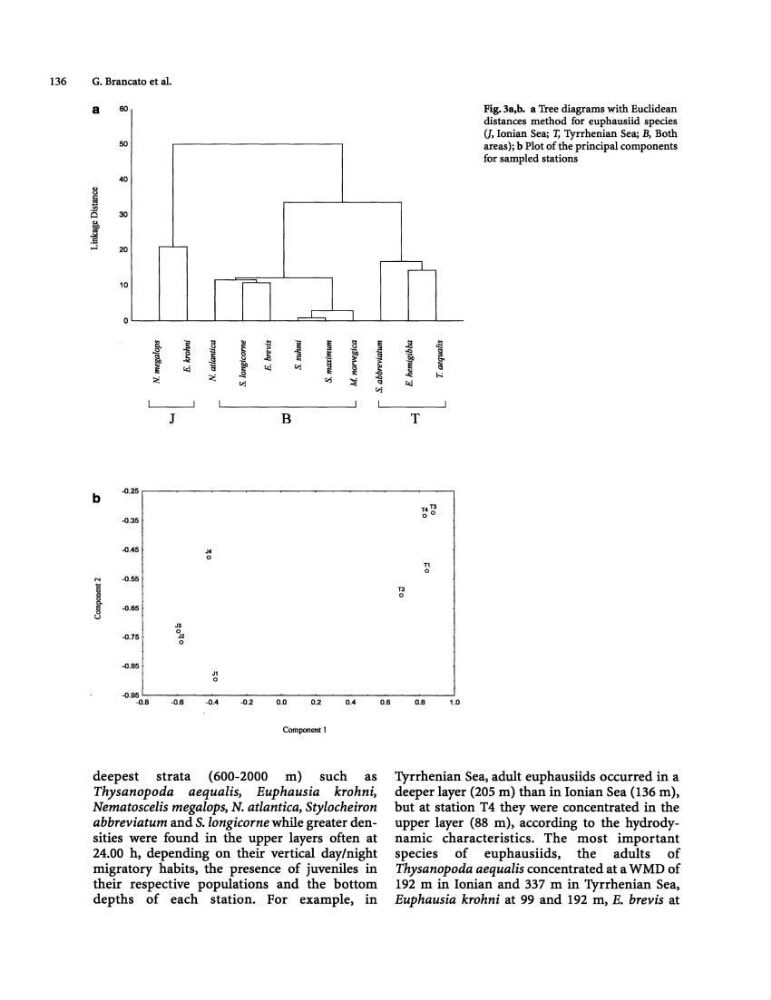
Fig. 3a,b. a Tree diagrams with Euclidean
distances method for euphausiid species
U, Ionian Sea; T, Tyrrhenian Sea; B, Both
areas); b Plot of the principal components
for sampled stations
-0.95 '-----~----~------------'
-O.B
-0.6
-0.4
-0.2
0.0
0.2
0.4
Component 1
deepest strata (600-2000 m) such as
Thysanopoda aequalis. Euphausia krohni.
Nematoscelis megalops. N. atlantica, Stylocheiron
abbreviatum and S. longicorne while greater densities were found in the upper layers often at
24.00 h, depending on their vertical day/night
migratory habits, the presence of juveniles in
their respective populations and the bottom
depths of each station. For example, in
0.6
0.6
1.0
Tyrrhenian Sea, adult euphausiids occurred in a
deeper layer (205 m) than in Ionian Sea (136 m),
but at station T 4 they were concentrated in the
upper layer (88 m), according to the hydrodynamic characteristics. The most important
species of euphausiids. the adults of
Thysanopoda aequalis concentrated at a WMD of
192 m in Ionian and 337 m in Tyrrhenian Sea,
Euphausia krohni at 99 and 192 m, E. brevis at
G. Brancato et al.
a 60
50
40
r--'-10
o
~
I
1 '
J
b
-0.25
-0.35
-0.45
'"
-0.55
I -0.65
U
J3
0
-0.75
J2
0
-0.85
II
""
..§
;;
~
J4
0
JI
o
~
1
..---L--.
~
.l:!l
1
~
j
' 1
.~
'
..9
"'i
"'i
B
I
.ll
~
~
~
~
.!
j
..,
' "
"'i
T2
o
.-l--J!
~
J
'
T1
o
~
r
...
Fig. 3a,b. a Tree diagrams with Euclidean
distances method for euphausiid species
U, Ionian Sea; T, Tyrrhenian Sea; B, Both
areas); b Plot of the principal components
for sampled stations
-0.95 '-----~----~------------'
-O.B
-0.6
-0.4
-0.2
0.0
0.2
0.4
Component 1
deepest strata (600-2000 m) such as
Thysanopoda aequalis. Euphausia krohni.
Nematoscelis megalops. N. atlantica, Stylocheiron
abbreviatum and S. longicorne while greater densities were found in the upper layers often at
24.00 h, depending on their vertical day/night
migratory habits, the presence of juveniles in
their respective populations and the bottom
depths of each station. For example, in
0.6
0.6
1.0
Tyrrhenian Sea, adult euphausiids occurred in a
deeper layer (205 m) than in Ionian Sea (136 m),
but at station T 4 they were concentrated in the
upper layer (88 m), according to the hydrodynamic characteristics. The most important
species of euphausiids. the adults of
Thysanopoda aequalis concentrated at a WMD of
192 m in Ionian and 337 m in Tyrrhenian Sea,
Euphausia krohni at 99 and 192 m, E. brevis at