

262
necessarily becoming totally ‘sea blind’ from the
viewpoint of sea power
1 ) and somewhat forgot its
maritime heritage till it was decided in 2009 to
launch a national consultation and work out the
contours of a national ocean policy (Fig. 2 ).
France is an EU Member State having a coastline on the Atlantic Ocean/Channel Sea and the
Mediterranean Sea. In addition, it has overseas
territories inherited from the colonial period in
the three oceans including the Antarctic area. As
shown on the map (Fig. 2 ), those overseas territories’ EEZ represent 97 % of France total maritime superfi cy. Nevertheless, while acting along
the principles of sovereignty and subsidiarity,
France is deeply involved in the EU integrated
maritime policy process.
Although the European Union (EU) has acted
like a land power for the past 50 years, it actually
has the geographical potential to become a sea
power as well (Rogers 2010 ).
1 President of the French Republic, The French White
Paper on Defence and National Security, 2008
In its European Security Strategy,
2 the EU
clearly acknowledged that as a union of 25 states
(27 nowadays) with over 500 million people producing a quarter of the world’s gross domestic
product (GDP), it is inevitably a global player.
The same strategy states that the primary objectives of the EU are to craft a ring of well- governed
countries around its borders and to strive for
more ‘effective multilateralism’, a rule-based
international system predicated on the rule of
law. This ‘ring of friends’ is fundamentally forged
through the European Neighbourhood Policy, the
Eastern Partnership and the Union for the
Mediterranean and applies not only to land areas
but also to almost enclosed or semi- enclosed
large water bodies which are the Baltic Sea
towards the northeast, the Mediterranean Sea
towards the south and the Black and Caspian
Seas towards the east (Hénocque 2011 ). All of
them are located at the boundaries of the
European Union with therefore great signifi cance
from the geography and geopolitics point of
view, particularly because they belong to the
2 December 12, 2003
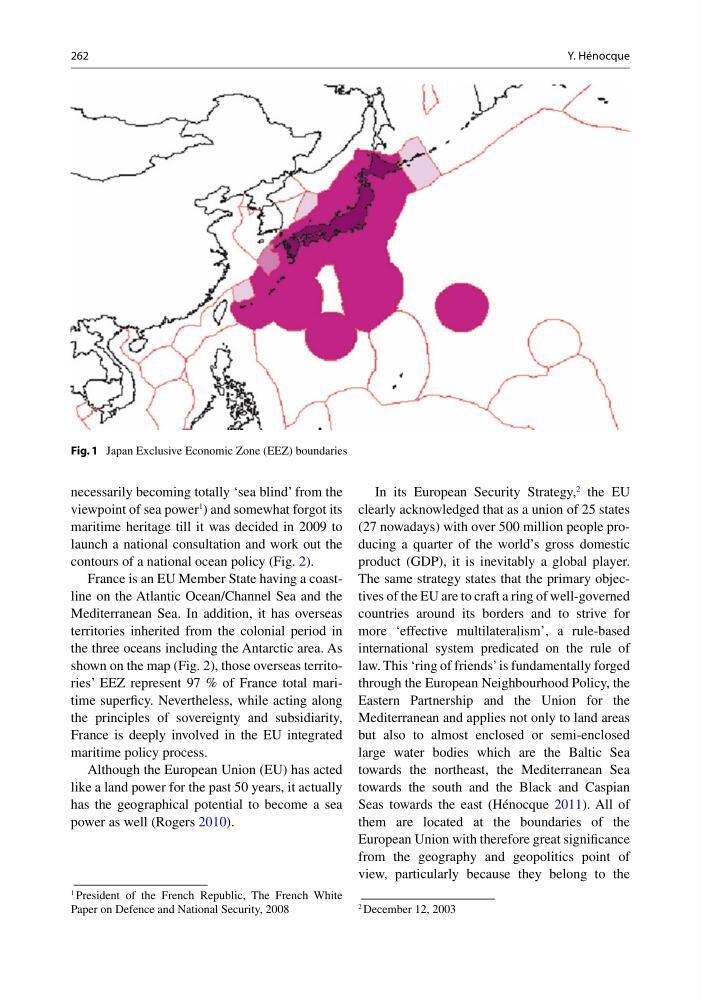
Fig. 1 Japan Exclusive Economic Zone (EEZ) boundaries
Y. Hénocque
necessarily becoming totally ‘sea blind’ from the
viewpoint of sea power
1 ) and somewhat forgot its
maritime heritage till it was decided in 2009 to
launch a national consultation and work out the
contours of a national ocean policy (Fig. 2 ).
France is an EU Member State having a coastline on the Atlantic Ocean/Channel Sea and the
Mediterranean Sea. In addition, it has overseas
territories inherited from the colonial period in
the three oceans including the Antarctic area. As
shown on the map (Fig. 2 ), those overseas territories’ EEZ represent 97 % of France total maritime superfi cy. Nevertheless, while acting along
the principles of sovereignty and subsidiarity,
France is deeply involved in the EU integrated
maritime policy process.
Although the European Union (EU) has acted
like a land power for the past 50 years, it actually
has the geographical potential to become a sea
power as well (Rogers 2010 ).
1 President of the French Republic, The French White
Paper on Defence and National Security, 2008
In its European Security Strategy,
2 the EU
clearly acknowledged that as a union of 25 states
(27 nowadays) with over 500 million people producing a quarter of the world’s gross domestic
product (GDP), it is inevitably a global player.
The same strategy states that the primary objectives of the EU are to craft a ring of well- governed
countries around its borders and to strive for
more ‘effective multilateralism’, a rule-based
international system predicated on the rule of
law. This ‘ring of friends’ is fundamentally forged
through the European Neighbourhood Policy, the
Eastern Partnership and the Union for the
Mediterranean and applies not only to land areas
but also to almost enclosed or semi- enclosed
large water bodies which are the Baltic Sea
towards the northeast, the Mediterranean Sea
towards the south and the Black and Caspian
Seas towards the east (Hénocque 2011 ). All of
them are located at the boundaries of the
European Union with therefore great signifi cance
from the geography and geopolitics point of
view, particularly because they belong to the
2 December 12, 2003
Fig. 1 Japan Exclusive Economic Zone (EEZ) boundaries
Y. Hénocque