

239
compartments, including the seagrass itself via
cascade effect (Sala et al. 1998 ). However, this is
not in fact such a theoretical approach, as there is
no correlation between the EBQI and the speciesbased indices (EQRs).
4
Conclusion
The noncongruence of the EBQI, i.e. the quality
of the ecosystem functioning, with the empirical
idea one may have of the P. oceanica ecosystem
at a given site, due to, e.g. the health of the seagrass and the clearness of the water (and even the
beauty of the landscape and the seascape), confi rms the usefulness of the EBQI index, based
upon the whole ecosystem rather than solely
upon the seagrass itself, sometimes together
with some affi liate species. Other anthropogenic
impacts, e.g. overfi shing, are putatively more
important than the above-mentioned parameters
with regard to the structure and functioning of the
ecosystem.
The EBQI that is proposed here for the P. oceanica ecosystem could constitute a model for
similar indices designed for other marine ecosystems, such as coralligenous outcrops, underwater
caves, soft bottoms and sublittoral reefs. Such
indices would constitute an innovative category
of biological indices, namely, ecosystem-based
indices, both in the terrestrial and the marine
realms. As in the marine environment, the health
assessment of terrestrial habitats is usually
based upon a few species or a single functional
compartment (e.g. primary producers or trees)
rather than on the whole ecosystem functioning,
including wolves, bears and eagles, as far as
Western Europe is concerned.
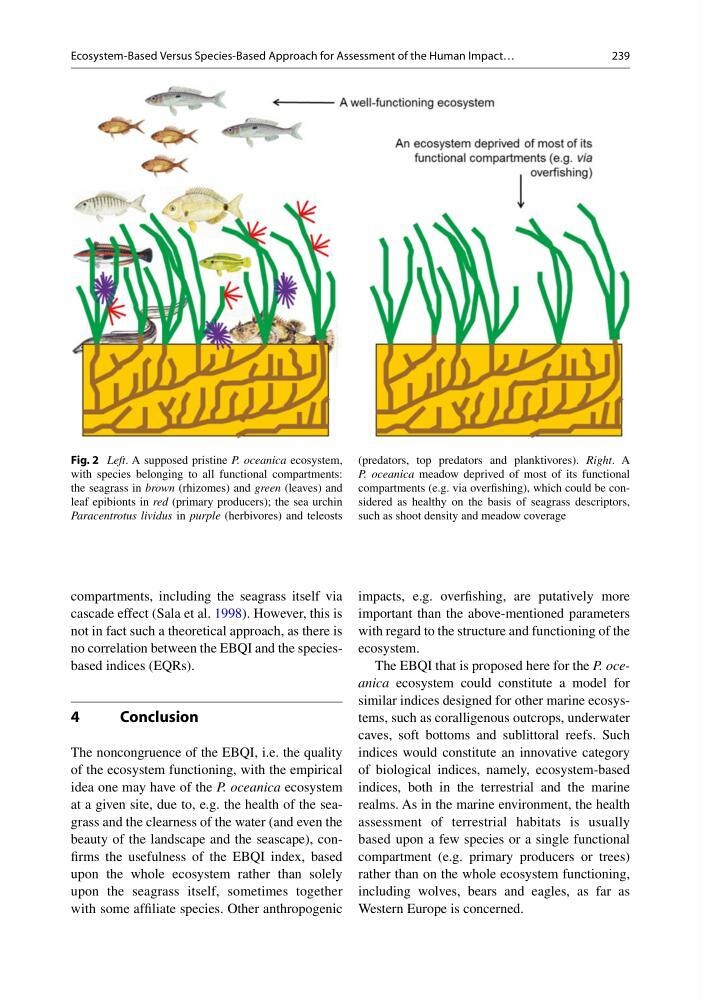
Fig. 2 Left . A supposed pristine P. oceanica ecosystem,
with species belonging to all functional compartments:
the seagrass in brown (rhizomes) and green (leaves) and
leaf epibionts in red (primary producers); the sea urchin
Paracentrotus lividus in purple (herbivores) and teleosts
(predators, top predators and planktivores). Right . A
P. oceanica meadow deprived of most of its functional
compartments (e.g. via overfi shing), which could be considered as healthy on the basis of seagrass descriptors,
such as shoot density and meadow coverage
Ecosystem-Based Versus Species-Based Approach for Assessment of the Human Impact…
compartments, including the seagrass itself via
cascade effect (Sala et al. 1998 ). However, this is
not in fact such a theoretical approach, as there is
no correlation between the EBQI and the speciesbased indices (EQRs).
4
Conclusion
The noncongruence of the EBQI, i.e. the quality
of the ecosystem functioning, with the empirical
idea one may have of the P. oceanica ecosystem
at a given site, due to, e.g. the health of the seagrass and the clearness of the water (and even the
beauty of the landscape and the seascape), confi rms the usefulness of the EBQI index, based
upon the whole ecosystem rather than solely
upon the seagrass itself, sometimes together
with some affi liate species. Other anthropogenic
impacts, e.g. overfi shing, are putatively more
important than the above-mentioned parameters
with regard to the structure and functioning of the
ecosystem.
The EBQI that is proposed here for the P. oceanica ecosystem could constitute a model for
similar indices designed for other marine ecosystems, such as coralligenous outcrops, underwater
caves, soft bottoms and sublittoral reefs. Such
indices would constitute an innovative category
of biological indices, namely, ecosystem-based
indices, both in the terrestrial and the marine
realms. As in the marine environment, the health
assessment of terrestrial habitats is usually
based upon a few species or a single functional
compartment (e.g. primary producers or trees)
rather than on the whole ecosystem functioning,
including wolves, bears and eagles, as far as
Western Europe is concerned.
Fig. 2 Left . A supposed pristine P. oceanica ecosystem,
with species belonging to all functional compartments:
the seagrass in brown (rhizomes) and green (leaves) and
leaf epibionts in red (primary producers); the sea urchin
Paracentrotus lividus in purple (herbivores) and teleosts
(predators, top predators and planktivores). Right . A
P. oceanica meadow deprived of most of its functional
compartments (e.g. via overfi shing), which could be considered as healthy on the basis of seagrass descriptors,
such as shoot density and meadow coverage
Ecosystem-Based Versus Species-Based Approach for Assessment of the Human Impact…