

190
is one of the main bycatches of sole, and its
catches also are regulated by a TAC and an MLS
of 27 cm. Scallops represent a highly valuable
species for dredgers who fish it from November
to April in five specific areas and then switch to
bottom trawls. The fishery is extremely controlled through individual weekly maximum
landings, MLS (110 mm), and a fishing closure
during the spawning season. Red mullet is a relatively short-lived species, which is currently not
subject to management. Red mullet has, however,
become an important species for trawlers due to
its high value, and new management measures
are likely to be enforced in the next years.
Cephalopods represent a large part of trawlers
revenues. Squids and cuttlefish are fished sequentially; the main fishing season is October/
November in the whole area and then June in
coastal areas. Because cephalopods and red mullet are not subject to management, French trawlers have increasingly targeted these species when
increased TAC constraints have severely capped
the catches of cod and whiting. Among the other
important species landed by French fleet, cod,
whiting, and sea bass are widely distributed, and
most of their life cycle and fisheries take place
outside VIId. They were hence pooled together
with the species of lesser economic importance,
into species group “OTHER,” which was not
explicitly taken into account in the analysis.
3
Parameterization of the ISISFish Model for the Eastern
English Channel
ISIS-Fish is a modeling tool suitable for investigating the consequences of alternative policies
on the dynamics of resources and fisheries
(Pelletier et al 2009). This spatially explicit
model is based on three sub-models: (1) a fishing
activity dynamics model, (2) a population
dynamics model, and (3) a management dynamics model. The three sub-models interact only if
they overlap in space and time. In ISIS-Fish, fishing mortality is calculated from the distribution
of fishing time over fish population areas, time,
métiers, and fleets. The objective of the parameterization is thus to describe as accurately as possible the structuration of effort in space and time
and over métiers and to predict its evolution
under various environmental and management
scenarios. Simulation times for the model
increase with the complexity of the activity, thus
making trade-offs necessary between accuracy
and level of description.
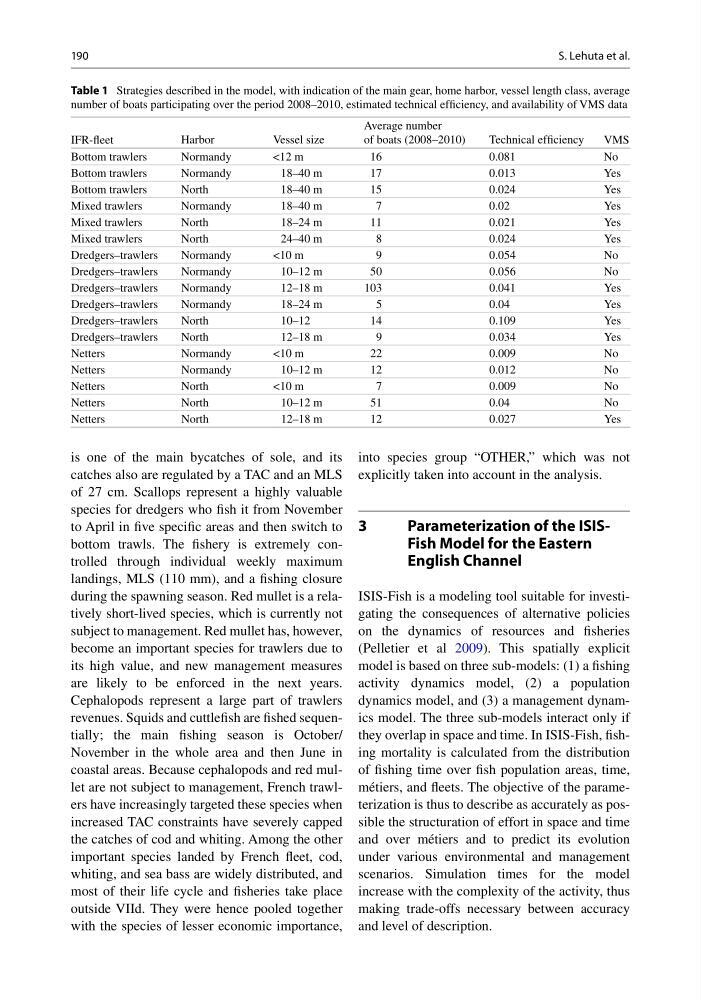
Table 1 Strategies described in the model, with indication of the main gear, home harbor, vessel length class, average
number of boats participating over the period 2008–2010, estimated technical efficiency, and availability of VMS data
IFR-fleet
Harbor
Vessel size
Average number
of boats (2008–2010)
Technical efficiency
VMS
Bottom trawlers
Normandy
<12 m
16
0.081
No
Bottom trawlers
Normandy
18–40 m
17
0.013
Yes
Bottom trawlers
North
18–40 m
15
0.024
Yes
Mixed trawlers
Normandy
18–40 m
7
0.02
Yes
Mixed trawlers
North
18–24 m
11
0.021
Yes
Mixed trawlers
North
24–40 m
8
0.024
Yes
Dredgers–trawlers
Normandy
<10 m
9
0.054
No
Dredgers–trawlers
Normandy
10–12 m
50
0.056
No
Dredgers–trawlers
Normandy
12–18 m
103
0.041
Yes
Dredgers–trawlers
Normandy
18–24 m
5
0.04
Yes
Dredgers–trawlers
North
10–12
14
0.109
Yes
Dredgers–trawlers
North
12–18 m
9
0.034
Yes
Netters
Normandy
<10 m
22
0.009
No
Netters
Normandy
10–12 m
12
0.012
No
Netters
North
<10 m
7
0.009
No
Netters
North
10–12 m
51
0.04
No
Netters
North
12–18 m
12
0.027
Yes
S. Lehuta et al.
is one of the main bycatches of sole, and its
catches also are regulated by a TAC and an MLS
of 27 cm. Scallops represent a highly valuable
species for dredgers who fish it from November
to April in five specific areas and then switch to
bottom trawls. The fishery is extremely controlled through individual weekly maximum
landings, MLS (110 mm), and a fishing closure
during the spawning season. Red mullet is a relatively short-lived species, which is currently not
subject to management. Red mullet has, however,
become an important species for trawlers due to
its high value, and new management measures
are likely to be enforced in the next years.
Cephalopods represent a large part of trawlers
revenues. Squids and cuttlefish are fished sequentially; the main fishing season is October/
November in the whole area and then June in
coastal areas. Because cephalopods and red mullet are not subject to management, French trawlers have increasingly targeted these species when
increased TAC constraints have severely capped
the catches of cod and whiting. Among the other
important species landed by French fleet, cod,
whiting, and sea bass are widely distributed, and
most of their life cycle and fisheries take place
outside VIId. They were hence pooled together
with the species of lesser economic importance,
into species group “OTHER,” which was not
explicitly taken into account in the analysis.
3
Parameterization of the ISISFish Model for the Eastern
English Channel
ISIS-Fish is a modeling tool suitable for investigating the consequences of alternative policies
on the dynamics of resources and fisheries
(Pelletier et al 2009). This spatially explicit
model is based on three sub-models: (1) a fishing
activity dynamics model, (2) a population
dynamics model, and (3) a management dynamics model. The three sub-models interact only if
they overlap in space and time. In ISIS-Fish, fishing mortality is calculated from the distribution
of fishing time over fish population areas, time,
métiers, and fleets. The objective of the parameterization is thus to describe as accurately as possible the structuration of effort in space and time
and over métiers and to predict its evolution
under various environmental and management
scenarios. Simulation times for the model
increase with the complexity of the activity, thus
making trade-offs necessary between accuracy
and level of description.
Table 1 Strategies described in the model, with indication of the main gear, home harbor, vessel length class, average
number of boats participating over the period 2008–2010, estimated technical efficiency, and availability of VMS data
IFR-fleet
Harbor
Vessel size
Average number
of boats (2008–2010)
Technical efficiency
VMS
Bottom trawlers
Normandy
<12 m
16
0.081
No
Bottom trawlers
Normandy
18–40 m
17
0.013
Yes
Bottom trawlers
North
18–40 m
15
0.024
Yes
Mixed trawlers
Normandy
18–40 m
7
0.02
Yes
Mixed trawlers
North
18–24 m
11
0.021
Yes
Mixed trawlers
North
24–40 m
8
0.024
Yes
Dredgers–trawlers
Normandy
<10 m
9
0.054
No
Dredgers–trawlers
Normandy
10–12 m
50
0.056
No
Dredgers–trawlers
Normandy
12–18 m
103
0.041
Yes
Dredgers–trawlers
Normandy
18–24 m
5
0.04
Yes
Dredgers–trawlers
North
10–12
14
0.109
Yes
Dredgers–trawlers
North
12–18 m
9
0.034
Yes
Netters
Normandy
<10 m
22
0.009
No
Netters
Normandy
10–12 m
12
0.012
No
Netters
North
<10 m
7
0.009
No
Netters
North
10–12 m
51
0.04
No
Netters
North
12–18 m
12
0.027
Yes
S. Lehuta et al.