

189
fleets considered to 17, hereafter referred to as
“strategies” (Table 1).
2.2
Definition of Métiers
and Strategies
The strategy of a fleet, that is, its activity along
the year, is described by the set of métiers it practiced. Métiers are defined as the combination of a
fishing gear, a fishing area, and when applicable a
set of target species. The analysis of catch compositions did not allow the identification of target
species a posteriori. It was therefore assumed that
the choice of gear and area of practice reflects the
choice of target species. However, depending on
species distribution and availability, the relative
amount of species targeted is not necessarily
reflected in the catch composition. Within VIId,
effort per gear per fleet is computed to identify
the main gears used, and the others are pooled
together in a métier OTH-VIId. For the purpose
of the study, all the effort spent outside area VIId
is considered a unique métier (OTH-OTH).
2.3
Identification of Fish
Populations of Interest
Sole is the main species in value landed by French
fleets in the Channel. It is managed by a TAC and
a minimum landing size (MLS) of 24 cm. Plaice
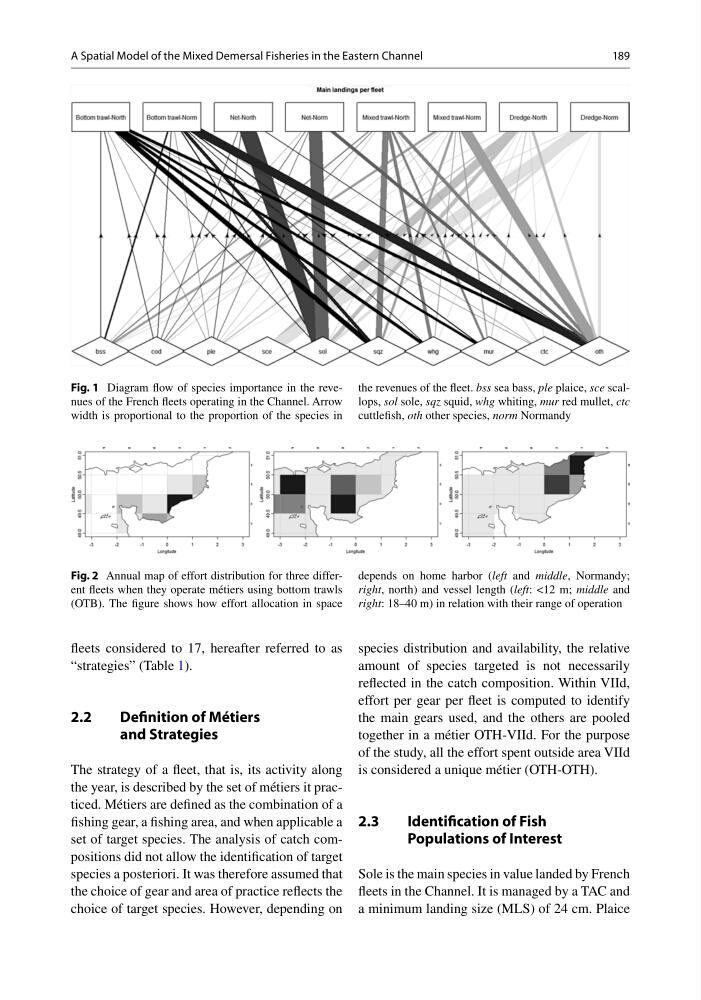
Fig. 1 Diagram flow of species importance in the revenues of the French fleets operating in the Channel. Arrow
width is proportional to the proportion of the species in
the revenues of the fleet. bss sea bass, ple plaice, sce scallops, sol sole, sqz squid, whg whiting, mur red mullet, ctc
cuttlefish, oth other species, norm Normandy
Fig. 2 Annual map of effort distribution for three different fleets when they operate métiers using bottom trawls
(OTB). The figure shows how effort allocation in space
depends on home harbor (left and middle, Normandy;
right, north) and vessel length (left: <12 m; middle and
right: 18–40 m) in relation with their range of operation
A Spatial Model of the Mixed Demersal Fisheries in the Eastern Channel
fleets considered to 17, hereafter referred to as
“strategies” (Table 1).
2.2
Definition of Métiers
and Strategies
The strategy of a fleet, that is, its activity along
the year, is described by the set of métiers it practiced. Métiers are defined as the combination of a
fishing gear, a fishing area, and when applicable a
set of target species. The analysis of catch compositions did not allow the identification of target
species a posteriori. It was therefore assumed that
the choice of gear and area of practice reflects the
choice of target species. However, depending on
species distribution and availability, the relative
amount of species targeted is not necessarily
reflected in the catch composition. Within VIId,
effort per gear per fleet is computed to identify
the main gears used, and the others are pooled
together in a métier OTH-VIId. For the purpose
of the study, all the effort spent outside area VIId
is considered a unique métier (OTH-OTH).
2.3
Identification of Fish
Populations of Interest
Sole is the main species in value landed by French
fleets in the Channel. It is managed by a TAC and
a minimum landing size (MLS) of 24 cm. Plaice
Fig. 1 Diagram flow of species importance in the revenues of the French fleets operating in the Channel. Arrow
width is proportional to the proportion of the species in
the revenues of the fleet. bss sea bass, ple plaice, sce scallops, sol sole, sqz squid, whg whiting, mur red mullet, ctc
cuttlefish, oth other species, norm Normandy
Fig. 2 Annual map of effort distribution for three different fleets when they operate métiers using bottom trawls
(OTB). The figure shows how effort allocation in space
depends on home harbor (left and middle, Normandy;
right, north) and vessel length (left: <12 m; middle and
right: 18–40 m) in relation with their range of operation
A Spatial Model of the Mixed Demersal Fisheries in the Eastern Channel