

179
fully protecting them (no impact of other gears),
while this measure is supposed to have no impact
on pelagic habitats and yield a 50 % protection to
target species (which can be also caught with
other gears such as tremels). The exclusion of
large vessels (mostly trawlers) from the 12 nautical miles zone is not expected to supply more
than a 10 % protection to features impacted by
ground-towed gears, since there are few such
large vessels operating in the study area.
The results of this drastic scenario (few choices
for management strategies, all of which prohibited ground-towed gears) are reported in Fig. 3.
2.2.2 Fisheries Dynamics Modelling
The ISIS-Fish model used is an improved
version of the one developed by Gasche et al.
(2013), characterizing population and exploitation dynamics of sole and plaice, with:
• A finer spatial resolution of 0.125° (latitude and
longitude) that allows for a more realistic depiction of biological and exploitation processes
a
b
c
d
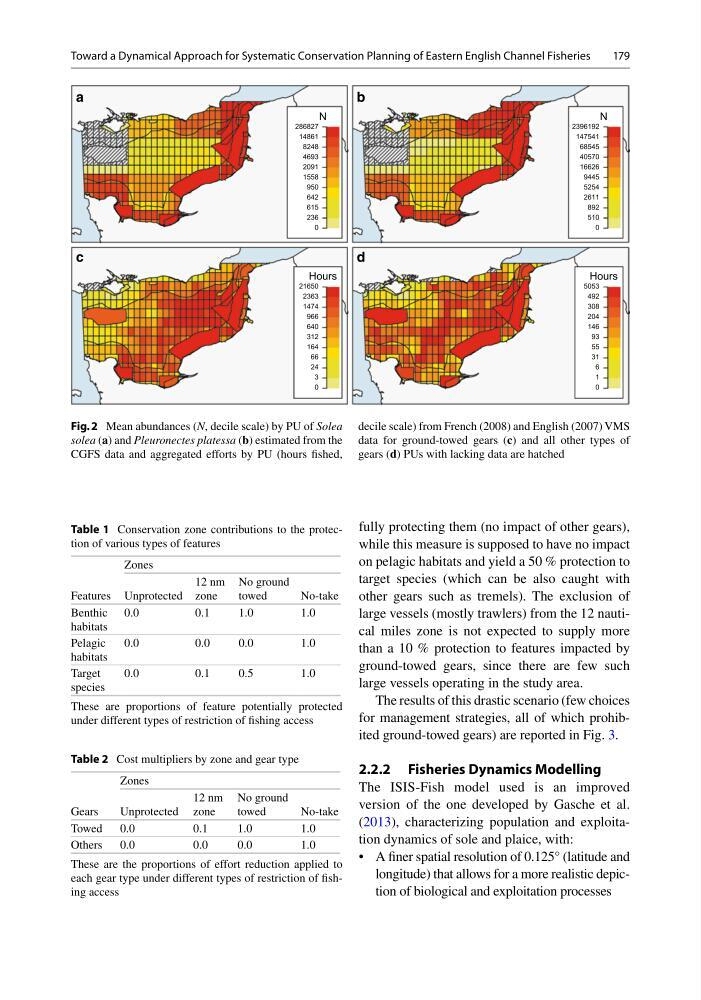
Fig. 2 Mean abundances (N, decile scale) by PU of Solea
solea (a) and Pleuronectes platessa (b) estimated from the
CGFS data and aggregated efforts by PU (hours fished,
decile scale) from French (2008) and English (2007) VMS
data for ground-towed gears (c) and all other types of
gears (d) PUs with lacking data are hatched
Table 1 Conservation zone contributions to the protection of various types of features
Features
Zones
Unprotected
12 nm
zone
No ground
towed
No-take
Benthic
habitats
0.0
0.1
1.0
1.0
Pelagic
habitats
0.0
0.0
0.0
1.0
Target
species
0.0
0.1
0.5
1.0
These are proportions of feature potentially protected
under different types of restriction of fishing access
Table 2 Cost multipliers by zone and gear type
Gears
Zones
Unprotected
12 nm
zone
No ground
towed
No-take
Towed
0.0
0.1
1.0
1.0
Others
0.0
0.0
0.0
1.0
These are the proportions of effort reduction applied to
each gear type under different types of restriction of fishing access
Toward a Dynamical Approach for Systematic Conservation Planning of Eastern English Channel Fisheries
fully protecting them (no impact of other gears),
while this measure is supposed to have no impact
on pelagic habitats and yield a 50 % protection to
target species (which can be also caught with
other gears such as tremels). The exclusion of
large vessels (mostly trawlers) from the 12 nautical miles zone is not expected to supply more
than a 10 % protection to features impacted by
ground-towed gears, since there are few such
large vessels operating in the study area.
The results of this drastic scenario (few choices
for management strategies, all of which prohibited ground-towed gears) are reported in Fig. 3.
2.2.2 Fisheries Dynamics Modelling
The ISIS-Fish model used is an improved
version of the one developed by Gasche et al.
(2013), characterizing population and exploitation dynamics of sole and plaice, with:
• A finer spatial resolution of 0.125° (latitude and
longitude) that allows for a more realistic depiction of biological and exploitation processes
a
b
c
d
Fig. 2 Mean abundances (N, decile scale) by PU of Solea
solea (a) and Pleuronectes platessa (b) estimated from the
CGFS data and aggregated efforts by PU (hours fished,
decile scale) from French (2008) and English (2007) VMS
data for ground-towed gears (c) and all other types of
gears (d) PUs with lacking data are hatched
Table 1 Conservation zone contributions to the protection of various types of features
Features
Zones
Unprotected
12 nm
zone
No ground
towed
No-take
Benthic
habitats
0.0
0.1
1.0
1.0
Pelagic
habitats
0.0
0.0
0.0
1.0
Target
species
0.0
0.1
0.5
1.0
These are proportions of feature potentially protected
under different types of restriction of fishing access
Table 2 Cost multipliers by zone and gear type
Gears
Zones
Unprotected
12 nm
zone
No ground
towed
No-take
Towed
0.0
0.1
1.0
1.0
Others
0.0
0.0
0.0
1.0
These are the proportions of effort reduction applied to
each gear type under different types of restriction of fishing access
Toward a Dynamical Approach for Systematic Conservation Planning of Eastern English Channel Fisheries