

143
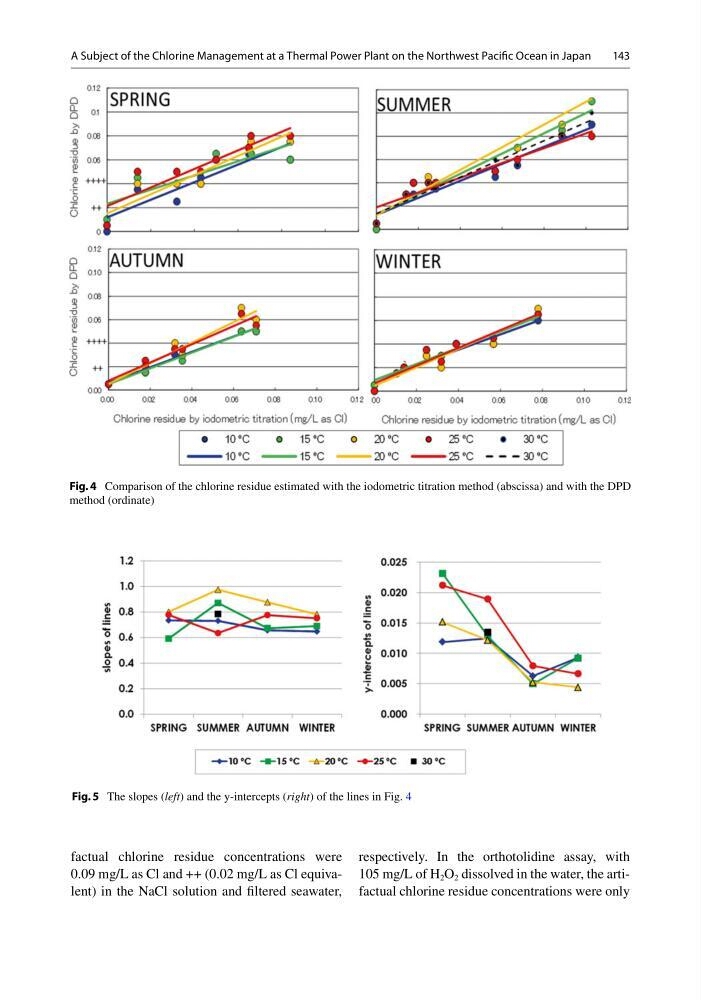
Fig. 4 Comparison of the chlorine residue estimated with the iodometric titration method (abscissa) and with the DPD
method (ordinate)
Fig. 5 The slopes ( left ) and the y-intercepts ( right ) of the lines in Fig. 4
factual chlorine residue concentrations were
0.09 mg/L as Cl and ++ (0.02 mg/L as Cl equivalent) in the NaCl solution and fi ltered seawater,
respectively. In the orthotolidine assay, with
105 mg/L of H 2 O 2 dissolved in the water, the artifactual chlorine residue concentrations were only
A Subject of the Chlorine Management at a Thermal Power Plant on the Northwest Pacifi c Ocean in Japan
Fig. 4 Comparison of the chlorine residue estimated with the iodometric titration method (abscissa) and with the DPD
method (ordinate)
Fig. 5 The slopes ( left ) and the y-intercepts ( right ) of the lines in Fig. 4
factual chlorine residue concentrations were
0.09 mg/L as Cl and ++ (0.02 mg/L as Cl equivalent) in the NaCl solution and fi ltered seawater,
respectively. In the orthotolidine assay, with
105 mg/L of H 2 O 2 dissolved in the water, the artifactual chlorine residue concentrations were only
A Subject of the Chlorine Management at a Thermal Power Plant on the Northwest Pacifi c Ocean in Japan