

141
method to measure the chlorine residue in the
same sample solution at different temperatures.
The concentration of the chlorine residue in each
sample was predetermined using an iodometric
titration, which is more accurate than either colorimetric method. The sample solutions were prepared by adding sodium hypochlorite to seawater
and then leaving the solutions to stand for more
than 60 min to allow the concentration of chlorine residue to stabilize. The solutions were held
at a temperature of 10, 15, 20, 25, or 30 °C during
the measurements. The temperature of 30 °C was
used only in the summer. The analytical methodology of the iodometric titration is described in
Standard Methods (Rice et al. 2012 ).
2.4
Interference by H 2 O 2
in the Measurement
of Chlorine Residue
To study the reactions between H 2 O 2 and the
reagents in the DPD and orthotolidine assays, we
measured the color changes that occurred in a
NaCl solution and in fi ltered seawater in which
H 2 O 2 was dissolved. The NaCl solution was
prepared by dissolving 35 g of NaCl in 1 L of distilled water. In the case of the DPD method,
0.03 mL of 35 % H 2 O 2 (11 mmol) was added to
1 L of NaCl solution and to 1 L of seawater. In
the case of the orthotolidine method, 0.3 mL of
35 % H 2 O 2 (105 mmol) was similarly added to
1 L of NaCl solution and to 1 L of seawater.
3
Results and Discussion
3.1
Field Survey of Chlorine
Residue
The results of the fi eld survey of chlorine residue
based on the DPD method are shown in Fig. 3 .
The DPD reagent develops a weak red color even
at the limit of quantitation. We ranked the extent
of the redness as +, ++, +++, and ++++, corresponding to solutions that were made by diluting
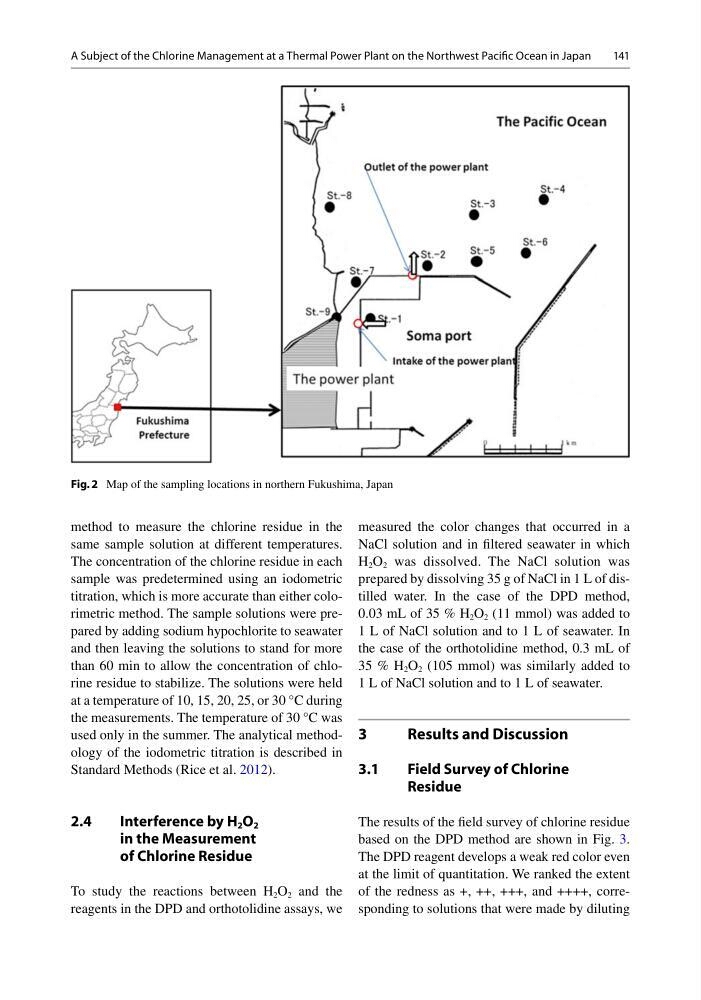
Fig. 2 Map of the sampling locations in northern Fukushima, Japan
A Subject of the Chlorine Management at a Thermal Power Plant on the Northwest Pacifi c Ocean in Japan
method to measure the chlorine residue in the
same sample solution at different temperatures.
The concentration of the chlorine residue in each
sample was predetermined using an iodometric
titration, which is more accurate than either colorimetric method. The sample solutions were prepared by adding sodium hypochlorite to seawater
and then leaving the solutions to stand for more
than 60 min to allow the concentration of chlorine residue to stabilize. The solutions were held
at a temperature of 10, 15, 20, 25, or 30 °C during
the measurements. The temperature of 30 °C was
used only in the summer. The analytical methodology of the iodometric titration is described in
Standard Methods (Rice et al. 2012 ).
2.4
Interference by H 2 O 2
in the Measurement
of Chlorine Residue
To study the reactions between H 2 O 2 and the
reagents in the DPD and orthotolidine assays, we
measured the color changes that occurred in a
NaCl solution and in fi ltered seawater in which
H 2 O 2 was dissolved. The NaCl solution was
prepared by dissolving 35 g of NaCl in 1 L of distilled water. In the case of the DPD method,
0.03 mL of 35 % H 2 O 2 (11 mmol) was added to
1 L of NaCl solution and to 1 L of seawater. In
the case of the orthotolidine method, 0.3 mL of
35 % H 2 O 2 (105 mmol) was similarly added to
1 L of NaCl solution and to 1 L of seawater.
3
Results and Discussion
3.1
Field Survey of Chlorine
Residue
The results of the fi eld survey of chlorine residue
based on the DPD method are shown in Fig. 3 .
The DPD reagent develops a weak red color even
at the limit of quantitation. We ranked the extent
of the redness as +, ++, +++, and ++++, corresponding to solutions that were made by diluting
Fig. 2 Map of the sampling locations in northern Fukushima, Japan
A Subject of the Chlorine Management at a Thermal Power Plant on the Northwest Pacifi c Ocean in Japan