

140
concentration of the chlorine residue under the
limit of quantitation (LOQ) at the outlet.
According to the Japanese Industrial Standards
(JIS), the LOQs of the chlorine residue are 0.05
and 0.01 mg/L as Cl for the N - N -diethyl- p -
phenylenediamine (DPD) and orthotolidine
methods of analysis, respectively (Japanese
Standards Association 2002 ).
2
Methods
2.1
Sampling of Seawater
and Phytoplankton
Seawater samples from a depth of 0.5 m at stations 1–8 and from a depth of 6 m at stations 1–6
were obtained with a reciprocal pump in the
vicinity of a thermal power plant on the coastline
of Japan facing the Western North Pacifi c Ocean
(Fig. 2 ). The dates of sampling were 30
September, 24 October, 2 December, and 20
December 2011 at stations 1–8 and 27 January,
21 February, and 15 March 2012 at stations 1–6.
For about 1 year, including this period, the injection of chlorine into the intake of the power plant
was stopped.
Phytoplankton samples were obtained from a
depth of 0.5 m at stations 1, 2, and 4 at the same
time as the seawater sampling. The phytoplankton in 10 L of seawater were fi ltered
through a 20-µm mesh-size net on board the
boat, concentrated into 200 mL seawater, and
preserved with 30 mL of 33 % formaldehyde
solution. Samples were stored in the dark under
cool conditions. Professionals at the Plantbio
Co., Ltd., Odawara, Japan, classifi ed and counted
the phytoplankton cells.
2.2
Measurement of Chlorine
Residue
We used both the DPD and orthotolidine colorimetric methods to measure the chlorine residue
in water samples on board the boat immediately
after obtaining the samples. The detailed analytical methodology of the DPD method is described
in Standard Methods (Rice et al. 2012 ), and that
of the orthotolidine method is described in JIS
Handbook Environmental Technology (Japanese
Standards Association 2002 ).
2.3
Temperature Effects
on Measurements of Chlorine
Residuals
Sensitivity tests for the two colorimetric methods
of chlorine quantitation were conducted on 28
June, 4 August, and 17 November 2012 and 2
February 2013. We used each colorimetric
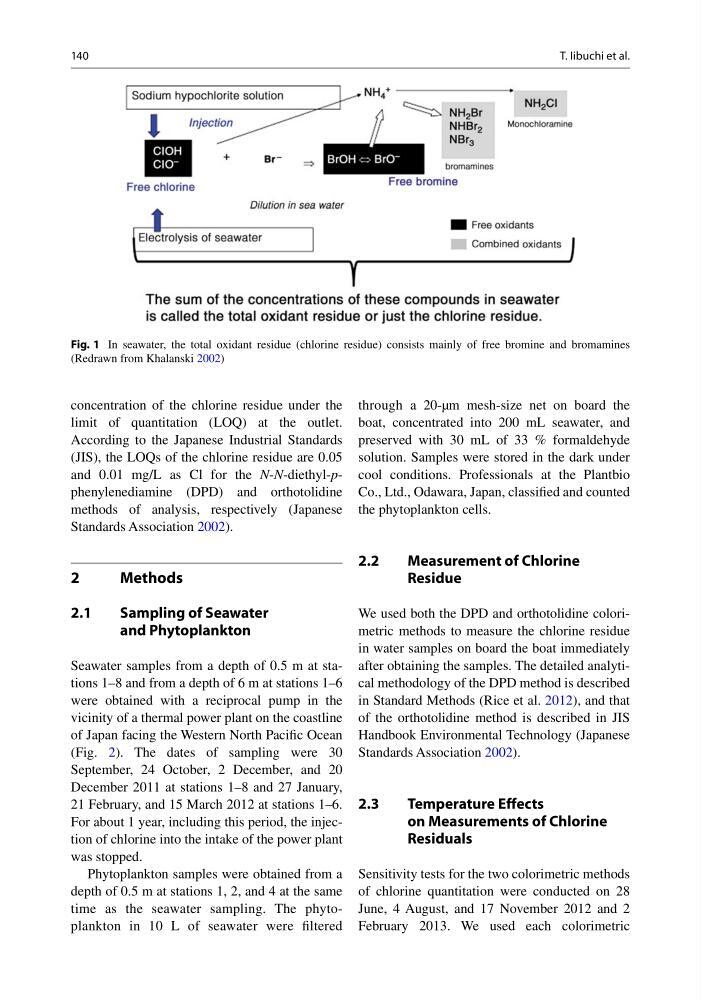
Fig. 1 In seawater, the total oxidant residue (chlorine residue) consists mainly of free bromine and bromamines
(Redrawn from Khalanski 2002 )
T. Iibuchi et al.
concentration of the chlorine residue under the
limit of quantitation (LOQ) at the outlet.
According to the Japanese Industrial Standards
(JIS), the LOQs of the chlorine residue are 0.05
and 0.01 mg/L as Cl for the N - N -diethyl- p -
phenylenediamine (DPD) and orthotolidine
methods of analysis, respectively (Japanese
Standards Association 2002 ).
2
Methods
2.1
Sampling of Seawater
and Phytoplankton
Seawater samples from a depth of 0.5 m at stations 1–8 and from a depth of 6 m at stations 1–6
were obtained with a reciprocal pump in the
vicinity of a thermal power plant on the coastline
of Japan facing the Western North Pacifi c Ocean
(Fig. 2 ). The dates of sampling were 30
September, 24 October, 2 December, and 20
December 2011 at stations 1–8 and 27 January,
21 February, and 15 March 2012 at stations 1–6.
For about 1 year, including this period, the injection of chlorine into the intake of the power plant
was stopped.
Phytoplankton samples were obtained from a
depth of 0.5 m at stations 1, 2, and 4 at the same
time as the seawater sampling. The phytoplankton in 10 L of seawater were fi ltered
through a 20-µm mesh-size net on board the
boat, concentrated into 200 mL seawater, and
preserved with 30 mL of 33 % formaldehyde
solution. Samples were stored in the dark under
cool conditions. Professionals at the Plantbio
Co., Ltd., Odawara, Japan, classifi ed and counted
the phytoplankton cells.
2.2
Measurement of Chlorine
Residue
We used both the DPD and orthotolidine colorimetric methods to measure the chlorine residue
in water samples on board the boat immediately
after obtaining the samples. The detailed analytical methodology of the DPD method is described
in Standard Methods (Rice et al. 2012 ), and that
of the orthotolidine method is described in JIS
Handbook Environmental Technology (Japanese
Standards Association 2002 ).
2.3
Temperature Effects
on Measurements of Chlorine
Residuals
Sensitivity tests for the two colorimetric methods
of chlorine quantitation were conducted on 28
June, 4 August, and 17 November 2012 and 2
February 2013. We used each colorimetric
Fig. 1 In seawater, the total oxidant residue (chlorine residue) consists mainly of free bromine and bromamines
(Redrawn from Khalanski 2002 )
T. Iibuchi et al.