

4.2 Actors in the Conservation and Exchange Activities of Plant Genetic
79
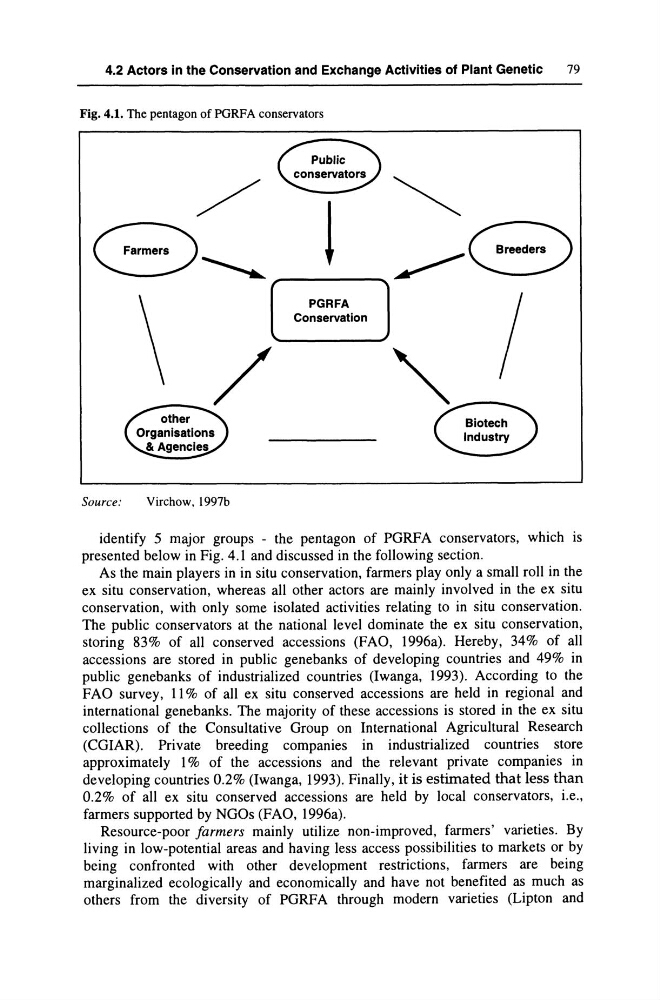
Fig. 4.1. The pentagon of PGRFA conservators
/
~
G __ ! ~8
------. ......
Conservation
\
PGRFA
/
Source:
Virchow. 1997b
identify 5 major groups - the pentagon of PGRFA conservators, which is
presented below in Fig. 4.1 and discussed in the following section.
As the main players in in situ conservation, farmers play only a small roll in the
ex situ conservation, whereas all other actors are mainly involved in the ex situ
conservation, with only some isolated activities relating to in situ conservation.
The public conservators at the national level dominate the ex situ conservation,
storing 83% of all conserved accessions (FAO, 1996a). Hereby, 34% of all
accessions are stored in public genebanks of developing countries and 49% in
public genebanks of industrialized countries (Iwanga, 1993). According to the
FAO survey, 11% of all ex situ conserved accessions are held in regional and
international genebanks. The majority of these accessions is stored in the ex situ
collections of the Consultative Group on International Agricultural Research
(CGIAR). Private breeding companies in industrialized countries store
approximately 1 % of the accessions and the relevant private companies in
developing countries 0.2% (Iwanga, 1993). Finally, it is estimated that less than
0.2% of all ex situ conserved accessions are held by local conservators, i.e.,
farmers supported by NGOs (FAO, 1996a).
Resource-poor farmers mainly utilize non-improved, farmers' varieties. By
living in low-potential areas and having less access possibilities to markets or by
being confronted with other development restrictions, farmers are being
marginalized ecologically and economically and have not benefited as much as
others from the diversity of PGRFA through modern varieties (Lipton and
79
Fig. 4.1. The pentagon of PGRFA conservators
/
~
G __ ! ~8
------. ......
Conservation
\
PGRFA
/
Source:
Virchow. 1997b
identify 5 major groups - the pentagon of PGRFA conservators, which is
presented below in Fig. 4.1 and discussed in the following section.
As the main players in in situ conservation, farmers play only a small roll in the
ex situ conservation, whereas all other actors are mainly involved in the ex situ
conservation, with only some isolated activities relating to in situ conservation.
The public conservators at the national level dominate the ex situ conservation,
storing 83% of all conserved accessions (FAO, 1996a). Hereby, 34% of all
accessions are stored in public genebanks of developing countries and 49% in
public genebanks of industrialized countries (Iwanga, 1993). According to the
FAO survey, 11% of all ex situ conserved accessions are held in regional and
international genebanks. The majority of these accessions is stored in the ex situ
collections of the Consultative Group on International Agricultural Research
(CGIAR). Private breeding companies in industrialized countries store
approximately 1 % of the accessions and the relevant private companies in
developing countries 0.2% (Iwanga, 1993). Finally, it is estimated that less than
0.2% of all ex situ conserved accessions are held by local conservators, i.e.,
farmers supported by NGOs (FAO, 1996a).
Resource-poor farmers mainly utilize non-improved, farmers' varieties. By
living in low-potential areas and having less access possibilities to markets or by
being confronted with other development restrictions, farmers are being
marginalized ecologically and economically and have not benefited as much as
others from the diversity of PGRFA through modern varieties (Lipton and