

228
K. M. G. Mostofa et al.
At pH < 12 in aqueous solution, O
•– is protonated to form HO
•
:
where k 3.5 = 1.7 × 10 6 M −1 s −1 for the HO
• formation reaction and k −3.5 = 1.2 ×
10 10 M −1 s −1 for the reverse reaction. The radical HO
• can significantly recombine
with NO
• and NO 2
— ; such reactions are very fast (diffusion-controlled) in aqueous
media (Mack and Bolton 1999):
where k 3.6 = 1.0 × 10 6 M −1 s −1 .
where k 3.7 = 1.0 × 10 10 M −1 s −1 . These reactions can limit the steady-state concentration of HO
• and, therefore, the ability of the hydroxyl radical to take part in
photooxidation reactions of organic compounds in natural waters. Note, however,
that the main HO
• scavengers are DOM in freshwater and bromide in seawater
(Takeda et al. 2004).
(3.5)
O
•− + H 2 O
k 3.5
⇋
k −3.5
HO
• + HO
−
(3.6)
HO
• + NO
• → HNO 2
(3.7)
HO
· + NO
−
2 → NO 2
· + OH
−
y = 0.00011x 2 + 0.0712x - 0.7
R 2 = 0.999
0
50
100
150
200
0
200
400
600
800
y = 0.0009x 2 -0.2903x + 32
R 2 = 0.996
0
300
600
900
1200
1500
1800
0
300 600 900 1200 1500 1800
y = 0.0002x 2 + 0.088x - 2.5
R 2 = 0.995
0
25
50
75
100
0
100
200
300
400
500
y = -0.0002x 2 + 0.2011x - 5.7
R 2 = 0.989
0
25
50
75
100
0
100
200
300
400
500
HO •
production (nM)
(d)
(c)
(b)
(a)
H 2 O 2 production (nM)
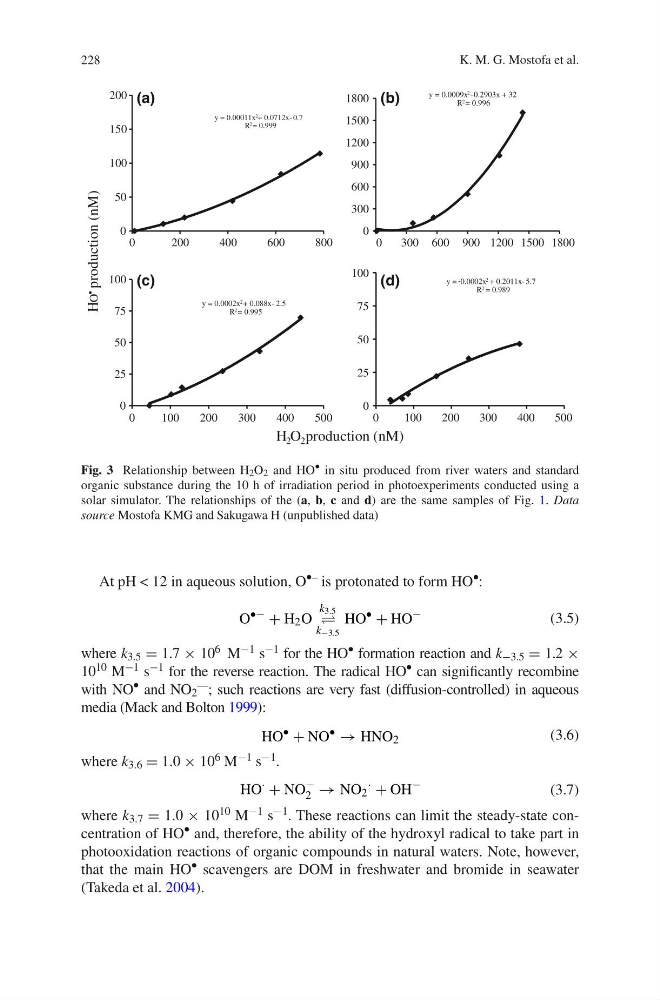
Fig. 3 Relationship between H 2 O 2 and HO
• in situ produced from river waters and standard
organic substance during the 10 h of irradiation period in photoexperiments conducted using a
solar simulator. The relationships of the (a, b, c and d) are the same samples of Fig. 1. Data
source Mostofa KMG and Sakugawa H (unpublished data)
K. M. G. Mostofa et al.
At pH < 12 in aqueous solution, O
•– is protonated to form HO
•
:
where k 3.5 = 1.7 × 10 6 M −1 s −1 for the HO
• formation reaction and k −3.5 = 1.2 ×
10 10 M −1 s −1 for the reverse reaction. The radical HO
• can significantly recombine
with NO
• and NO 2
— ; such reactions are very fast (diffusion-controlled) in aqueous
media (Mack and Bolton 1999):
where k 3.6 = 1.0 × 10 6 M −1 s −1 .
where k 3.7 = 1.0 × 10 10 M −1 s −1 . These reactions can limit the steady-state concentration of HO
• and, therefore, the ability of the hydroxyl radical to take part in
photooxidation reactions of organic compounds in natural waters. Note, however,
that the main HO
• scavengers are DOM in freshwater and bromide in seawater
(Takeda et al. 2004).
(3.5)
O
•− + H 2 O
k 3.5
⇋
k −3.5
HO
• + HO
−
(3.6)
HO
• + NO
• → HNO 2
(3.7)
HO
· + NO
−
2 → NO 2
· + OH
−
y = 0.00011x 2 + 0.0712x - 0.7
R 2 = 0.999
0
50
100
150
200
0
200
400
600
800
y = 0.0009x 2 -0.2903x + 32
R 2 = 0.996
0
300
600
900
1200
1500
1800
0
300 600 900 1200 1500 1800
y = 0.0002x 2 + 0.088x - 2.5
R 2 = 0.995
0
25
50
75
100
0
100
200
300
400
500
y = -0.0002x 2 + 0.2011x - 5.7
R 2 = 0.989
0
25
50
75
100
0
100
200
300
400
500
HO •
production (nM)
(d)
(c)
(b)
(a)
H 2 O 2 production (nM)
Fig. 3 Relationship between H 2 O 2 and HO
• in situ produced from river waters and standard
organic substance during the 10 h of irradiation period in photoexperiments conducted using a
solar simulator. The relationships of the (a, b, c and d) are the same samples of Fig. 1. Data
source Mostofa KMG and Sakugawa H (unpublished data)