

11
esters, mannans, glucomannans, and β-1,3 and β-1,4 glucans (Scheller and Ulvskov
2010). While xylans are the major components of hemicellulose in hardwood and
herbaceous plants, mannans form the major component in the hemicellulose of softwoods. All of the xylans of the higher plants are based on a β-1,4-linked xylopyranose backbone which is substituted with acetyl groups and other sugar residues
(Fig. 1.4) (Dodd and Cann 2009). The heterogeneous nature of hemicellulose necessitates the requirement of multiple enzymes that act synergistically and/or sequentially. Different microorganisms employ different strategies for degradation of
hemicellulose. Several of the biomass-degrading filamentous fungi secrete an entire
cocktail of hemicellulases together, and these act synergistically on the hemicellulose to break down the polymer into its monomers. On the other hand, aerobic
bacteria accomplish this in two stages, where the first step is the secretion of
enzymes that break the hemicellulose backbone and release oligomers; the second
one is its further cleavage to monomeric sugars by cell-wall-bound or intracellular
enzymes. In yet another strategy, anaerobic bacteria uses cellulosome-like structures to hydrolyze hemicellulose (Shallom and Shoham 2003).
The major hemicellulose-degrading enzymes are the enzymes which break down
the xylan backbone (endo- and exoxylanases and β-xylosidases) and the side chains
(arabinofuranosidases, glucuronidases, acetyl xylan esterases, ferulic acid esterases, and alpha galactosidases). A total degradation of xylan requires the synergistic
action of mainly endoxylanases, which cleaves the β-1,4 xylose linkages of xylan
backbone; exoxylanases, which hydrolyzes β-1,4 linkages of xylan from the
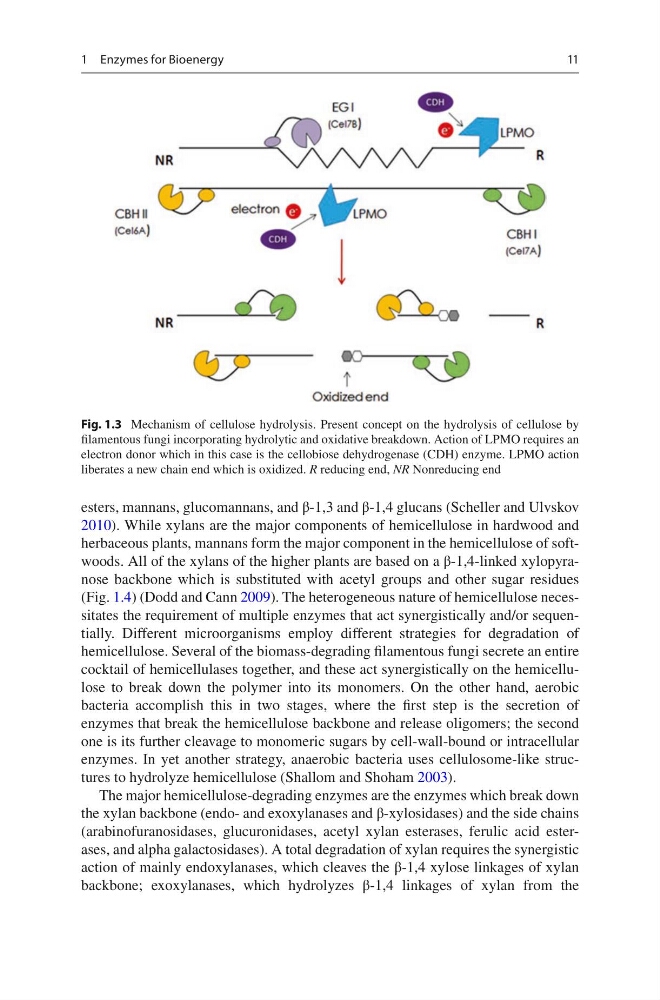
Fig. 1.3 Mechanism of cellulose hydrolysis. Present concept on the hydrolysis of cellulose by
filamentous fungi incorporating hydrolytic and oxidative breakdown. Action of LPMO requires an
electron donor which in this case is the cellobiose dehydrogenase (CDH) enzyme. LPMO action
liberates a new chain end which is oxidized. R reducing end, NR Nonreducing end
1 Enzymes for Bioenergy
esters, mannans, glucomannans, and β-1,3 and β-1,4 glucans (Scheller and Ulvskov
2010). While xylans are the major components of hemicellulose in hardwood and
herbaceous plants, mannans form the major component in the hemicellulose of softwoods. All of the xylans of the higher plants are based on a β-1,4-linked xylopyranose backbone which is substituted with acetyl groups and other sugar residues
(Fig. 1.4) (Dodd and Cann 2009). The heterogeneous nature of hemicellulose necessitates the requirement of multiple enzymes that act synergistically and/or sequentially. Different microorganisms employ different strategies for degradation of
hemicellulose. Several of the biomass-degrading filamentous fungi secrete an entire
cocktail of hemicellulases together, and these act synergistically on the hemicellulose to break down the polymer into its monomers. On the other hand, aerobic
bacteria accomplish this in two stages, where the first step is the secretion of
enzymes that break the hemicellulose backbone and release oligomers; the second
one is its further cleavage to monomeric sugars by cell-wall-bound or intracellular
enzymes. In yet another strategy, anaerobic bacteria uses cellulosome-like structures to hydrolyze hemicellulose (Shallom and Shoham 2003).
The major hemicellulose-degrading enzymes are the enzymes which break down
the xylan backbone (endo- and exoxylanases and β-xylosidases) and the side chains
(arabinofuranosidases, glucuronidases, acetyl xylan esterases, ferulic acid esterases, and alpha galactosidases). A total degradation of xylan requires the synergistic
action of mainly endoxylanases, which cleaves the β-1,4 xylose linkages of xylan
backbone; exoxylanases, which hydrolyzes β-1,4 linkages of xylan from the
Fig. 1.3 Mechanism of cellulose hydrolysis. Present concept on the hydrolysis of cellulose by
filamentous fungi incorporating hydrolytic and oxidative breakdown. Action of LPMO requires an
electron donor which in this case is the cellobiose dehydrogenase (CDH) enzyme. LPMO action
liberates a new chain end which is oxidized. R reducing end, NR Nonreducing end
1 Enzymes for Bioenergy