

10
of the enzyme through the cellulose surface while the glucan chain is threaded to the
active site tunnel, and this movement requires that the cellulose chain is threaded
and is being hydrolyzed (Igarashi et al. 2009). It is considered that the rate-limiting
step in processive CBH action is the dissociation from cellulose chains. Processively
acting CBH molecules can get stalled at amorphous regions of cellulose and this
leads to a diminished hydrolysis rate (Praestgaard et al. 2011). The renewed concept
on the role of EGs is that they are acting not only to generate reducing and nonreducing ends and thus helping CBH to attach, but also to help CBH dissociate from
the cellulose chain when they encounter amorphous regions during their processive
action (Jalak et al. 2012).
In light of the above findings, the roles of different cellulases may have to be
redefined. EGs and LPMOs do the endo-initiation in the amorphous and crystalline
regions of cellulose respectively by breaking down the glycosidic bonds. Endoinitiation is also aided by the exoglucanases. The liberated reducing and nonreducing ends are attacked respectively by cellobiohydrolase I and II, which act in a
processive fashion to liberate cellobiose units, and the cellobiose units are eventually cleaved to glucose by the beta glucosidases (Fig. 1.3).
1.2.1.7 Hemicellulases
Hemicellulose is a hetero-polysaccharide made up of various carbohydrate monomers having different linkages and substitutions, and its structure and composition
changes with the plant source and geographical origin (Juturu and Wu 2012). The
different types of hemicelluloses recognized include xyloglucans, xylans, ferulate
a
b
c
Catalytic Domain
Linker
CBM
d
e
f
Initial
threading
Hydrolysis
Expulsion
Threading - Processive cycle
Recognition
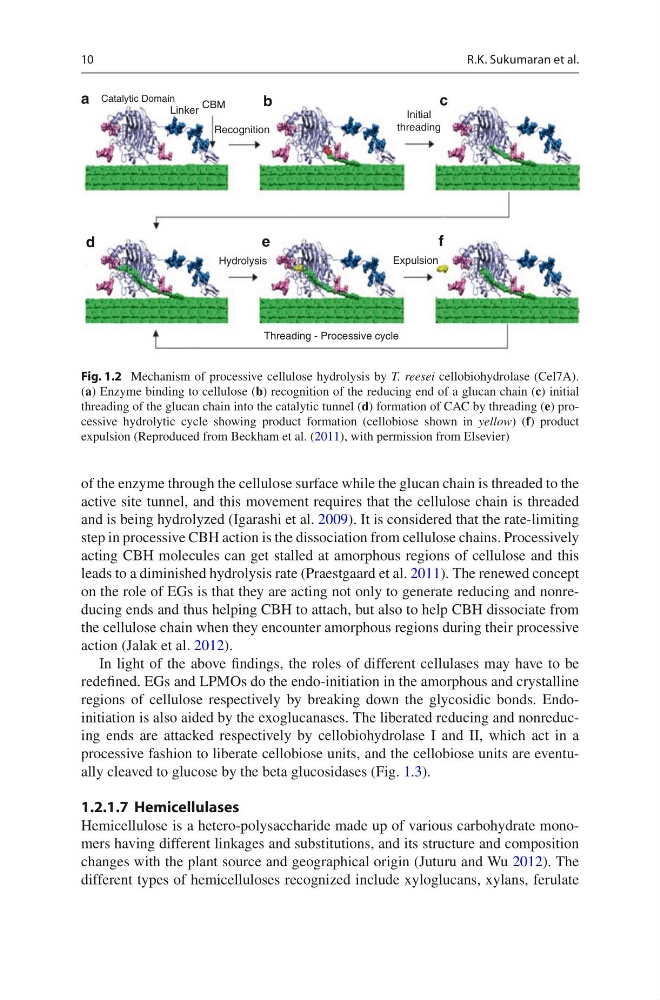
Fig. 1.2 Mechanism of processive cellulose hydrolysis by T. reesei cellobiohydrolase (Cel7A).
(a) Enzyme binding to cellulose (b) recognition of the reducing end of a glucan chain (c) initial
threading of the glucan chain into the catalytic tunnel (d) formation of CAC by threading (e) processive hydrolytic cycle showing product formation (cellobiose shown in yellow) (f) product
expulsion (Reproduced from Beckham et al. (2011), with permission from Elsevier)
R.K. Sukumaran et al.
of the enzyme through the cellulose surface while the glucan chain is threaded to the
active site tunnel, and this movement requires that the cellulose chain is threaded
and is being hydrolyzed (Igarashi et al. 2009). It is considered that the rate-limiting
step in processive CBH action is the dissociation from cellulose chains. Processively
acting CBH molecules can get stalled at amorphous regions of cellulose and this
leads to a diminished hydrolysis rate (Praestgaard et al. 2011). The renewed concept
on the role of EGs is that they are acting not only to generate reducing and nonreducing ends and thus helping CBH to attach, but also to help CBH dissociate from
the cellulose chain when they encounter amorphous regions during their processive
action (Jalak et al. 2012).
In light of the above findings, the roles of different cellulases may have to be
redefined. EGs and LPMOs do the endo-initiation in the amorphous and crystalline
regions of cellulose respectively by breaking down the glycosidic bonds. Endoinitiation is also aided by the exoglucanases. The liberated reducing and nonreducing ends are attacked respectively by cellobiohydrolase I and II, which act in a
processive fashion to liberate cellobiose units, and the cellobiose units are eventually cleaved to glucose by the beta glucosidases (Fig. 1.3).
1.2.1.7 Hemicellulases
Hemicellulose is a hetero-polysaccharide made up of various carbohydrate monomers having different linkages and substitutions, and its structure and composition
changes with the plant source and geographical origin (Juturu and Wu 2012). The
different types of hemicelluloses recognized include xyloglucans, xylans, ferulate
a
b
c
Catalytic Domain
Linker
CBM
d
e
f
Initial
threading
Hydrolysis
Expulsion
Threading - Processive cycle
Recognition
Fig. 1.2 Mechanism of processive cellulose hydrolysis by T. reesei cellobiohydrolase (Cel7A).
(a) Enzyme binding to cellulose (b) recognition of the reducing end of a glucan chain (c) initial
threading of the glucan chain into the catalytic tunnel (d) formation of CAC by threading (e) processive hydrolytic cycle showing product formation (cellobiose shown in yellow) (f) product
expulsion (Reproduced from Beckham et al. (2011), with permission from Elsevier)
R.K. Sukumaran et al.